Most guides to hiring a contractor stop at "check the license number." That's necessary, but it's the easy part, and it's not where people actually get burned. The real risk in seismic retrofit work is further down the process: in what the contract actually specifies, who's really doing the structural engineering, and whether payment is tied to verified progress or just a calendar.
The license and bond, and what they don't cover
Seismic retrofit and foundation bolting work is typically done under a Class B General Building Contractor license, though the exact class required can depend on the specific scope of work. Every active licensee carries a $25,000 contractor's bond, and it's worth understanding exactly what that is: a fund for consumers with claims of defective construction or license-law violations, and for unpaid employee wages. It is not general liability insurance, and in our experience that small a fund can be exhausted quickly on a real construction dispute, so treat it as a limited backstop rather than real protection.
California law requires contractors with employees to carry workers' compensation insurance, and losing that coverage suspends the license. General liability insurance is a different matter: we could not find a single CSLB-mandated dollar figure for it, so don't assume a contractor carries any specific amount just because they're licensed. Ask directly for a Certificate of Insurance, then call the carrier listed on it yourself to confirm the policy is actually active. That second step is the one people skip.
Check more than "active": look at the complaint history
CSLB's online license lookup shows more than whether a license is active. Click through to the individual license detail page and you'll find a disciplinary and legal-action history section too, which most people never look at. CSLB is upfront about the limits of that record: only construction-related civil judgments that get reported actually show up, so a clean record is a real signal, not an absolute guarantee. For the mechanics of running the lookup itself, see our guide to checking a California contractor's license.
Who's actually doing the structural engineering
This is the highest-leverage question in the whole process, and it's the one most homeowners never think to ask. In our experience, and as retrofit contractors themselves describe the normal division of labor, a licensed structural engineer evaluates the building and designs the specific fix, and the contractor's job is to execute plans that engineer has already stamped, not to originate the structural design themselves. If a contractor tells you they'll "handle the structural side" without naming a separate licensed engineer, that's not a convenience, it's a gap. Ask who the engineer is before you ask anything about price. (Commercial owners follow the same split, with the evaluation often driven by an ordinance or a lender's report; see our commercial seismic retrofit guide.)

When a standard plan set takes the place of a custom design
Not every house needs a one-off engineered design. For the most common single-family retrofit, bolting the frame to the foundation and bracing short cripple walls, California has a code-based path. The California Residential Mitigation Program says an Earthquake Brace + Bolt retrofit "must be done in compliance with California Existing Building Code (CEBC), Chapter A3," and that "An EBB seismic retrofit is only done on wood-framed, pre-1980 homes with a raised foundation." Bracing applies where the cripple walls are short, 4 feet or less, and bolt-only work applies where the frame sits directly on the stem wall.
For a house that fits that description, the retrofit can often follow a standard plan set rather than a custom engineered one. For a house that doesn't, such as tall cripple walls, a hillside, an addition on a different foundation or a soft-story garage, an engineer's design is the normal route. Either way, the hiring question is the same: ask the contractor which path your house is on and why, and have them show you the plan set or the engineer's stamped drawings before you sign.
If you plan to apply for an EBB grant, the contractor choice is tied to it. CRMP says "EBB provides up to $3,000 toward a code-compliant seismic retrofit to a qualifying house," and "If you hire a contractor to do the retrofit work, you must choose from the Contractor Directory." In our experience, owners lose grant eligibility most often by signing with a contractor before checking the directory and the program's registration window.
Structuring the bid and the payment schedule
California law is specific about the first payment: home improvement contracts must disclose that the down payment may not exceed $1,000 or 10 percent of the contract price, whichever is less. That's a real, enforceable limit, but in our experience it only protects you on the first payment. Nothing in that rule governs what happens after, and that's where the real overpayment risk lives if the rest of the schedule isn't tied to anything verifiable. Push for payments tied to specific milestones, plan approval, a passed framing or bolting inspection, final sign-off, rather than a schedule based on the calendar or a vague percentage of completion. For what a bid should actually itemize on the cost and scope side, our seismic retrofit cost guide covers that in detail.
What the written contract has to cover
A retrofit is a home improvement project, so California's contract rules apply. CSLB says "there must be a written contract for all home improvement projects over $500 in combined labor and materials costs." It says a contract should "detail the work, price, when payments will be made, who gets the necessary building permits, and when the job will be finished," and that "A good contract also has warnings and notices about the right to cancel, mechanics liens, and allowable delays." On cancellation, CSLB states: "You may cancel within three (3) days of signing a contract, but it must be mailed before midnight of the third day."
For seismic work, in our experience, the general rules need a few retrofit-specific lines to be useful:
- The plan it follows. Name the standard plan set or the engineer's drawings by date, so the scope can't drift.
- Quantities. The number of anchor bolts or connectors, the length of wall to be braced, and the hardware type, all as shown on the plans.
- Inspections. Which inspections the contractor schedules, and that final payment follows the final sign-off.
- Hidden conditions. How rot, termite damage or a cracked stem wall found in the crawl space will be priced. CSLB says "any changes made to that contract must be in writing," so insist on a signed change order before extra work starts.
References, reviews, and getting more than one bid
CSLB's own guidance is direct about this: get at least three contractors to give you an estimate, along with references, then call those references and ask questions about the actual projects. Getting at least three detailed bids helps you compare accurate quotes and confirm the costs align with market rates. In our experience, it's worth checking reviews across more than one platform rather than trusting a single glowing profile, since a contractor can curate what shows up in one place. The same CSLB checklist also recommends asking to see the contractor's pocket license and confirm their identity with a current photo ID in person, not just online.
Who pulls the permit
For licensed contractor work, the contractor normally pulls their own permit; LA's permitting system is built around licensed contractors doing this directly. If a contractor asks you to pull an owner-builder permit while they do the actual work, treat that as a real question, not a formality. CSLB warns generally that having someone else obtain an owner-builder permit while an unlicensed party performs the work is a common scam tactic, and as an owner-builder, you personally assume full responsibility for every phase of the project and its integrity. That's the normal, expected arrangement whenever a licensed contractor is doing licensed work.
Red flags, especially after a disaster
Contractor fraud has a documented pattern after earthquakes and fires. CSLB's own Disaster Help Center warns that unscrupulous, unlicensed contractors often prey on victims of natural disasters, and that it's a felony to contract without a license in a declared disaster area. This isn't hypothetical: the LA County District Attorney's office filed felony charges against unlicensed contractors operating after the 2025 LA fires. Watch for pressure to sign the same day, a demand for a down payment above the legal cap, no written contract, or someone showing up door-to-door right after a quake or fire looking for work.
What to watch for at the crawl-space walkthrough
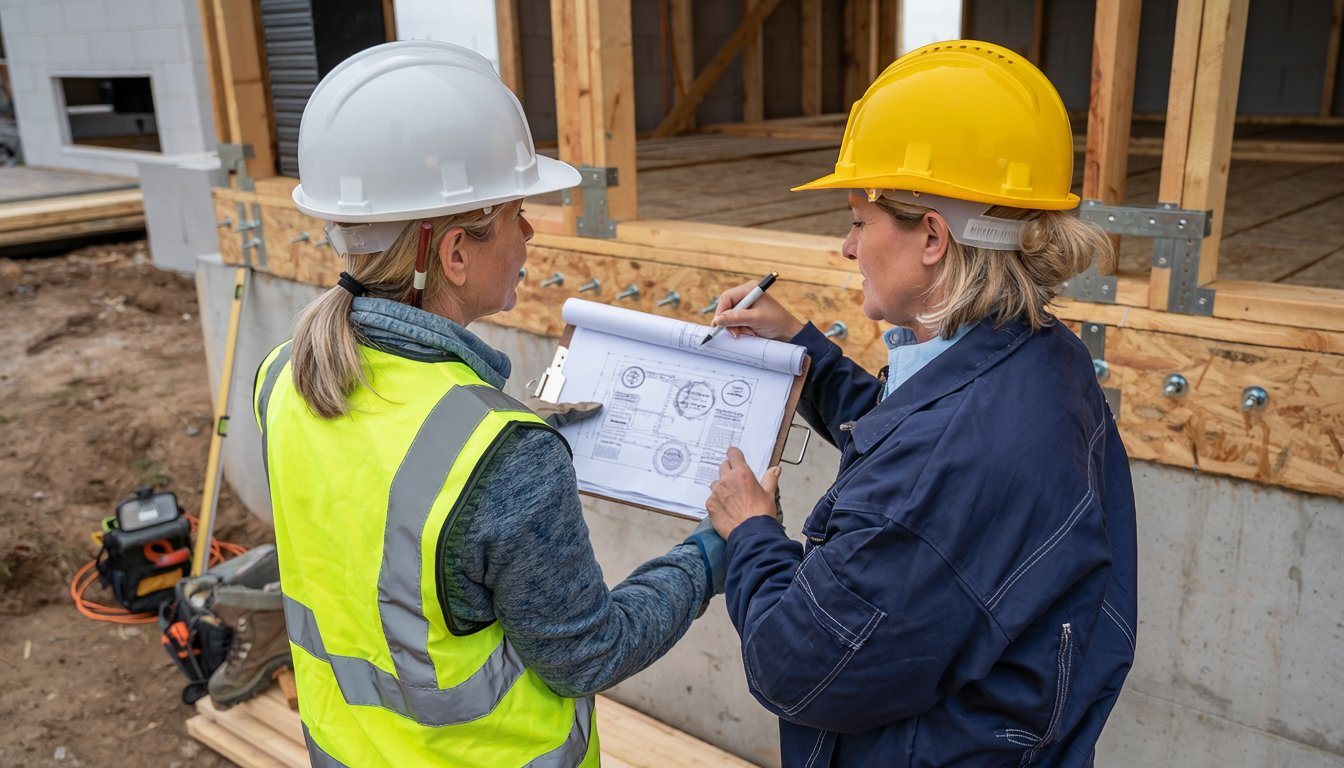
A bid written from the curb is a guess. In our experience, a contractor worth hiring goes into the crawl space before pricing the job, and the walkthrough tells you a lot about how the work will go. Watch whether they measure the cripple wall heights, look at the condition of the sill plate and the foundation, and note existing bolts or hardware. Ask them to photograph what they find, including any rot, termite damage or cracking, and to tie those photos to line items in the bid. A contractor who can explain on site why your house is a standard-plan job or an engineered one, and where the bracing and bolts will go, is usually the one whose bid will hold up once the work starts.
General contractor or a retrofit specialist?
A specialist retrofit company does this kind of work exclusively. A general contractor may offer it as one service among several, alongside additions, remodels, and everything else. Neither is automatically the better choice, but the vetting question is the same either way: ask specifically how many retrofit jobs, not renovations generally, they've completed, and whether they'll name the structural engineer up front without you having to ask twice. If you're pursuing the state's Earthquake Brace + Bolt grant specifically, our guide to EBB-registered contractors covers the directory requirement and grant-specific details that this guide doesn't.
Medici Construction Group is one licensed option for seismic retrofits, holding California A, B and C-10 licenses under CSLB #1114433 and is listed in the California Residential Mitigation Program's Earthquake Multi-Unit Retrofit (EMR) Contractor Directory.
Frequently asked questions
What license does a seismic retrofit contractor need in California?
Typically a Class B General Building Contractor license, though the exact required class can depend on the specific scope of the work.
How do I verify a contractor's license and check for complaints?
Use CSLB's online license lookup, but don't stop at confirming active status. Click through to the license detail page, which includes a disciplinary and legal-action history section that shows reported civil judgments.
Is general liability insurance required for seismic retrofit contractors?
Workers' compensation insurance is legally required for contractors with employees. There's no specific CSLB-mandated dollar amount for general liability insurance, so ask for a Certificate of Insurance directly and call the carrier to confirm the policy is active.
How much can a contractor legally ask for as a down payment in California?
By law, a home improvement contract's down payment cannot exceed $1,000 or 10 percent of the contract price, whichever is less. That rule only covers the first payment, so the rest of the schedule should be tied to verifiable milestones.
Should a separate structural engineer be involved, or does the contractor handle that?
A licensed structural engineer typically evaluates the building and designs the retrofit; the contractor executes plans the engineer has stamped. A contractor who says they'll handle the structural side without naming a separate engineer is worth questioning.
What are red flags when hiring a contractor after an earthquake or fire?
Pressure to sign the same day, a down payment demand above the legal cap, no written contract, and door-to-door solicitation right after a disaster. Contracting without a license in a declared disaster area is a felony in California.
Should I hire a general contractor or a retrofit specialist?
Either can work well. Ask how many retrofit jobs specifically they've completed, not renovations generally, and whether they'll name the structural engineer involved without being asked twice.
How many bids should I get before choosing a contractor?
At least three, per CSLB's own guidance and standard consumer advice. Getting multiple detailed bids helps you compare quotes accurately and confirm the pricing aligns with market rates.