In our experience, this is a common story. A homeowner notices a crack running up from a doorway and calls three foundation repair companies. The first recommends a row of steel piers along one wall. The second recommends lifting the slab with injected foam. The third recommends a different pier system and a drain. Each recommendation happens to match what that company installs. None of them is necessarily lying. Each is showing you its toolbox.
That's the most useful thing to understand when choosing a foundation repair company: most are built around a handful of repair systems, and the company you call tends to see your house through them. This guide covers how to pick one whose methods fit your foundation, who actually does the work, and what to look for in the warranty.
Quick answers
The right foundation repair company is one whose repair methods fit your foundation and your engineer's plan, who can handle the related work, and who puts the scope and warranty in writing. Before you sign, confirm:
- The cause has been diagnosed, not just the symptom.
- The company offers more than one method, or can explain why its method fits.
- The product has an evaluation report you can look up.
- You know who will do the work and who pulls the permit.
- The warranty says what's covered, what isn't and whether it transfers.
- Payment terms are in a signed contract.
Three kinds of foundation repair company
In our experience, the companies you'll find fall into three broad groups. None is automatically better; each fits some jobs better than others.
- System installers, often national or regional. A sales representative or inspector usually visits first, and the crew comes later. They tend to recommend their own product lines, such as piers, slab lifting or wall supports, often with a standardized warranty. They may leave drainage fixes, finish repairs and sometimes engineering to someone else.
- Local foundation specialists. The owner or a lead installer often does the first visit. They may offer a few methods and more flexibility on the plan. What they leave out varies, so ask about drainage, finishes and permits.
- Full-service general contractors. They tend to work from an engineer's plan rather than a product line, and in our experience can handle the related work that often comes with foundation problems: correcting drainage, pulling the permit, and repairing drywall, doors and floors afterward. They may bring in a specialty installer for a particular pier system.
In our experience, the question isn't which type is best in general, but which one covers what your house actually needs.
Match the company's toolbox to your foundation
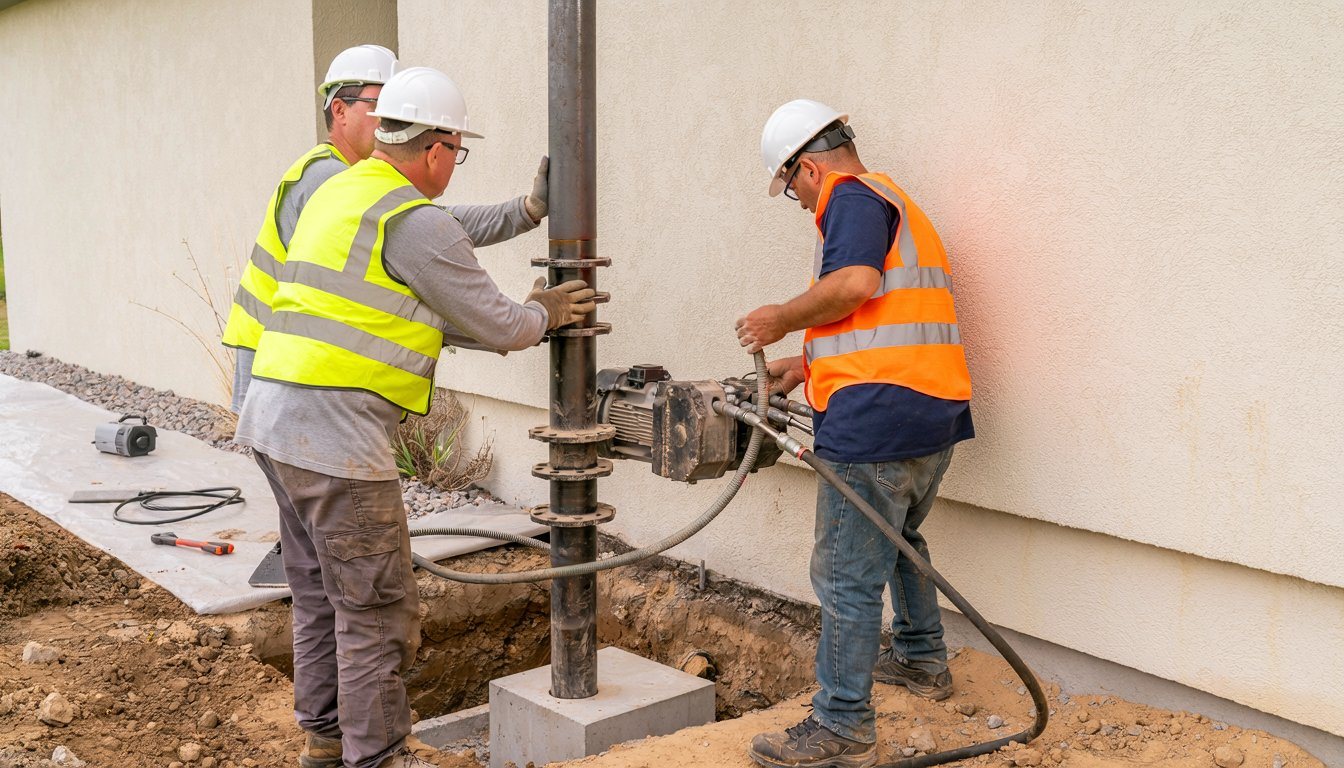
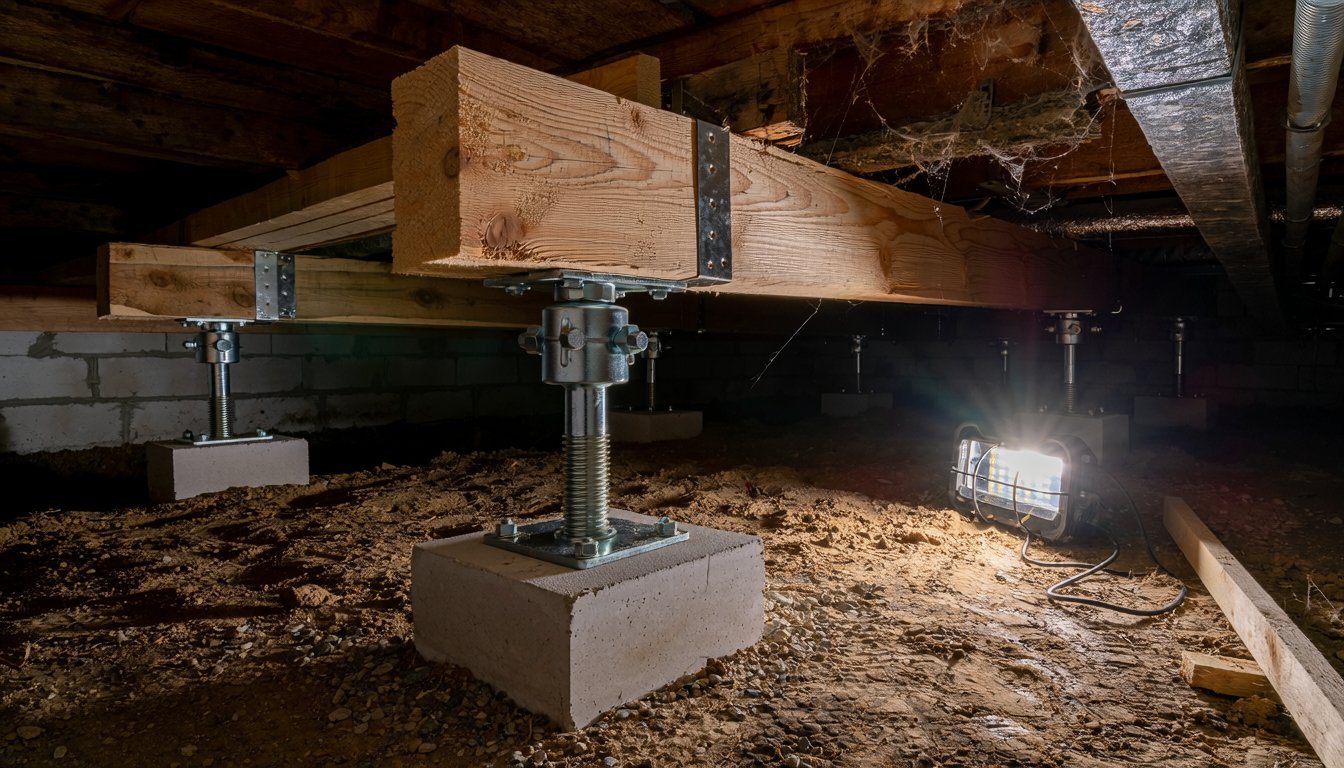
Different repair systems suit different foundations. In an article for WATERPROOF! Magazine, engineer Patrick Nevison explains the basic difference between two common pier types: "Push piers are hydraulically driven into the ground using the weight of the structure as resistance. Helical piers are screwed into the ground using a hydraulic torque motor." Because push piers depend on the building's weight, a lighter structure can change the choice: "If it is a shallow footing or thickened edge slab, helicals may be needed." He also notes that "Each push pier is load tested during installation, so the actual capacity is verified on every pier."
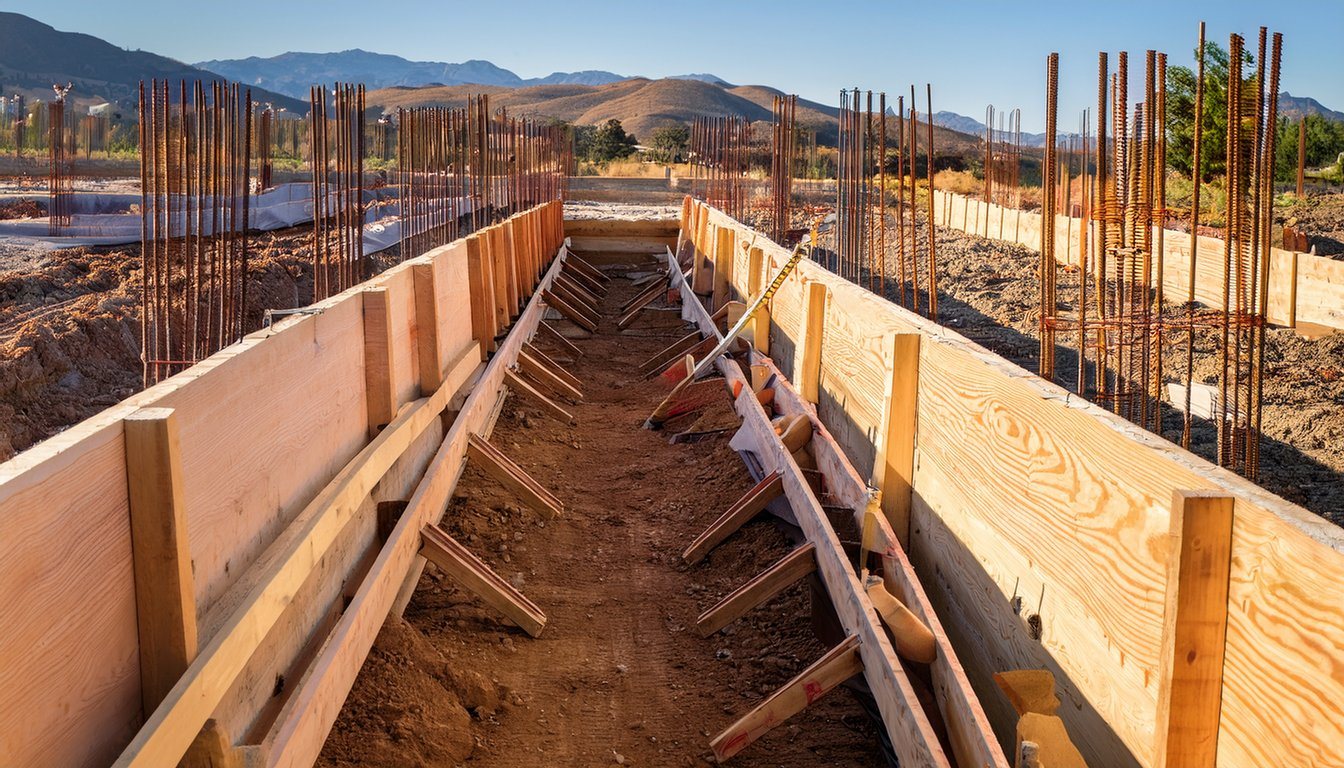
In our experience, Los Angeles adds its own mix. Many older homes sit on raised foundations with a crawl space and a short perimeter wall, where the repair may involve the wall, the posts and beams, or the connection to the house rather than piers. Newer homes, in our experience, are often on slabs. Houses on slopes raise their own questions, which we cover separately. A company that only installs one system may not be the right fit for a raised foundation that needs a new section of stem wall.
For manufactured systems, ask for the product's evaluation report. ICC Evaluation Service's acceptance criteria AC358, for example, exists "to establish requirements for helical pile systems and helical pile devices to be evaluated in ICC Evaluation Service, LLC (ICC-ES), evaluation reports" under the International Building Code. In our experience, an evaluation report speaks to the product, not the installer, so it's one check among several. Our guide to foundation underpinning covers the main methods in more detail.
When two companies disagree
In our experience, conflicting recommendations are normal, and they usually come from one of three places:
- Different diagnoses. One company sees settlement, another sees soil movement from water, a third sees an old crack that isn't moving. The fix follows the diagnosis.
- Different toolboxes. Each company proposes what it installs.
- Different scope. One quote covers one wall, another covers the whole house, a third adds drainage.
When the disagreement is about the cause, an independent opinion is usually worth it before you pay for any repair. Our guide to foundation inspections explains why a free inspection from a company that sells repairs is a sales estimate, and who can give you an independent diagnosis. When the disagreement is only about method, ask each company why the other methods don't fit your foundation. In our experience, a good answer is specific to your house; a weak one is a list of reasons their product is better in general.
In our experience, "monitor it for now" is also a real recommendation, and a company willing to say that when it's true is showing you something useful about how it works.

Who does the work after you sign
In our experience, the person who sells the job is often not the person who does it. That's normal, but it's worth knowing before you sign:
- Who installs. The company's own crew, or a subcontractor.
- Who designs. Whether an engineer is involved in the repair plan, and who hires that engineer.
- Who pulls the permit and meets the inspector.
- Who handles the related work, such as drainage corrections, plumbing that has to be moved, and repairs to finishes afterward.
- Who you call later if you see new movement.
In our experience, a company that answers these clearly, in writing, is usually one that has thought about the job after the sale. Our guide to the foundation repair process covers how the permit and inspections fit in.
Reading the warranty
In our experience, foundation repair warranties vary widely, and the headline rarely tells you much. The FTC's guide to federal warranty law explains that the federal law it covers applies to warranties on consumer products, and it distinguishes a "full" warranty from a "limited" one: a limited warranty is one whose coverage "does not meet at least one of the Act's standards." The FTC also notes that the Act does not apply to warranties on services alone, though it can reach a repair warranty that covers parts as well as workmanship. In our experience, what matters most is what the written warranty says.
In our experience, these are the questions that decide whether a warranty is useful:
- What counts as a covered failure? Further movement at the repaired area, or something narrower, such as the product itself?
- What's excluded? Cosmetic cracks, areas that weren't repaired, and damage from plumbing leaks or drainage problems are common exclusions.
- What must you do? Some warranties depend on keeping drainage working or on notifying the company promptly.
- Does it transfer to a buyer if you sell, and is there a process or fee to transfer it?
- Who backs it if the company is sold or closes?
For a large repair, it's reasonable to have an attorney review the contract and warranty before you sign. Our pier foundation repair guide covers what pier bids should spell out, including warranty terms for pier systems.
What "best foundation repair companies" lists can and can't tell you
Search for the best foundation repair companies and you'll find ranked lists, directory pages and review sites. In our experience, they're useful for building a shortlist and weak for making the final choice:
- What they can show. Whether a company has a track record, how it responds to complaints, and whether past customers describe problems being fixed rather than just a pleasant sales visit.
- What they usually can't show. Whether the company's methods fit your foundation, whether it handles drainage and finish work, and how its warranty reads.
- How to read reviews. In our experience, the most useful reviews describe the problem, the repair and what happened afterward. Reviews written right after the sales visit say little about the work.
In our experience, a spot at the top of a list can reflect marketing as much as workmanship. Use the lists to find names, then use the questions below to choose.
Questions to ask on the first visit
In our experience, these questions tell you more about a foundation repair company than any ranking or list of the best companies:
- What do you think is causing the movement, and how would you confirm it?
- Which repair methods do you offer, and why does this one fit my foundation?
- Will an engineer design or review the repair?
- What product are you proposing, and does it have an evaluation report?
- Who will do the work, and who will I deal with during the job?
- What related work is included, and what isn't?
- Who pulls the permit?
- Can I see the full warranty before I sign?
On payment, the BBB's guidance on hiring after disasters applies to any major repair: "be sure to have a signed contract in place that outlines the payment terms," and be cautious about paying for everything up front. California's rules on down payments and progress payments are covered in our guide to finding a contractor.
The bottom line
A foundation repair company tends to recommend what it installs, so the most important step is making sure its methods fit your foundation and the cause of the problem. Then check who does the work, who handles the related work and what the warranty really covers. Medici Construction Group is one licensed option for foundation repair, holding California A, B and C-10 licenses under CSLB #1114433.
Frequently asked questions
How do I choose a foundation repair company?
In our experience, start with a clear diagnosis, then look for a company whose repair methods fit your foundation type, that can handle the related work such as drainage and permits, that tells you who will do the work, and whose written warranty spells out what's covered.
How do I know if a foundation repair company is reputable?
In our experience, reputable companies explain the cause before the fix, put the scope and warranty in writing, name the product and its evaluation report, say who does the work and who pulls the permit, and don't pressure you to sign on the first visit.
Are national foundation repair companies better than local ones?
Not by default. In our experience, national and regional companies often bring standardized products and warranty programs, while local contractors may handle more of the surrounding work. What matters is whether the company's methods fit your house and who stands behind the work later.
Is a company that only recommends one method a red flag?
Not always, since some houses do need the method a company specializes in. In our experience, it's worth a second opinion when every visit ends with the same product regardless of foundation type, or when the company can't explain why other methods don't fit.
Should I get more than one quote?
Yes. In our experience, two or three quotes on the same defined scope are the clearest way to see differences in method and price. Our guide to the foundation repair process explains how a written repair plan makes bids comparable.
What should a foundation repair warranty cover?
In our experience, a useful warranty states exactly what's covered, such as further movement at the repaired area, what isn't, such as cosmetic cracks or areas not repaired, what conditions you must meet, whether it transfers to a buyer, and who honors it if the company closes.
Is a lifetime foundation warranty worth it?
In our experience, it depends on the terms rather than the word lifetime. Read whose lifetime or ownership it follows, whether it transfers, what triggers a claim, what maintenance conditions apply, and whether anyone backs the promise if the company is sold or closes.