In our experience, homeowners compare per-pier numbers first. Here's an illustration of why that's not enough. One bid for a settled corner quotes $1,800 per pier and plans 6 piers: $10,800. Another quotes $2,400 per pier and plans 9: $21,600. Which one is the better deal? The per-pier price alone can't tell you. The two bids are describing different repairs, and until you know why one contractor wants three more piers, you can't compare them.
A pier price is only half of a pier bid. The other half is how many piers the plan calls for, how deep each one has to go before the price changes, and the engineering, permit and restoration lines around them. This guide covers what published sources say a pier costs, then how that number becomes the total you actually pay.
Quick answers
- Per pier: published ranges run roughly $1,000 to $4,000 per pier, depending on the source and the pier type.
- How many: cost guides put a typical house at about 5 to 10 piers, so the count usually moves the total more than the unit price.
- Usually extra: depth beyond a standard allowance, engineering, permits, access and restoration of landscaping, hardscape or floors.
- Pier and beam is a different job: replacing or reshimming the piers under a raised floor is priced differently from steel piers under a footing.
Per-pier prices by pier type
Today's Homeowner breaks out foundation pier costs by type. Its table lists steel (push) piers at $1,500 to $2,500, concrete piers at $2,000 to $3,000 and helical piers at $2,500 to $3,500, along with lower-priced segmented and spot piers. The same guide says most homeowners need 7 to 10 piers.
HomeGuide, looking only at helical piers, puts them at "$2,000 to $4,000 per pier installed on average", with most homeowners spending about $3,000, and splits that into materials of $1,500 to $2,000 and labor of $500 to $2,000 or more per pier. HomeGuide also describes push piers as the lower-cost option compared with helical.
A few notes on reading these numbers, based on our experience in the field. They're worth knowing because the types work differently.
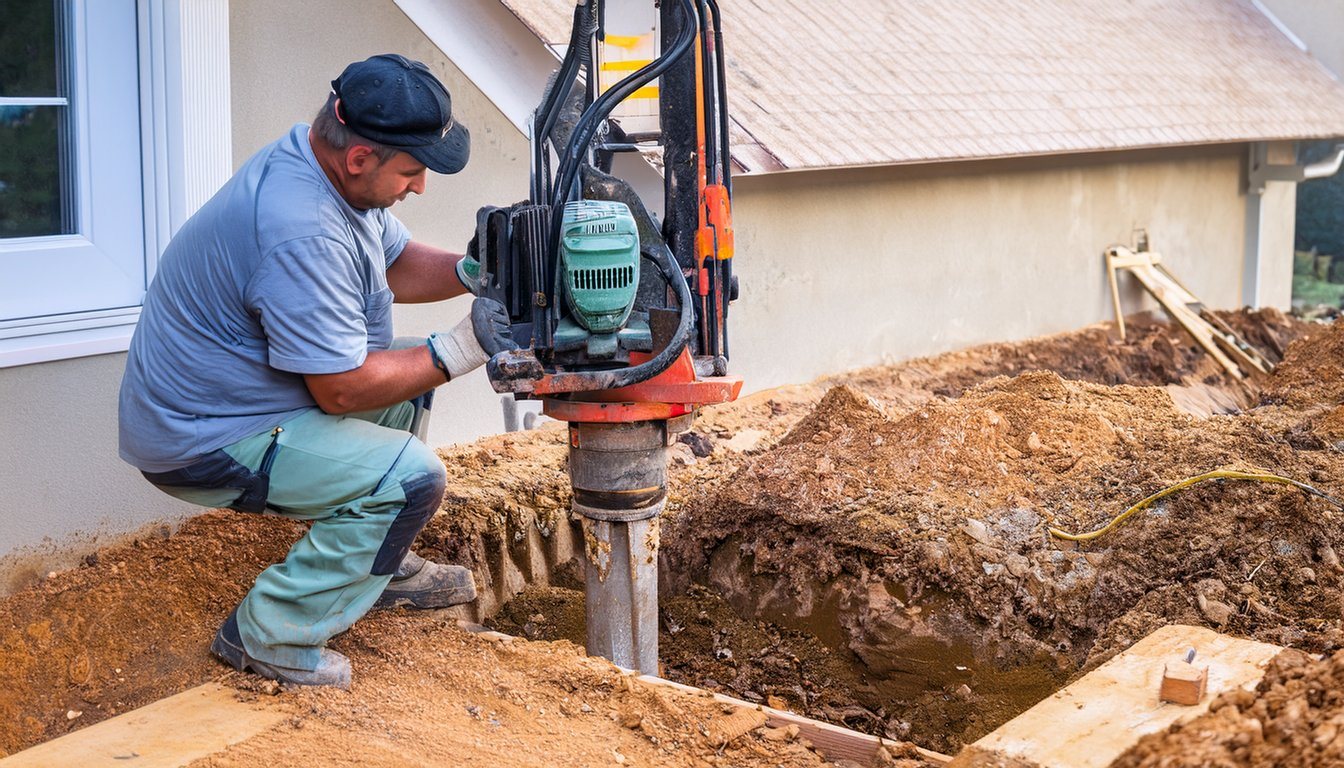
- Push piers are steel pipe sections driven hydraulically into the ground, using the weight of the house as the reaction to push against. They're installed in sections, so Today's Homeowner's separate "segmented" row can be confusing; the guide doesn't explain the difference, and we don't use that row below.
- Helical piers have steel plates shaped like a screw thread and are turned into the soil. The torque it takes to install them is used to judge their capacity.
- Concrete piers are poured or pressed concrete supports, and Today's Homeowner's range for them sits between its push and helical figures.
On these two sources' published ranges, push piers price lower per pier than helical piers. That's not a recommendation. Which type fits your house depends on the soil, the load and the access, and that's a call for the engineer who designs the repair, not the price sheet.
How a per-pier price becomes a total
Four things turn a per-pier number into a real bid.
The count. Piers go along the part of the foundation that has moved, at the spacing the design calls for. HomeGuide says "a typical residential home foundation often needs 5 to 10 piers". A single settled corner might need a few; a whole wall, many more. That's why the two bids in the opening can be so far apart.
The depth. A pier has to reach soil that can carry the load. Ram Jack, a pier manufacturer, puts it this way: "The number of piles and the depth of each pile is a crucial aspect of any foundation repair." For helical piers, HomeGuide says contractors typically charge a flat price per pier up to a standard depth, then add "$20 to $25+ per foot" beyond it. The "+" matters: the rate can be higher. In our experience, push-pier contractors handle depth in different ways, some with a set price to a target depth and some with a per-foot charge, so ask how each bid treats it.
The foundation type and access. Today's Homeowner notes that pier work on slab foundations generally costs the least, with crawlspaces more expensive and basements usually the most. In our experience, piers placed from outside the house are simpler than interior piers, which mean cutting through the slab or working in a tight crawl space, and then patching floors afterward.
The lines around the piers. In our experience, engineering, the permit, excavation, hauling and putting back landscaping, concrete walks or floor finishes are often listed separately. So is any plumbing or drainage work that caused the movement in the first place. A per-pier price that looks low may simply leave more of these out.
Worked example: nine piers
This is an illustration, not a Los Angeles quote. We picked nine piers because it sits inside both Today's Homeowner's 7 to 10 range and HomeGuide's 5 to 10 range. Each row uses one source's per-pier range times nine; don't add or average the rows.
| Basis | Per pier | Nine piers |
|---|---|---|
| Steel push piers (Today's Homeowner) | $1,500 to $2,500 | $13,500 to $22,500 |
| Helical piers (Today's Homeowner) | $2,500 to $3,500 | $22,500 to $31,500 |
| Helical piers, installed (HomeGuide) | $2,000 to $4,000 | $18,000 to $36,000 |
Now add depth. If each helical pier on the HomeGuide basis had to go 5 feet past the standard depth, at $20 to $25 or more per foot, that's 9 × 5 × $20 to $25, or $900 to $1,125 or more on top of the helical rows. That overage illustration uses HomeGuide's helical pricing model only; don't apply it to the push row. All three rows are before engineering, permits, access work and restoration.
The takeaway: the spread between sources is wide, and the count moves the total as much as the unit price does. If you want the bigger picture of what foundation repairs cost by problem, our foundation repair cost guide covers that.
Pier and beam repair is a different job
These prices are not the same as steel piers under a footing. In our experience, many older Los Angeles houses sit on a raised foundation with a crawl space, and "pier repair" on those houses often means work on the short concrete piers, wood posts and beams that hold up the floor, not new steel piers driven into the ground.
For that kind of work, Angi lists reshimming at "around $1,600 on average, with most jobs totaling between $1,200 and $2,000". It says "Replacing a single pier costs an average of $3,000, with most projects falling between $2,000 and $6,000", and that adding a pier runs "around $2,000 on average, with most projects falling between $800 and $4,000". Modernize lists replacing piers at $2,500 to $6,000 per pier.
In our experience, on a raised floor that sags, the fix is often a mix: new footings and posts in a few places, shims where the wood has shrunk, and sometimes new beams. If the perimeter foundation itself has settled, that's where steel piers can come back into the picture. Our guide to leveling a house foundation explains how raised floors and slabs are brought back to level, and our raised foundation cost guide covers building a new one.
What a pier bid should spell out
Whether you're getting two bids or five, ask each one to put these in writing so they can be compared:
- Pier type and count, and where each pier goes, ideally on a plan.
- Who designed the layout. In our experience, a repair laid out by an engineer is easier to permit and to compare than one sized by the salesperson.
- Depth included and the overage rate, per foot, if piers go deeper than planned.
- Installation records. For helical piles, one industry design guide says "Final torque should be measured with equipment appropriate for the project and recorded in a way the inspector can verify." In our experience, push-pier installers also keep a log of depth and pressure for each pier; ask for a copy.
- Restoration. What gets put back: landscaping, concrete, flooring, and to what standard.
- Warranty terms. Ram Jack's Dealers Association National Warranty Trust offers a "Limited Lifetime Transferable Warranty". That's one manufacturer's program; warranties vary by contractor, so read what yours covers and who stands behind it.
For what happens after the piers go in, including sign-off and the paperwork you should keep, see our guide to the foundation repair process.
Permits and engineering in California
Rules depend on where you live, so check with your city or county building department before work starts. As one example, San Jose states that "A building permit is required to repair or replace a foundation." Los Angeles County's building division, answering a question about foundation underpinning for a two-story addition on an existing footing, says its code has no provisions for that construction and "requires a structural design and details to be provided by a licensed civil/structural engineer or a licensed architect in the State of California" for that construction. That's a specific context, but in our experience it reflects how most local agencies treat structural foundation work: plan on an engineer and a permit. Our guide to foundation inspection requirements covers what inspectors look for.
Getting a pier repair priced
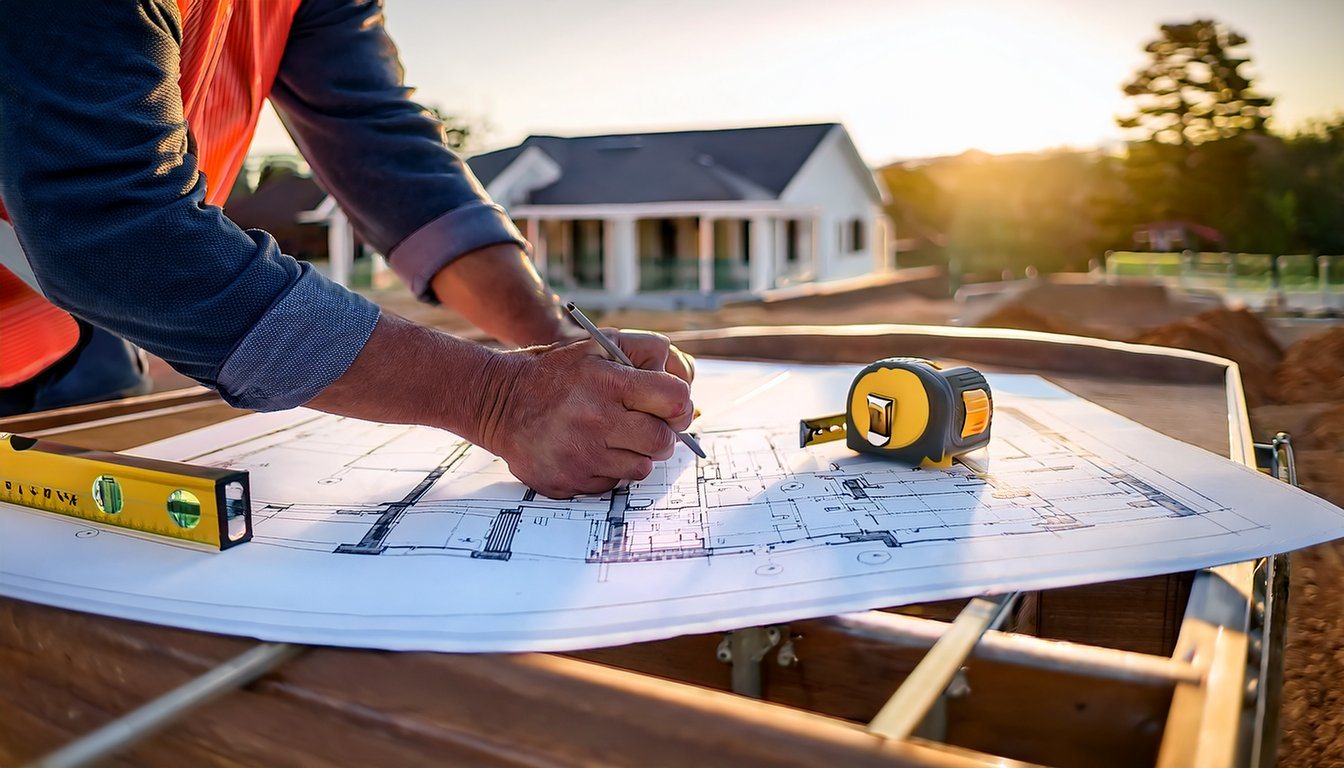
Start with the cause. In our experience, piers fix the symptom, a foundation that has moved, and don't fix the water, plumbing leak or drainage problem that made the soil move. A repair that includes both is usually the one that holds. Then get the engineer's layout, and ask every bidder to price that same layout, with depth, access and restoration spelled out. That turns a per-pier comparison into a real one. Our guide to choosing a foundation repair company covers how to judge the companies behind those bids.
Medici Construction Group is one licensed option for foundation repair, holding California A, B and C-10 licenses under CSLB #1114433. Whoever you hire, the plan, the pier count and the depth assumption are the three numbers to line up before you compare prices.
Frequently asked questions
How much does a foundation pier cost?
Published ranges run roughly $1,000 to $4,000 per pier, depending on the source and the pier type. Today's Homeowner lists steel push piers at $1,500 to $2,500 and helical piers at $2,500 to $3,500; HomeGuide puts installed helical piers at $2,000 to $4,000. Engineering, permits and restoration are usually separate.
How many piers does a house need?
It depends on the length of foundation that has moved and the spacing the design calls for. Today's Homeowner says most homeowners need 7 to 10 piers, and HomeGuide says a typical home often needs 5 to 10. A corner repair may need fewer; a whole side of the house, more.
How much does pier and beam foundation repair cost?
It's a different job from steel piers under a footing. Angi puts reshimming at $1,200 to $2,000 for most jobs and replacing a single pier at $2,000 to $6,000. Modernize lists replacing piers at $2,500 to $6,000 per pier. In our experience, beam or joist work adds more.
Are helical piers more expensive than push piers?
On the published ranges we used, yes, per pier: Today's Homeowner lists helical piers above steel push piers, and HomeGuide's helical guide describes push piers as the lower-cost option. The right type depends on the house and soil, which is the engineer's call.
Why does pier depth change the price?
Piers have to reach soil that can carry the load. HomeGuide says helical contractors typically charge a flat price per pier to a standard depth and add $20 to $25 or more per foot beyond it, so deeper soil means a higher bill.
Is a permit required to install foundation piers?
It depends on the jurisdiction, but in our experience, structural foundation work usually needs one. San Jose, for example, says a building permit is required to repair or replace a foundation. Check with your city or county building department before work starts.
Do foundation piers come with a warranty?
In our experience, many do, but terms vary by contractor and manufacturer. Ask for the warranty in writing, including what it covers, whether it transfers to a buyer, and who stands behind it if the installer closes.