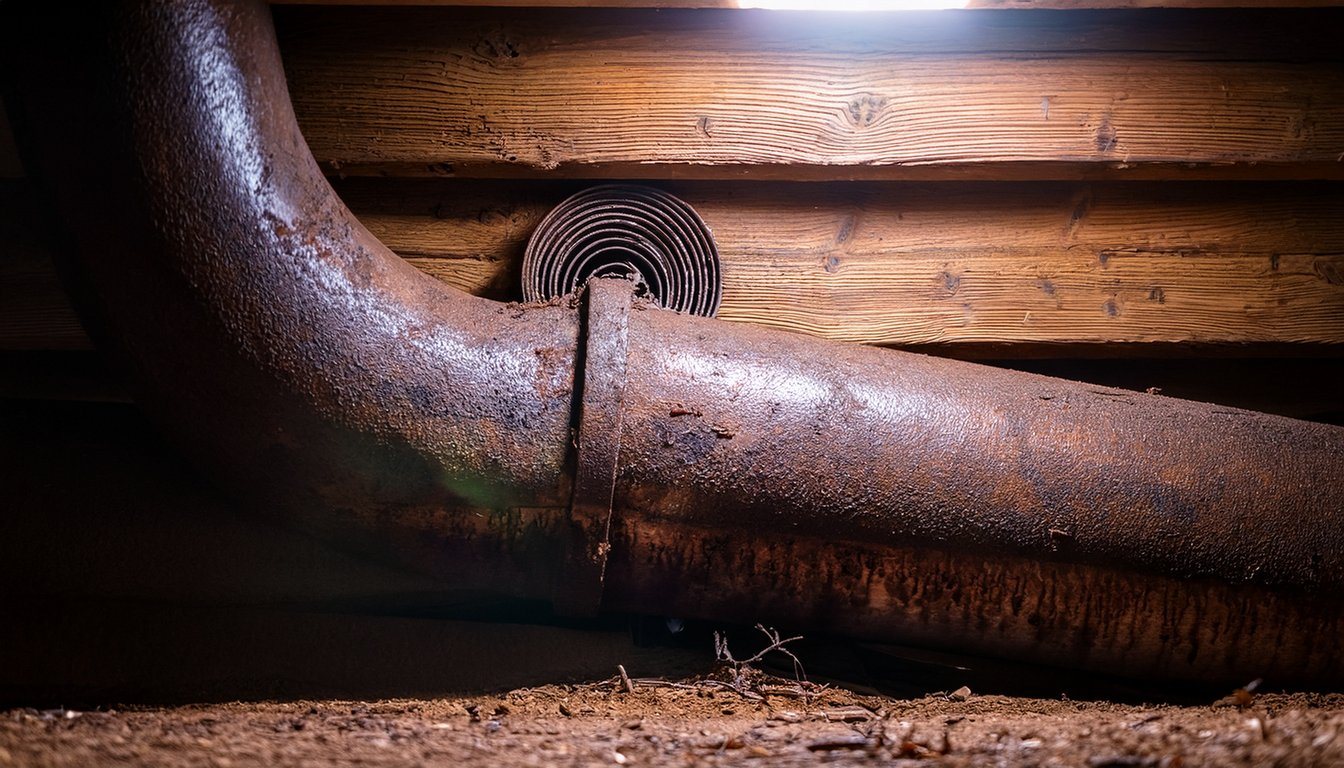
In our experience, a common pattern goes like this. A cast iron drain in a basement or crawl space starts weeping at one spot. Someone packs it with epoxy putty, and it holds for a few weeks. Then a damp patch appears a foot further along, and then another. The epoxy did what it was designed to do. The problem was the pipe it was stuck to.
A cast iron repair is only as good as the pipe it grabs onto. Epoxy, wraps and clamps work on sound metal around one small defect. Cutting in a new section works where the pipe on both sides is solid. When the metal around a leak is thin, the honest repair is a longer section, a liner or a replacement. So the first step is finding out how much of the run is sound, and the second is matching the repair to where the pipe is. Before anyone applies anything, confirm the line is a drain, not a gas or pressurized water line.
Quick answers
- Can it be repaired? Often, if the pipe around the damage is still sound.
- Quick fixes: epoxy, tape and coatings are bridges until a real repair, not the repair.
- Lasting fixes: a sleeve on solid pipe, a replaced section, lining, or replacing the run.
Can cast iron be repaired?
Yes, often, and a repair is sometimes exactly the right call. A single crack in an otherwise solid stretch, or one failed joint on a line that's in good shape, is a normal repair. The question is whether the rest of the run is in similar shape. Angi's cost guide gives a simple rule: "If repairing cast iron exceeds 50% of your replacement cost, your best bet is to replace them."
Western Rooter, a Southern California plumbing company, makes the same point from the field: when corrosion runs through a line, "patching individual sections becomes a losing game." In our experience, the way to know which case you're in is a camera inspection of the whole run, not a look at the one spot that's wet. Our guide to cracked cast iron sewer pipe explains what the video shows and why one crack can mean more than one repair.
Repair options, from quickest to most permanent
| Option | What it's for | What it isn't |
|---|---|---|
| Epoxy putty or repair wrap | Stopping a small leak in solid metal until a real repair | A structural fix |
| Tape, spray or coating | Slowing a drip for a short time | A plumbing repair |
| Repair sleeve or clamp | A crack or hole in otherwise sound pipe | A fix for thin, flaking pipe or a failed joint |
| Replacing a section | A bad stretch with solid pipe on both sides | A fix if the whole run is failing |
| Lining | A continuous run that still holds its shape | A fix for collapsed or sagging pipe |
| Replacing the run | Widespread damage, repeated leaks, a sag | The cheapest option |
Epoxy putty and wraps. This is what most of the videos show, and it has a place. J-B Weld says its WaterWeld putty is "Ideal for repairing plumbing, fuel tanks, tub and shower, drains, pool and spa, boats and potable water tanks", and the manufacturer lists a pressure rating that matters more for supply lines than for drains, which aren't under pressure. Western Rooter's view is that epoxy "can hold for several years on minor damage, but it doesn't restore structural strength." In our experience, it holds best on a small defect in clean, solid metal, and poorly on a large hole or on rust that keeps flaking under it. A big hole patched with putty or tape is a bridge until the section is replaced.
Repair sleeves and clamps. Western Rooter describes the sleeve plainly: "A stainless steel repair sleeve (sometimes called a band clamp) wraps around the outside of the pipe over the damaged area." Full-circle repair clamps are also made for pressure water pipe; Smith-Blair's submittal lists its clamps under "Water and Industrial" and notes that "The allowable working pressure of a pipe repair clamp decreases as pipe diameter increases (regardless of manufacturer)." In our experience, that rating matters for pressure lines, not drains. In our experience, on a drain a sleeve works when the metal under the gasket is solid; on paper-thin pipe it has nothing to grip. A leak at a hub or joint is also a different problem than a crack in the wall, and a clamp over the pipe body won't fix a failing joint.
Replacing a section. The damaged stretch is cut out and a new piece, cast iron or plastic, is set in with couplings at each end. This is a lasting repair when the pipe at both ends is sound. Our guide to cast iron to PVC sewer pipe covers how those couplings should be made and where the new pipe should start and stop. In our experience, don't cut or clamp an active stack yourself; a vertical stack carries weight and needs support before any section comes out.
Lining. For a buried or under-slab run that's continuous and still holds its shape, lining from inside can often seal it without digging. A camera inspection decides whether it fits; our sewer pipe lining cost guide covers what it involves.
Replacing the run. When the camera shows damage along much of the line, a sag, or repeat failures, replacement is usually the better buy. Our cast iron replacement cost guide covers pricing by location. Whatever you do in the meantime, any temporary fix should be followed by a proper inspection.
Where the pipe is changes the answer
The same crack calls for different work depending on how you reach it. In our experience:
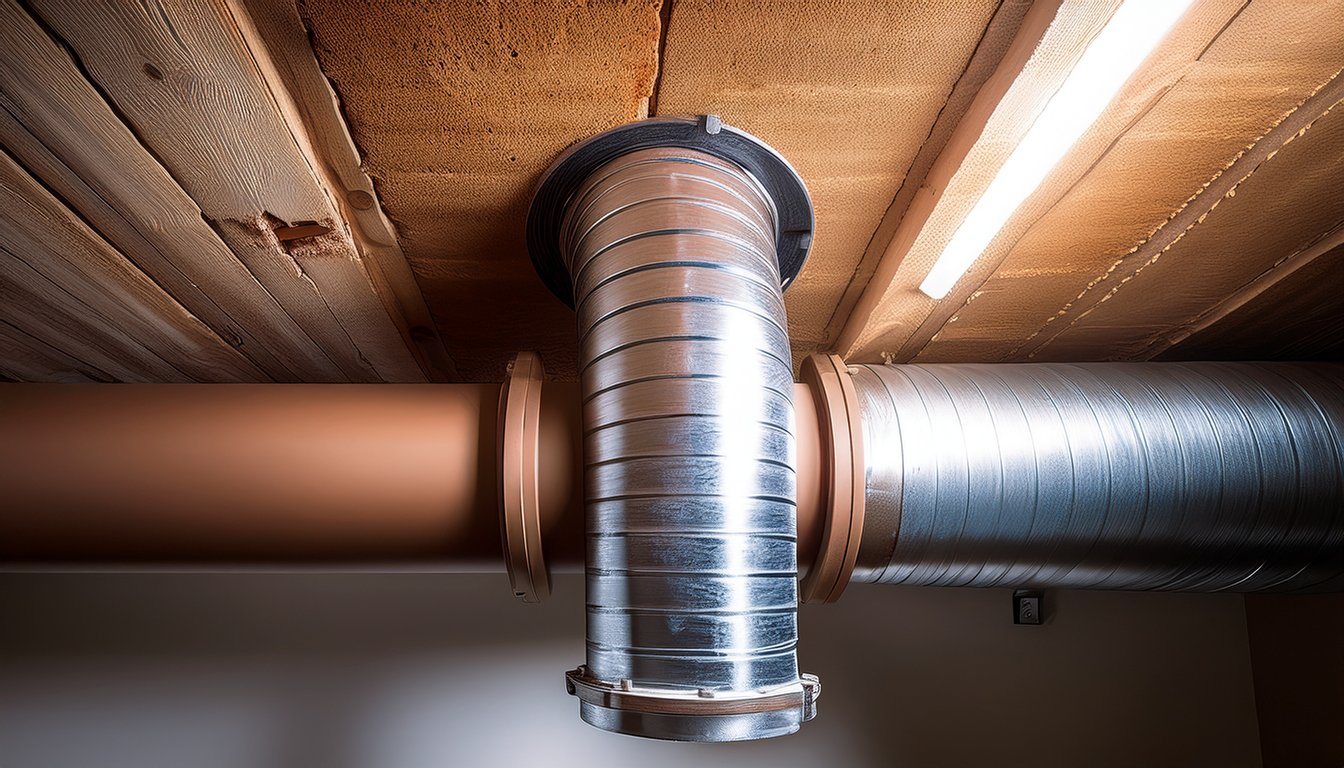
- Exposed in a basement or crawl space: the easiest case. A sleeve or a replaced section is usually simple if the pipe on either side is sound.
- Inside a wall: the wall has to be opened, so the repair usually covers more pipe than the leak, and the patching adds to the cost.
- Buried outside: excavation or a trenchless method; see our lining cost guide.
- Under a slab: the most expensive access; our cast iron replacement cost guide covers the options.
The metal next to the leak
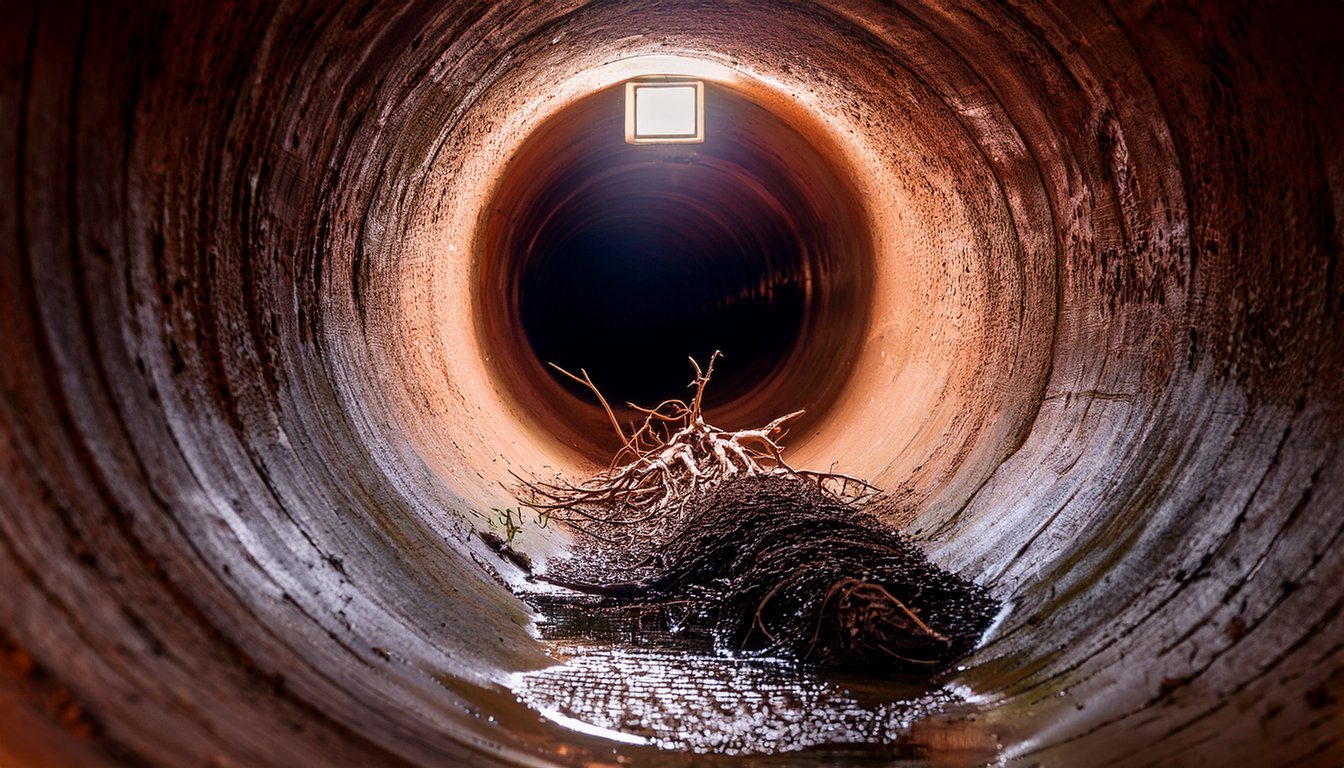
Most failed cast iron repairs we see failed beside the repair, not at it. Cast iron often wears from the inside, and in our experience the bottom of a horizontal line can be much thinner than the outside suggests. A patch or sleeve sealed to that metal holds only as long as the metal does. That's why a camera inspection before choosing a repair is worth more than any product: it shows whether you're fixing one spot or starting a series. Our guide to descaling cast iron sewer pipe explains how scale hides what the pipe wall looks like.
Permits
Whether a repair needs a permit depends on the work and where you live. One California example is Santa Cruz County, which says a permit is required when plumbing, gas or drainage piping work "is installed, altered, repaired, or replaced unless specifically exempted by the California Plumbing Code or by County Ordinance." Its exemptions include "Stopping of leaks in drains, soil, waste or vent pipe" and repairs that "do not involve replacement or rearrangement of pipes, valves, or fixtures." Los Angeles rules may differ; our cracked cast iron guide covers the LA permit side. In our experience, replacing a section is the point where a permit usually applies.
Odor and leaks: why not to wait
A leaking drain can let sewer gas into the house. The CDC's Agency for Toxic Substances and Disease Registry (ATSDR) says hydrogen sulfide "has a characteristic rotten-egg odor that is detectable at concentrations as low as 0.5 ppb" and "is released from sewage sludge, liquid manure, sulfur hot springs, and natural gas." If you smell it, ventilate, stay out of crawl spaces and other tight spaces, and have the line checked rather than masking the smell.
What to do until the repair
A leaking drain only leaks when something drains through it, which gives you some control while you line up a repair. In our experience, these steps limit the damage:
- Find out which fixtures feed the leak and use them as little as possible. A leak under a kitchen drain line gets worse with every load of dishes; one under a toilet branch gets worse with every flush.
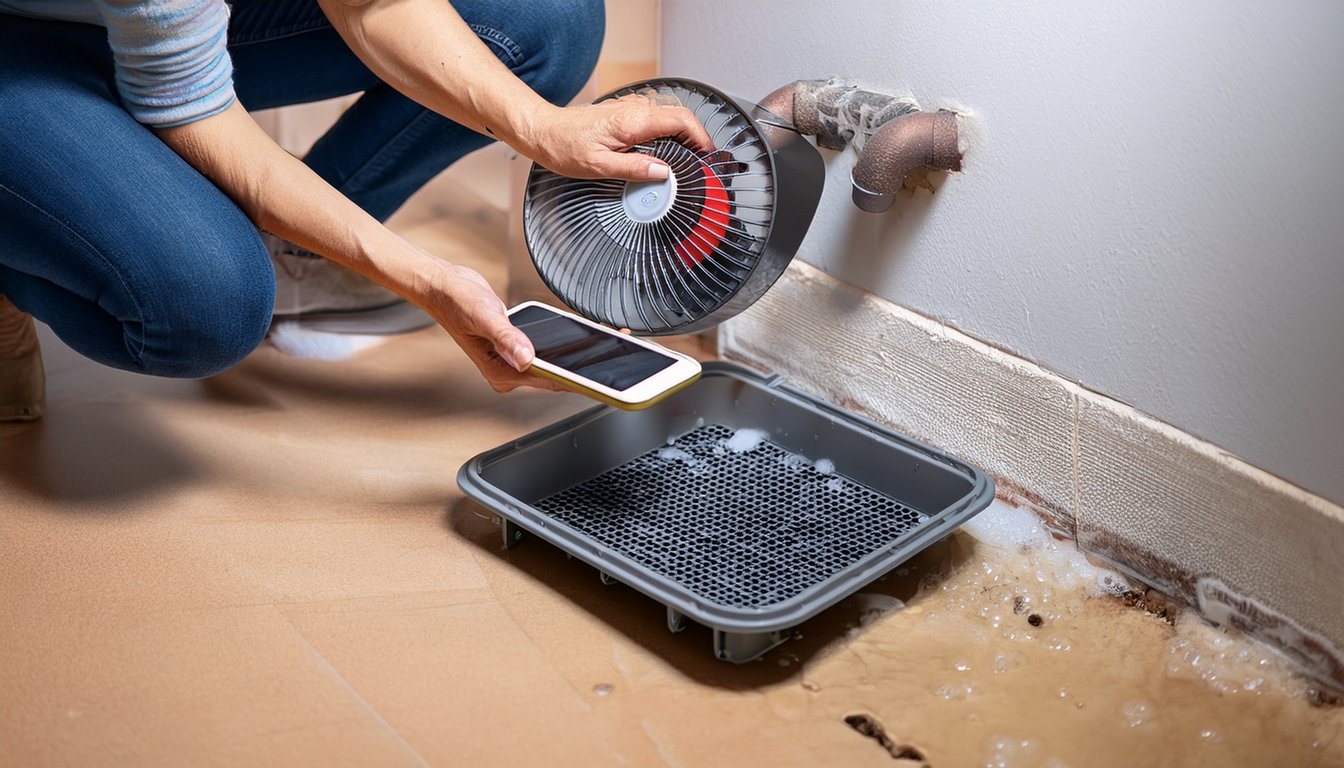
- Catch and dry what you can. A tray or bucket under an exposed leak and a fan in a damp crawl space help keep water out of wood framing and insulation.
- Skip chemical drain cleaners. They add nothing to a leak repair; ask your plumber before using anything in the line.
- Take photos and note when it leaks. A leak that shows up only when a certain fixture runs tells the plumber where to look.
Questions for a cast iron repair quote
- Did you camera the whole run, and can I see the video?
- Is this repair temporary or permanent, and does the quote say so in writing?
- How much pipe on either side of the damage is sound?
- If a section is replaced, what material and couplings, and where does it start and stop?
- Does it need a permit and inspection?
- What happens, and what does it cost, if the next section fails?
The bottom line
Match the repair to the pipe around the leak, not the leak alone. A quick fix buys time, a sleeve or a new section lasts on sound pipe, and widespread damage calls for lining or replacement. Medici Construction Group is one licensed option for cast iron drain and sewer repair, holding California A, B and C-10 licenses under CSLB #1114433.
Frequently asked questions
Can you repair a cast iron pipe leak?
Often, yes, if the pipe around the leak is still sound. A small crack in solid metal can take a sleeve, and a bad stretch can be cut out and replaced. Epoxy or tape on a large hole is only a bridge until a real repair, and a leaking joint needs different work than a cracked wall.
Can J-B Weld be used on cast iron pipe?
The manufacturer says its WaterWeld putty is ideal for repairing plumbing and drains. In our experience, epoxy putty holds best on a small defect in clean, solid metal, and it's a stopgap on a drain line rather than a permanent repair. Plan a follow-up inspection.
Will Flex Seal work on cast iron pipe?
In our experience, a spray or tape coating isn't a plumbing repair. At most it slows a drip until someone can look at the pipe properly, and it can make the metal underneath harder to judge. Treat it as a stopgap and get the pipe inspected.
What is a cast iron pipe repair sleeve?
Typically a stainless steel band with a rubber gasket that wraps around the pipe and clamps over the damaged spot. It works when the metal under it is solid. On thin, flaking pipe it has nothing sound to grip, and the leak tends to move to the next weak spot.
How much does cast iron pipe repair cost?
It depends on the method and access. Western Rooter, a Southern California plumber, puts a sleeve on exposed pipe at a few hundred dollars, more if it's buried or behind walls. Cutting in a new section, lining or replacing a run usually costs more; our cast iron replacement cost guide covers those.
Do I need a permit to repair a cast iron pipe?
It depends on the work and where you live. In one California county's rules, stopping a leak is exempt but repairs that replace pipe are not. In our experience, replacing a section usually needs a permit; check with your local building department.
When should cast iron be replaced instead of repaired?
Angi's rule of thumb is to replace once repairing costs more than half of replacement. In our experience, repeated leaks along the same run, heavy scale or a sagging line are also signs that repairs have stopped paying off.