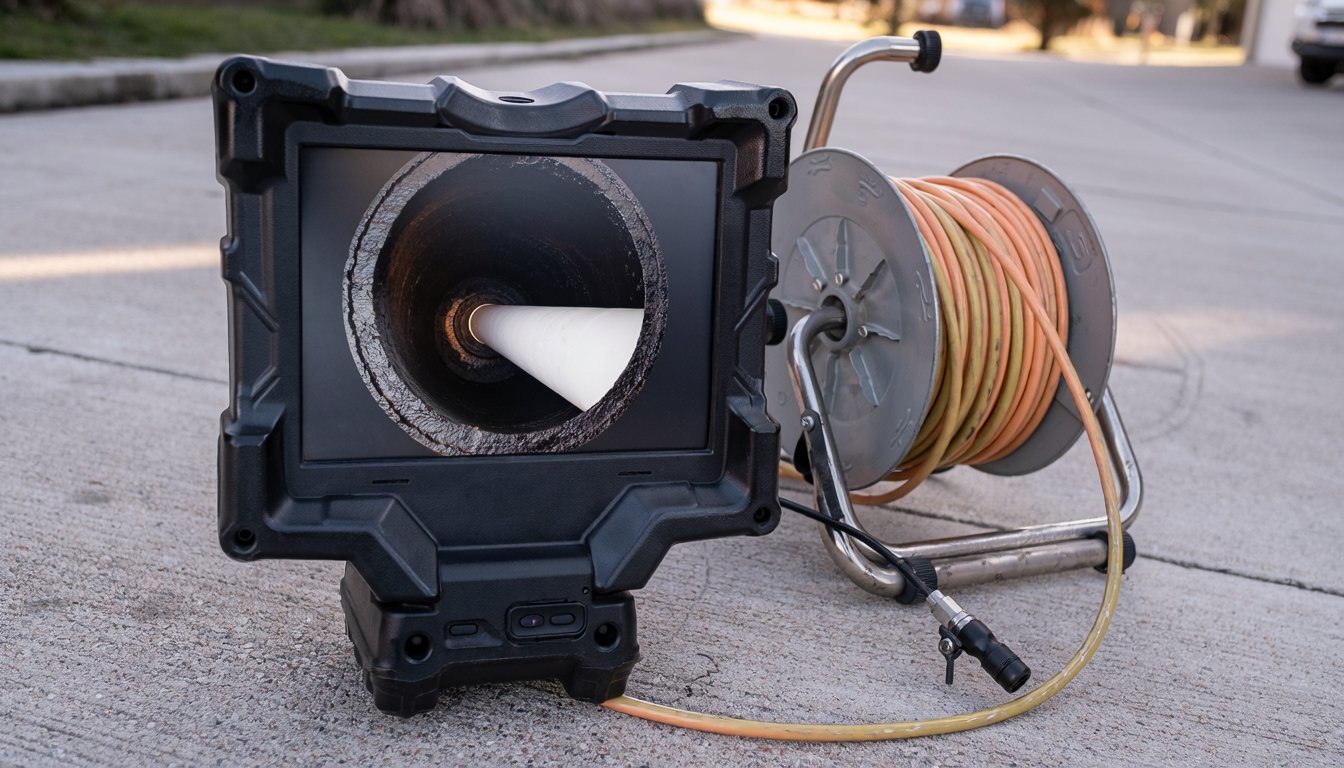
A scene we've seen more than once: an owner replaces the cast iron sewer under the yard with new PVC. About a year later there's a slow leak and a sewer smell under the house. The camera shows the new PVC is fine and the coupling is tight. The problem is the old cast iron a few feet past the joint, which had rotted through along the bottom while the new pipe was going in.
That's the real story behind cast iron to PVC. The new pipe is rarely what fails. The decisions that matter are where the PVC should start and stop, which cast iron is worth keeping, and how the joint between the two is made. This guide covers all three.
Quick answers
- Can you replace cast iron with PVC? Usually, yes, the whole run or a damaged section tied into sound cast iron.
- Where it matters most: buried sewer lines are the easiest switch; drains inside walls raise noise and fire questions.
- The weak point: the transition joint and the old iron beside it, not the new PVC.
Should you replace cast iron with PVC?
For a buried sewer line, PVC is the common modern choice, and in our experience it's the right one for most single-family homes. It's lighter and easier to handle than cast iron. Charlotte Pipe, which makes both materials, notes PVC's "relatively low cost". Cast iron has real strengths too: the same manufacturer says "extra-heavy soil pipe can withstand up to a 58% greater crush load than service" weight pipe and that its "graphite content provides cast iron with natural corrosion resistance to sanitary effluents."
So the choice usually isn't about which material is better in general. It's about the condition of the line you have and where the pipe runs. A sewer camera inspection shows whether the cast iron is cracked, scaled or rotted through, and our cracked cast iron guide explains what those findings mean. What replacement costs depends mostly on where the pipe runs, which our cast iron sewer pipe replacement cost guide covers.
Where PVC fits and where cast iron still earns its place
Buried under the yard. This is where PVC is at its best, as long as it's installed right. Because it's flexible, it depends on the soil around it for support. Charlotte Pipe notes that PVC "requires specific techniques for burying" under ASTM D2321, including "a minimum of 4 inches of firm, stable, and uniform bedding material". In our experience, poor bedding is a more common problem with buried PVC than the pipe itself.
Inside walls and ceilings. Here the case for keeping cast iron is stronger. The cast iron industry group, CISPI, claims that cast iron soil pipe and fittings "create a plumbing system that is twice as quiet as an all-plastic system," a point it makes for buildings like high-rise condos and hotels. That's an industry claim, but the underlying point is familiar to anyone who has heard water rush through a plastic drain in a bedroom wall.
Through fire-rated floors and walls. The same group notes that "Plastic piping will combust and lose its strength, leaving a hole that lets smoke and flame through," so plastic through a rated assembly typically needs an approved firestop. In our experience, this matters most in multi-unit buildings and in houses with attached garages, where rated separations are common.
Long runs that see temperature swings. Charlotte Pipe notes that "Plastics will expand and contract four to five times more than metallic systems." For a buried sewer that barely changes temperature this typically matters little; for long exposed runs it affects how the pipe is supported.
Where to stop: choosing the transition point
On a partial replacement, the transition point is the most important decision in the job. In our experience, a good one has three things going for it:
- Sound pipe. The cast iron at the joint is round, solid and not scaled thin. The camera should see a few feet past the planned joint, not just the damaged section.
- Access. The joint sits somewhere it can be reached again: near a cleanout, at the foundation line, or in a crawl space, rather than buried mid-slab where nobody will see it.
- A logical break. It lines up with a change in the job, such as where the yard line meets the house, so the new and old sections each have a clear purpose.
If the cast iron on the far side of the joint is already heavily corroded, the honest answer may be that there is no good transition point, and the whole run should go. In our experience, owners are often surprised that a full replacement can cost less over a few years than two or three partial repairs, each with its own excavation, permit and new joint. The camera video is what makes that call honest, so ask to see the footage beyond the damaged section, not just the clip of the break.
How a cast iron to PVC replacement is done
This is licensed work, and a buried sewer replacement normally needs a permit. The steps, from a contractor's point of view:
- Camera the line to find the damage and check the pipe on either side.
- Locate and expose the section, including the planned joint location.
- Remove the damaged cast iron back to sound pipe, as described above.
- Make the transition with the right coupling, covered in the next section.
- Bed and support the new PVC at the correct slope.
- Test and inspect before the trench is closed, then camera the finished line.
How the joint should be made
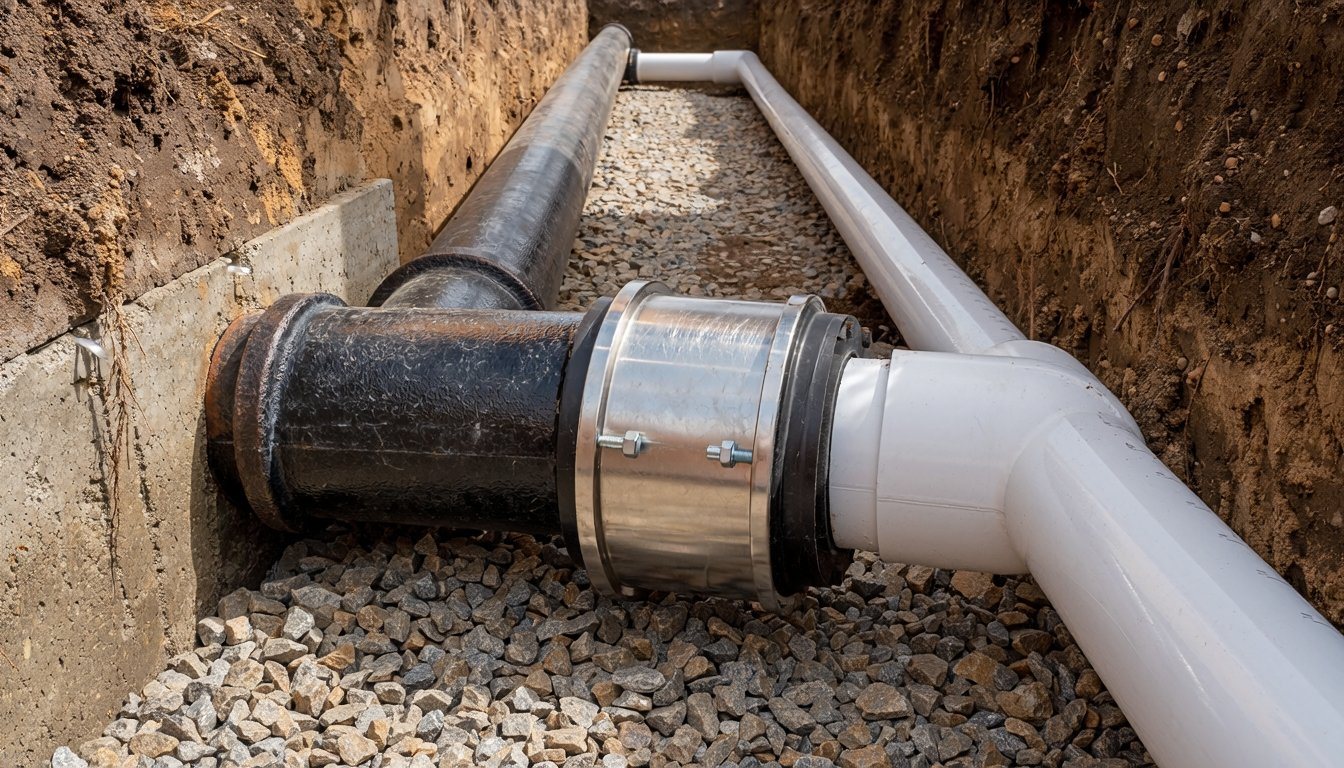
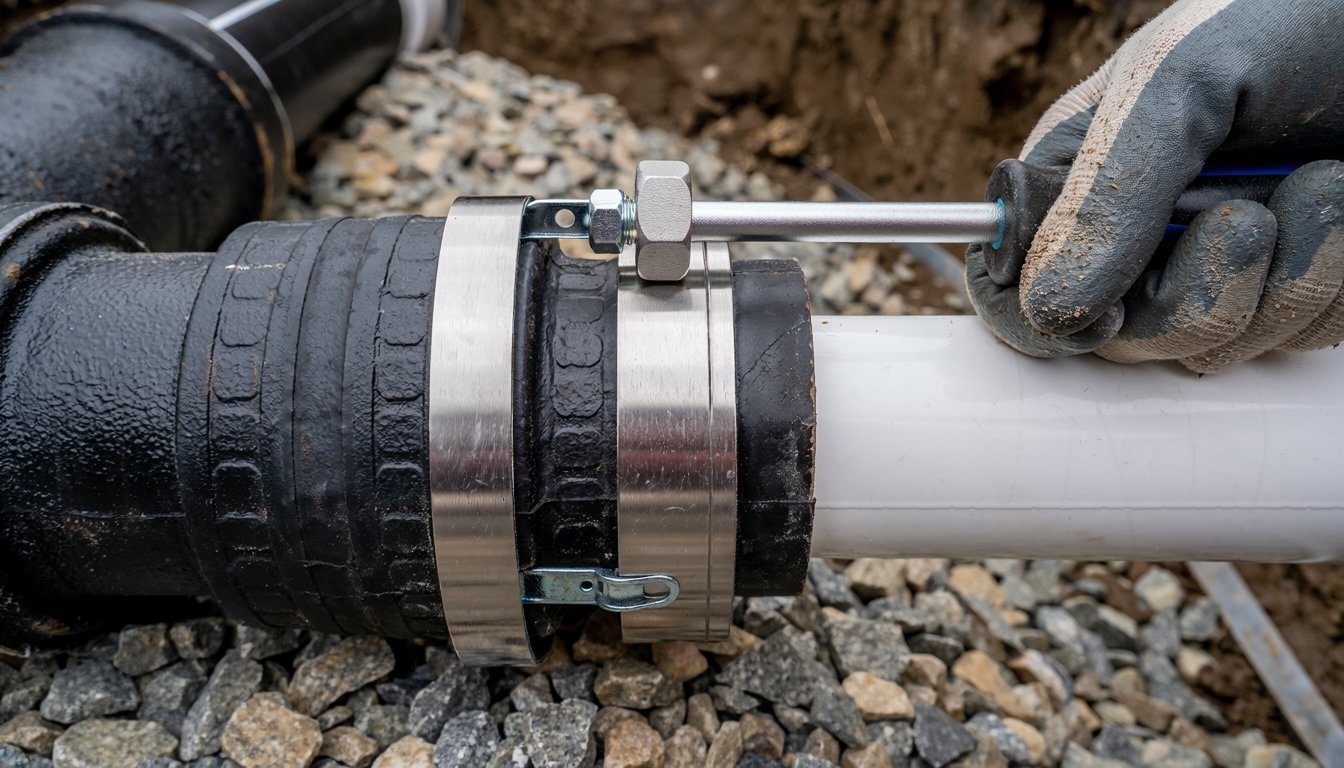
In our experience, cast iron and PVC of the same nominal size often differ in outside diameter, and old cast iron generally comes in two joint styles: hub-and-spigot and hubless. The coupling has to match both.
Hubless cast iron. ASTM C1277 "covers the materials and testing of shielded hubless couplings to join hubless cast iron soil pipe and fittings." The standard names CISPI 310, FM 1680 and ASTM C1540 as comparable specifications.
Hub-and-spigot cast iron. ASTM C564 (2008 edition) "covers preformed rubber gaskets used to seal joints in cast iron soil pipe and fittings." In our experience, PVC pushed into an old hub with no proper gasket, or with a gasket made for different pipe, is one of the most common leaking joints we find.
Joining the two materials. Transition couplings are made for exactly this. Mission Rubber describes its specialty line as "Shielded, transition couplings designed to connect similar and dissimilar pipe materials and sizes." That line is recommended for above-ground, non-pressure use and doesn't list buried joints, so check with the manufacturer before burying one. For buried transitions, local rules may be stricter; one Northern California district's standard drawing calls for a "FOUR BAND SHIELDED REPAIR COUPLING AT MATERIAL TRANSITIONS AS APPROVED BY THE DISTRICT." Check your own jurisdiction's requirement. Our clay pipe repair guide explains why shielded couplings matter underground.
In our experience, the other common mistakes are an unshielded rubber sleeve buried in the ground, where soil load can push the pipes out of line, and a joint left without support so the new pipe sags away from the old.
PVC, ABS and what your jurisdiction allows
"PVC" is often used loosely for any plastic drain pipe, but there are several products, and local rules decide which ones can be buried. One Northern California district, South Placer Municipal Utility District, specifies for the upper lateral of a building sewer ductile iron, vitrified clay, or plastics such as "ABS Schedule 40 ASTM designation D2661, PVC SDR 26 ASTM designation D3034, or DWV Schedule 40" pipe. Other agencies write their own lists. In our experience, the practical point for an owner is simple: the quote should name the exact pipe, not just "PVC," and it should match what your building department accepts for a buried building sewer.
Signs a tie-in is failing
A transition that's going bad usually announces itself before it floods anything. In our experience, the common signs are a sewer smell under the house or in a crawl space, a damp or sunken spot in the yard over the joint, slow drains that come back soon after clearing, and roots showing up on a camera video at the joint. Any of these near a known cast iron to PVC transition is worth a camera look, because the fix is usually cheaper while the problem is still a leak rather than a break.
The cast iron you leave behind
Every partial job leaves some cast iron in service. In our experience, that pipe deserves the same scrutiny as the section being replaced. Heavy internal scale can hide thin walls; our descaling guide covers when cleaning it out makes sense. Lining the remaining cast iron is another option we'll cover in its own guide. What doesn't make sense is spending money on a perfect PVC section and a perfect joint that connect to pipe on its last legs. Our cast iron pipe repair guide covers the options when that remaining pipe starts to leak.
Permits
Replacing a building sewer is permitted plumbing work in most places, and the inspection before backfill is the one chance anyone has to check the joint and bedding. The Los Angeles permit steps are covered in our cracked cast iron guide.
Questions for a cast iron to PVC quote
- Whole run or partial? And what the camera showed beyond the planned joint.
- Where is the transition? Location, access, and why there.
- What coupling? Type and rating for buried or above-ground use.
- What bedding and support? For the new PVC and at the joint.
- Permit and inspection? Who pulls it, and when it's inspected.
- Post-job camera video? Through the new pipe and the joint.
The bottom line
Switching cast iron to PVC is usually a good move for a buried sewer. Choose where the new pipe stops, make the joint with the right coupling, and check the iron you keep. Medici Construction Group is one licensed option for cast iron sewer replacement, holding California A, B and C-10 licenses under CSLB #1114433.
Frequently asked questions
Can I replace cast iron sewer pipe with PVC?
In most cases, yes. A buried cast iron sewer can usually be replaced with PVC, either the whole run or a damaged section tied into sound cast iron. The pipe itself is the easy part; where the new pipe stops and how it's joined decide whether the job lasts.
Can you connect PVC to cast iron?
Yes, with a transition coupling made for the two pipes' outside diameters. Couplings with a rubber sleeve and a stainless steel shield are the usual choice. Pushing PVC into an old cast iron hub without the right gasket, or using an unshielded sleeve underground, invites leaks.
What kind of coupling joins cast iron to PVC?
A shielded transition coupling sized for both pipes. Above ground, specialty transition couplings are made for joining cast iron to plastic. For buried joints, local rules may be stricter; one Northern California district's standard drawing calls for a four-band shielded coupling at material transitions.
Is PVC louder than cast iron?
Usually, yes. The cast iron industry group says a cast iron system is twice as quiet as an all-plastic one. That matters most for drain lines inside walls and ceilings near bedrooms, and much less for a sewer line buried under the yard.
Can PVC pass through a fire-rated floor or wall?
It can, with the right firestop. The cast iron industry group says plastic pipe through a fire-rated assembly typically requires an intumescent firestop assembly, because plastic burns and leaves an opening. Your plans and inspector confirm the approved method.
When is it safe to replace only part of a cast iron line?
When the camera shows one damaged section and the cast iron on both sides is still round and sound. If the rest of the run is heavily corroded or cracked, a partial replacement often moves the next failure a few feet down the line.
Do you need a permit to replace a sewer line with PVC?
Usually. Replacing a building sewer or drain line is plumbing work that many California jurisdictions permit and inspect before the trench is closed. Our cracked cast iron guide covers the Los Angeles permit steps.