Two sewer lining quotes for the same house can be thousands of dollars apart, and often it's because they aren't lining the same pipe. One covers the drain under your slab, another the run across the yard, a third the section under the street. Per-foot averages only mean something once you know which of those is in the quote.
HomeAdvisor puts cured-in-place pipe (CIPP) lining at "$90 to $250 per foot". This guide explains where your job falls in that range: which part of the line is being lined, who owns it in Los Angeles, what kind of liner you're paying for and the standards it should meet. For how lining compares with pipe bursting and spot repair, and the pipe conditions that rule trenchless out, see our trenchless sewer repair cost guide.
Quick answers
- Per foot: HomeAdvisor lists CIPP lining at $90 to $250 per foot.
- Small repairs: HomeAdvisor lists a broken or cracked pipe repair at $600 to $1,050.
- Why quotes differ: which segment is lined (under the slab, the yard or the street), the liner type, and access.
- Under the slab: replacing a line by trenching under a slab adds $300 to $350 per foot by HomeAdvisor's figures, which is where lining tends to save the most.
- Who owns it in LA: you own the entire lateral, including the part under the street.
- Rebate: LA Sanitation offers up to $2,500 for qualifying lateral repairs; confirm with the city that your method qualifies.
What sewer pipe lining costs
National cost guides give a wide range because lining jobs vary so much. HomeAdvisor's figures:
| Item | HomeAdvisor range |
|---|---|
| CIPP lining | $90 to $250 per foot |
| Broken or cracked pipe repair | $600 to $1,050 |
| Camera inspection | $100 to $500 |
The per-foot number multiplies against length, so a long run from a house set back on a deep lot costs more than a short one, and HomeAdvisor also names the "depth of your line" as a price driver. In our experience, lining crews also carry a minimum charge for mobilizing equipment, so a very short liner rarely prices out at the per-foot rate alone.
The camera inspection comes first, because nobody can price lining accurately without seeing the pipe. Our sewer camera inspection guide covers what that video should show.
Why two quotes for "the sewer line" differ
The pipe that carries your wastewater to the city's main is really three segments, and a lining quote can cover any of them.
The building drain under your slab. On slab-on-grade homes, part of the line runs under the floor. Replacing it the traditional way means cutting the slab, and HomeAdvisor puts "Under-slab trenching" at $300 to $350 additional per foot. That premium is why lining is so often chosen for under-slab lines: it avoids the trench. In our experience, under-slab lining needs a way in, usually a cleanout or a small opening, and more branch connections to reopen than a yard run.
The upper lateral. LA Sanitation divides the private sewer line into "an upper lateral (from your building to your property line) and a lower lateral (from your property line to the middle of the street)". The upper lateral, under your yard or driveway, is the most common lining job we see.
The lower lateral under the street. Many owners assume the city owns the part under the street. It doesn't. LA Sanitation says owners must maintain and repair their whole lateral. Work in the public right-of-way also has its own rules: the city's Bureau of Engineering says it requires a Bonded Sewer Contractor under LAMC 64.15(e). In our experience, street work also brings traffic control and more coordination, so the same footage costs more there.
| Segment | Where it runs | What tends to add cost |
|---|---|---|
| Building drain | Under the house slab | Access openings, more branch connections to reopen |
| Upper lateral | House to property line | Length, depth, driveway or hardscape at access points |
| Lower lateral | Property line to the middle of the street | Bonded sewer contractor, street permit, traffic control |
Before comparing prices, ask each contractor which segments and how many feet their quote covers. Two quotes that look far apart often turn out to be pricing different lengths of pipe.
What you're paying for: the liner
"Lining" covers more than one product, and that's the other reason per-foot prices vary. For how a liner is installed step by step, see how trenchless sewer repair works. For drains inside the house, our guide to cast iron pipe lining covers why old cast iron costs more to line.
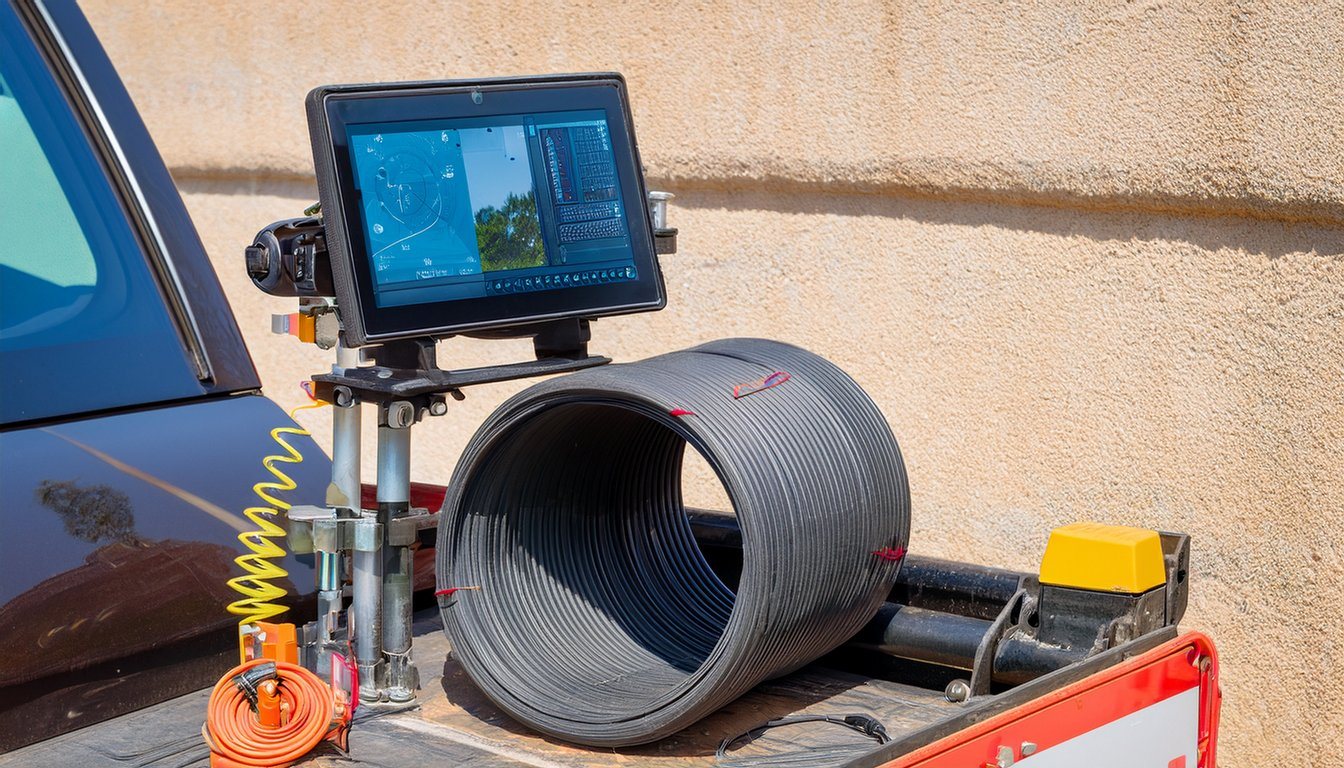
Cured-in-place pipe (CIPP). This Old House says pipe lining repairs involve "installing a new pipe liner inside the old, failing pipe." With CIPP, the liner is a resin-soaked tube that hardens in place. How it hardens varies: "Cured-in-place pipes require that their resin be cured after installation to achieve full strength, by hot water or steam or, if a fiberglass tube is used, by UV light."
Spray or spin-cast coatings. Instead of a tube, some systems coat the inside of the pipe. HomeGuide lists spin-casting at "$80–$250" per linear foot, a band that overlaps CIPP's. In our experience, "epoxy lining" in quotes can mean either a resin tube or a coating, so ask which one you're getting.
Point or sectional liners. A short liner that covers one damaged section instead of the whole run. In our experience, it's usually the least expensive lining option when the rest of the pipe is in good shape.
The standards to ask about
NASSCO, an industry association for sewer and pipeline work, publishes a CIPP specification that sets out what a liner should be made of and how it should be designed. It says the tube should "meet the material requirements of ASTM F1216, ASTM F1743, or ASTM F2019." On design, it says "The CIPP shall be designed as per ASTM F1216 Appendix X1, ASTM F2019 Appendix X1, or ASCE MOP 145."
You don't need to read the standards. In our experience, asking a contractor which standard their liner meets and how its thickness was chosen for your pipe tells you a lot. A solid answer names a standard; a vague one is a reason to ask more questions. Get the warranty terms in writing too, including what they cover and for how long.
Design life, video and warranty
The same NASSCO guideline answers three questions owners ask about what they are paying for. On lifespan, it says "The CIPP shall be designed for a life of 50 years or greater and an equal service life." On proof, it calls for a closed-circuit television inspection after lining and says "Unedited digital documentation of the inspection shall be provided to the Owner within ten (10) working days." On connections, it puts the burden on the installer: "It is the Contractor's responsibility to make sure that all active service connections are reconnected." And its model warranty is short: "The Contractor shall warrant the CIPP material and installation for a period of one (1) year."
The guideline is written mainly for public sewer agencies, so a home lateral contract won't always follow it. In our experience, it is still a useful yardstick. A quote that promises a liner "good for 50 years" should also name the design standard behind that number, include unedited after-lining video, and spell out the warranty term. A longer warranty than one year is worth comparing across bids, but ask what it covers: the liner material, the installation, the reopened connections, or all three.
Lining vs replacement: when lining isn't the right buy
This Old House describes CIPP as suited "for minor cracks and leaks in pipes that are otherwise structurally sound". Lining also needs a clear path: "Obstructions in the existing pipeline, such as protruding laterals, must be removed prior to installation." A collapsed section, a badly sagging run or a pipe full of roots may need digging instead, or at least a spot repair before the rest is lined. Our trenchless sewer repair guide covers those disqualifiers in detail, our sewer line replacement cost guide covers what digging costs, and our root intrusion cost guide covers what dealing with root damage costs at earlier, less severe stages. Our guide to pipe bursting vs pipe lining walks through five questions that decide between the two.
In our experience, the lining-or-replacement decision usually comes down to three questions: is the pipe still round and continuous, is its slope still right, and how much of the run is damaged. If the pipe has kept its shape and damage runs along much of the line, lining often wins on disruption. If a section has lost its shape or holds water in a belly, replacement is the fix, and a single bad section may only need a spot repair.
LA permits and the lateral rebate
LA's Bureau of Engineering says an S-Permit is required to "connect to the City of Los Angeles sewer system." Work in the street goes through that permit system and a bonded sewer contractor; our sewer line replacement cost guide covers the permits and street restoration. For other ways to cover the cost, see how to pay for sewer line replacement.
LA Sanitation runs a sewer lateral repair rebate of "up to a $2,500 rebate" for "rate paying property owners who own residential, multifamily, commercial, and industrial property, and who pay sewer service charge to the City of Los Angeles". The rebate application asks for permit and inspection documentation, including a camera video, so plan for it before the work starts. The page describes repairs generally and doesn't separate lining from replacement, so confirm with LA Sanitation that your job qualifies before counting on it.
How to compare sewer lining quotes
In our experience, putting every quote into the same format is the fastest way to see what's really different. For each one, write down:
- Segments and footage. Under-slab, upper lateral, lower lateral, and how many feet of each.
- Access. Which cleanouts or openings they'll use, and whether any new cleanout or pit is included.
- Preparation. Whether cleaning or descaling before lining is in the price. For cast iron specifically, our cast iron pipe descaling cost guide covers what that prep step should cost on its own.
- Liner type and standard. Tube or coating, cure method, and the standard it meets.
- Connections. How many branch connections will be reopened after lining.
- Video. Before and after camera footage handed to you.
- Permits. Which permits are needed and who pulls them.
- Warranty. Terms in writing.
If a sewer backup is what started this, our sewer backup repair cost guide covers the cleanup side. When you're ready to hire, check the license first; our guide to checking a California contractor license walks through it. Medici Construction Group is one licensed option for sewer line repair and lining, holding California A, B and C-10 licenses under CSLB #1114433. Whoever you hire, ask for the quote broken out by segment so you can compare it with the others.
Frequently asked questions
Why do sewer lining quotes for the same house differ so much?
Usually because they cover different segments or lengths of pipe: the drain under the slab, the upper lateral in the yard, or the lower lateral under the street. Liner type and access also change the price.
How much does it cost to line a sewer pipe under a slab?
Lining uses the same per-foot pricing, but the comparison matters: HomeAdvisor lists under-slab trenching at $300 to $350 additional per foot for traditional replacement, which is what lining avoids.
Is epoxy pipe lining cheaper than CIPP?
Not necessarily. "Epoxy lining" often refers to the same resin-lining category, and published ranges overlap: HomeAdvisor lists CIPP at $90 to $250 per foot and HomeGuide lists spin-casting at $80 to $250.
Who pays for the sewer lateral under the street in Los Angeles?
The property owner. LA Sanitation says owners are responsible for the maintenance and repair of their entire lateral, including the lower lateral from the property line to the middle of the street.
What standards should a sewer pipe liner meet?
NASSCO's CIPP specification calls for tube materials meeting ASTM F1216, F1743 or F2019, and design under ASTM F1216 Appendix X1, F2019 Appendix X1 or ASCE MOP 145. Ask your contractor which applies.
Does the LA sewer lateral rebate cover pipe lining?
The rebate page describes repairs generally and doesn't separate lining from replacement. Confirm with LA Sanitation before the work starts, and keep the permit and camera video it asks for.
How much does a small sewer crack repair cost?
HomeAdvisor lists a broken or cracked pipe repair at $600 to $1,050. Longer damage usually means lining or replacing a section, priced per foot.
How long does a sewer pipe liner last?
NASSCO's CIPP specification guideline says the liner shall be designed for a life of 50 years or greater. That is a design target, not a guarantee. Ask which standard the liner was designed to, and get the warranty term and the after-lining video in writing.