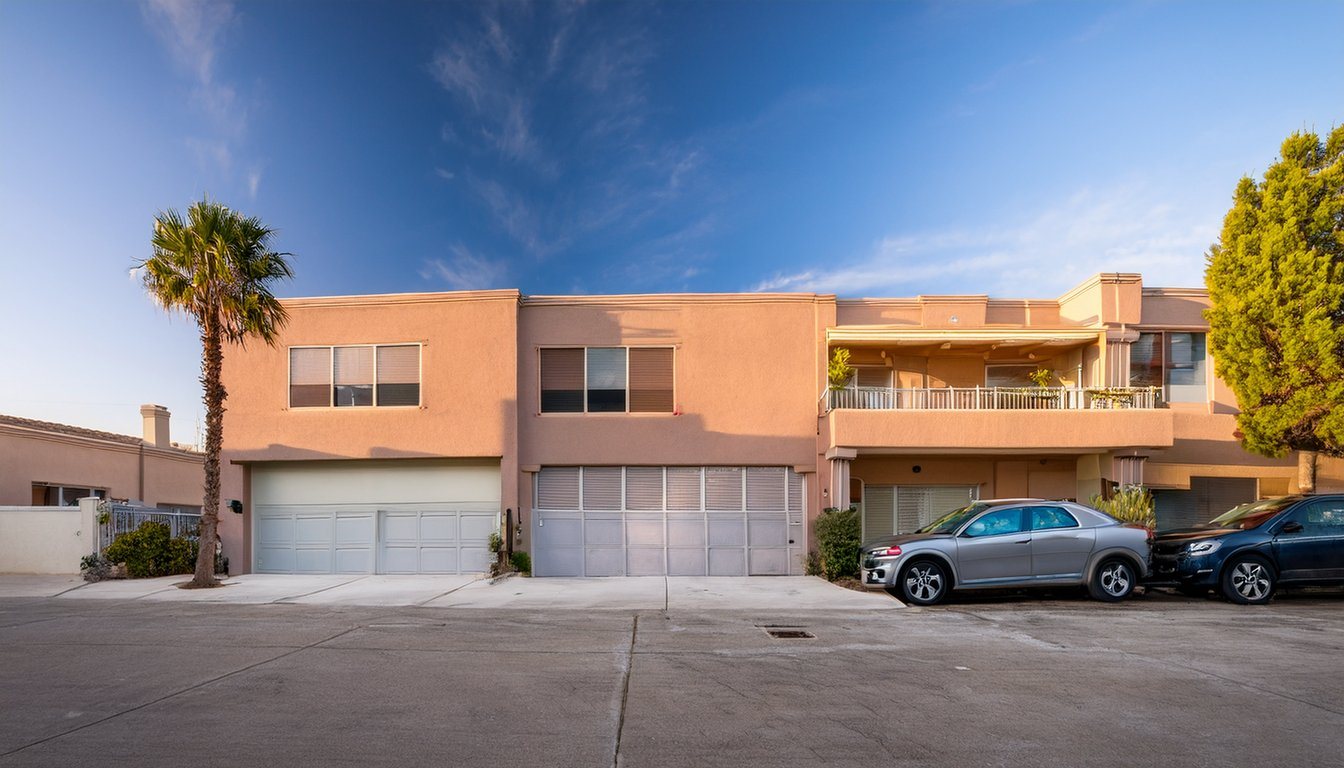
Picture two neighbors with the same house, the same mortgage and the same equity. One wants a detached unit at the back of the lot. The other wants a unit attached to the side of the house. They can walk into the same lender and walk out with different options, because the big federal renovation programs draw their lines around the type of project, not just the borrower. Most guides to ADU financing list loans by interest rate. This one sorts them by project: what you're building, which loans can pay for it, and whether the rent the unit will earn can help you qualify.
We build ADUs; we're not lenders or financial advisors. What follows is how the published program rules read, so you can walk into a lender's office with the right questions.
Quick answers
- Using equity you already have: a HELOC, home equity loan or cash-out refinance works for any ADU type, as long as your current equity covers the build.
- Borrowing against the finished value: renovation loans such as Fannie Mae HomeStyle lend on the "as completed" value, with renovation costs capped at 75% of that value on a refinance.
- FHA 203(k): covers conversions, attached ADUs and renovating an existing ADU, but California's ADU handbook says it can only be used to construct an attached ADU.
- Future rent: FHA and Freddie Mac can count part of the ADU's rent toward qualifying, capped at 30% of the income used to qualify.
- Value: what the finished unit adds to the house matters to any loan based on the appraisal; our guide to how much value an ADU adds covers that side.
Step 1: pin down what you're building
Before you compare loans, settle the project type, because it's the first thing a loan program checks. For financing purposes most ADUs fall into one of four groups:
- A detached new build: a separate structure built from the ground up in the yard. See our backyard ADU ideas for layouts.
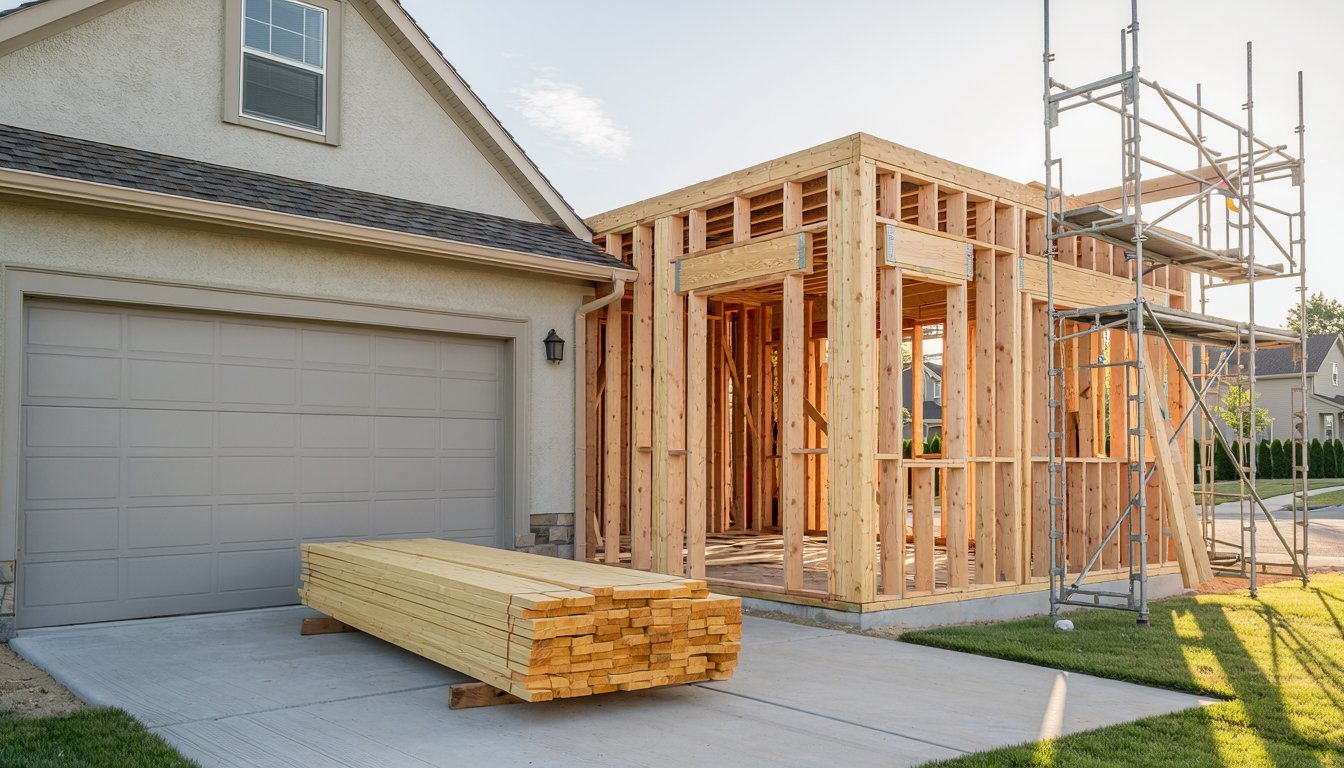
- An attached addition: new square footage built onto the house with its own entrance.
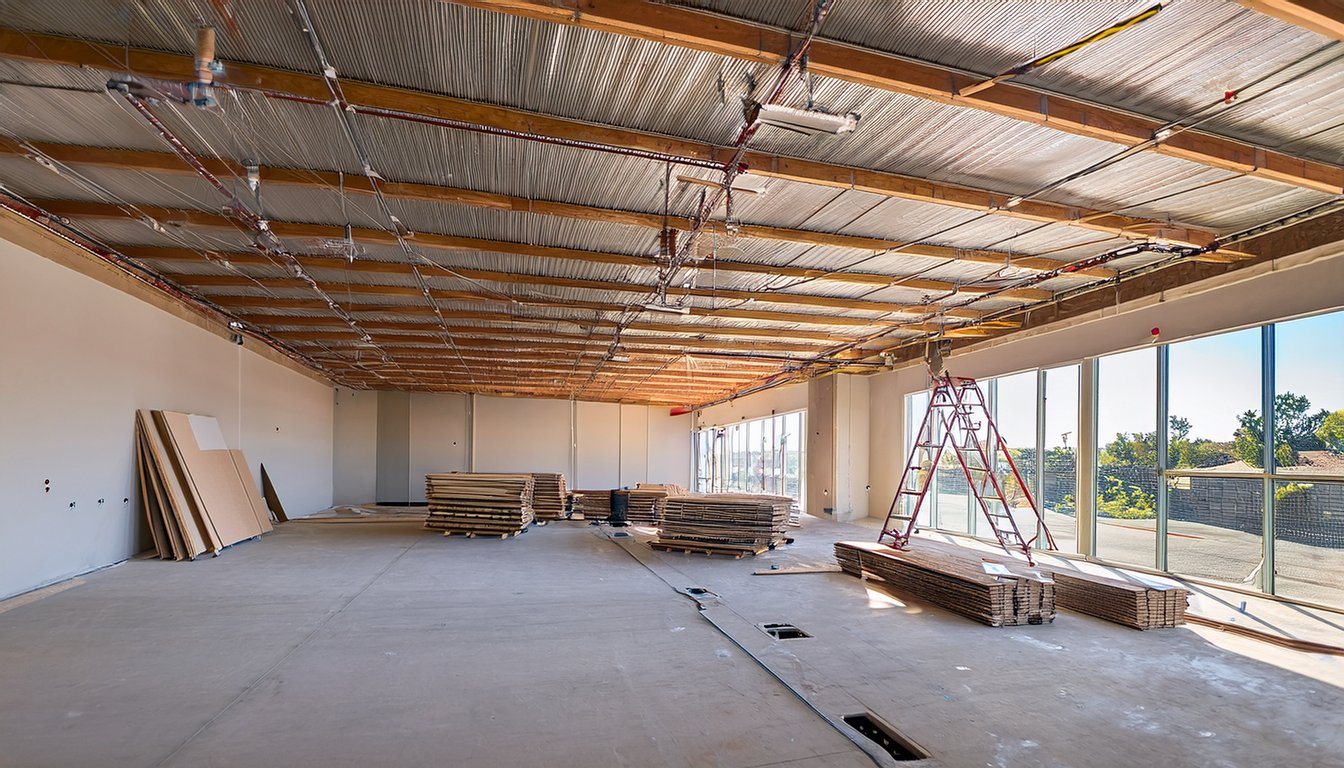
- A conversion of existing space: turning part of the house, or an existing accessory structure, into a unit.
- A factory-built unit: a manufactured or prefab unit delivered and set on a foundation. Our prefab ADU cost guide explains how manufacturers take payment.
You also want a realistic budget before you talk to a lender. Our ADU construction cost guide walks through what drives the number.
Option 1: borrow against the equity you have
If you already have substantial equity, the simplest route is usually to borrow against it with a home equity line of credit (HELOC), a fixed home equity loan or a cash-out refinance. These don't care what kind of ADU you build; the lender is lending against the house you have today. Our home addition cost guide explains how the three differ and how much equity lenders typically want you to keep.
Two practical points specific to building. First, your current equity has to cover the whole project, because these loans are sized on today's value, not the value after the ADU is built. Second, read the fee schedule. The Consumer Financial Protection Bureau lists the fees a lender can charge on a HELOC, including "An application fee," "Origination, appraisal, title, or other closing costs fees," "An annual or membership fee," "A cancellation fee – a fee for terminating the HELOC early, usually within the first two or three years," and "A conversion fee – a fee for converting a portion of your balance to a fixed interest rate." A line of credit suits a construction project because you draw as invoices come in, but those fees belong in the comparison.
A cash-out refinance replaces your whole first mortgage, so it changes the rate and term on the balance you already owe, not just on the new money. Whether that makes sense depends on the rate you have now, which is a question for your lender.
Option 2: renovation loans that lend on the finished value
If your equity today won't cover the build, renovation mortgages are designed for that gap. They size the loan on the home's value after the work is done, and the renovation money is typically held back and paid out in stages as the work is done. The three major programs each draw the ADU line differently.
Fannie Mae HomeStyle Renovation
Fannie Mae's HomeStyle Renovation FAQs set the size limit: "The cost of renovations must not exceed 75% of the lesser of the purchase price plus renovation costs, or the 'as completed' appraised value for purchase transactions; and 75% of the 'as-completed' appraised value for refinance transactions." It can be used on a purchase or on what Fannie Mae calls a limited cash-out refinance, and the same page says "Major renovations such as additions or multi-room rehabilitations are eligible projects."
On ADUs, two answers on that page sit side by side. Asked whether an accessory unit can be detached, Fannie Mae answers: "Yes, an accessory unit may be detached from the primary dwelling. All improvements related to accessory units must be in compliance with local and state codes and statutes." Asked whether the financing can be used to build another residential dwelling on the parcel, it answers: "No. Funds may not be used to construct another residential dwelling on the property." Read together, a detached unit that is accessory to the main house appears to qualify, while building a second full residence does not; ask the lender how it applies that line to your plans. The same page adds that HomeStyle "may be used to purchase and install a manufactured home ('MH') accessory dwelling unit ('ADU')" when Fannie Mae's manufactured home rules are met.
Freddie Mac CHOICERenovation
Freddie Mac is the most direct about new construction. Its ADU fact sheet (February 2026) says the program "Allows borrowers purchasing or refinancing to use Freddie Mac CHOICERenovation® mortgage for constructing a new ADU or renovating an existing one." It also describes a way to refinance after the fact: CHOICERenovation can use "a 'no cash-out' refinance mortgage to pay off short-term financing that financed ADU renovations." In plain terms, some owners build with shorter-term money and then fold it into a new mortgage once the unit is done.
FHA 203(k)
FHA's rehabilitation loan was opened to ADUs in HUD Mortgagee Letter 2023-17, which lists eligible improvements including "converting a one-family Structure to a one-family Structure with an ADU," "adding an Accessory Dwelling Unit (ADU) that will be attached to an existing Structure," and "renovating an existing ADU that is attached or unattached to an existing Structure." Building a new detached unit from scratch is not on that list, and California's ADU Handbook from the Department of Housing and Community Development states it directly: "the 203(k) Rehabilitation loan may only be used to construct an attached ADU."
FHA also has a smaller Limited 203(k). Mortgagee Letter 2024-13 raised its ceiling: "The total rehabilitation costs must not exceed $75,000." That's enough for some conversions of existing space, but not for most ground-up units.
| Project type | Fannie Mae HomeStyle | Freddie Mac CHOICERenovation | FHA 203(k) |
|---|---|---|---|
| Detached new build | Accessory unit may be detached; no second full residence (ask the lender) | "constructing a new ADU" allowed | Not listed; HCD says attached only |
| Attached addition | Additions are eligible projects | Allowed | Listed |
| Conversion of existing space | Eligible as renovation | Allowed | Listed |
| Manufactured unit | Allowed if manufactured home rules are met | Check with lender | Check with lender |
The table summarizes the program documents cited above; individual lenders can add their own limits, so treat it as a starting point for the conversation, not an approval.
Option 3: a construction-to-permanent loan
A construction-to-permanent loan is one loan that funds the build and then becomes your long-term mortgage. California's ADU Handbook notes that Fannie Mae offers "building a home with an ADU using Construction-to-Permanent Financing." Fannie Mae's construction-to-permanent document describes the mechanics: "the lender will be responsible for managing the disbursement of the loan proceeds to the builder, contractor, or other authorized suppliers," and "the construction loan will automatically convert to a permanent long-term mortgage upon completion of the construction."
For an ADU, the practical thing to sort out early is the payment schedule. The lender releases money in stages, and your contractor's contract should line up with those stages. If you're buying a factory-built unit, the manufacturer's deposit schedule may not match a construction lender's draws; our prefab guide covers that mismatch.
Option 4: cash, personal loans and contractor financing
Cash is the cleanest option if you have it: no appraisal, no draw inspections and no waiting on a lender to release funds. Some owners combine cash with a smaller loan to cover the gap.
Unsecured personal loans come up for smaller projects or to bridge a shortfall. The CFPB's guide to secured and unsecured loans explains the tradeoff: "Because unsecured loans put lenders at higher risk, they may have a higher interest rate than secured loans." Financing offered through a contractor or a prefab manufacturer is usually a third-party loan; read who the lender is and what the terms are before you sign.
Some cities and counties also run their own ADU loan or incentive programs, which come and go with funding. Check with your local housing department.
Will the ADU's future rent help you qualify?
This is where the project type and the paperwork start to matter. Counting rent from a unit that doesn't exist yet is allowed in some programs, with limits.
FHA. Mortgagee Letter 2023-17 allows it, capped: "The amount of the Rental Income from an ADU used as Effective Income must not exceed 30 percent of the total monthly Effective Income used to qualify the Borrower." The lender has to document the expected rent with an appraisal that includes a comparable rent schedule, and FHA counts only part of the rent: 75 percent of the lesser of the appraiser's fair market rent or the rent in the lease on a standard loan, and 50 percent on a 203(k). One restriction matters if you're refinancing: "rental income from the ADU cannot be used as Effective Income to qualify for a cash-out refinance."
Freddie Mac. Its ADU fact sheet sets similar limits for a primary residence: "Rental income that is documented with a lease must not exceed 75% of the lease amount" and "qualifying rental income cannot exceed 30% of total income used to qualify." For the same primary-residence case, it says "rental income from an illegal ADU may not be used to qualify."
Fannie Mae. Fannie Mae's ADU rent rules for purchases are covered in our ADU value guide.
The common thread is that a permitted, documented unit is what lenders can work with. An unpermitted unit's rent generally can't help you, which is one more reason to build it with permits. Our ADU permit guide covers how to legalize an existing unit.
Grants and the carrying cost
California's best-known ADU grant is on pause. CalHFA's ADU grant page says "The latest round of ADU funding has been fully allocated," and warns that anyone claiming they can help you obtain the grant is committing fraud. If a public program does fund part of an ADU, ask whether it carries prevailing wage terms.
Plan for property tax too. The state Board of Equalization explains that when you add new construction, the assessor adds only the market value the new construction contributes, and the existing property's value is not affected. In practice the ADU adds its own assessed value to your bill, while the house keeps its existing assessment. Build that into the monthly math alongside the loan payment.
The order that avoids surprises
- Price the project. Get a realistic budget range for the ADU type you want.
- Decide the project type. Detached, attached, conversion or factory-built, since that narrows the loan programs.
- Talk to a lender before you sign a construction contract. Ask which programs fit your project type, whether future rent can count, and how draws are released.
- Get plans and permits moving. Renovation and construction lenders usually want plans, a contractor bid and a timeline before they close.
- Match the contract to the draw schedule. Your contractor's payment milestones should line up with how the lender pays out.
Medici Construction Group is one licensed option for building ADUs, holding California A, B and C-10 licenses under CSLB #1114433. We can provide the plans, bids and schedules a lender asks for, but the loan decision is between you and your lender.
Frequently asked questions
How do most people finance an ADU?
Owners with enough equity commonly use a HELOC, home equity loan or cash-out refinance. Owners who need to borrow against the finished value look at renovation mortgages such as Fannie Mae HomeStyle, Freddie Mac CHOICERenovation or FHA 203(k), or at a construction-to-permanent loan. Cash and personal loans fill smaller gaps.
Can you use a HELOC to build an ADU?
Yes. A HELOC is secured by the home you already own, so it doesn't depend on the ADU type. The limit is your current equity, and the CFPB lists fees to compare, including application, closing, annual and cancellation fees.
Can you use an FHA loan to build an ADU?
FHA's 203(k) can fund converting part of the house into an ADU, adding an attached ADU, or renovating an existing ADU. California's ADU Handbook says the 203(k) may only be used to construct an attached ADU, so it isn't the tool for a new detached unit.
Can ADU rental income help you qualify for a loan?
Sometimes. FHA and Freddie Mac allow part of the ADU's rent to count, capped at 30% of the income used to qualify, and FHA doesn't allow it on a cash-out refinance. Rent from an unpermitted unit can't be used under Freddie Mac's rules.
Does Fannie Mae HomeStyle cover a detached ADU?
Fannie Mae's FAQ says an accessory unit may be detached from the primary dwelling, but that the funds may not be used to construct another residential dwelling on the property. Ask the lender how it applies those two answers to your plans.
Is there a grant for building an ADU in California?
CalHFA's ADU grant page says the latest round of funding has been fully allocated, and it warns that anyone offering to help you get the grant is committing fraud. Some cities run their own programs, so check locally.
Will an ADU raise my property taxes?
Yes, by the value it adds. The Board of Equalization says new construction gets its own base year value for the market value it adds, and the value of the existing property is not affected.