A door that used to close fine now sticks in the frame. A floor that always felt level now has a faint slope you only notice when a marble rolls across it. Neither looks like a "foundation problem." Both often are, and usually before a crack ever shows up.
Quick answers
- A crack isn't usually the first sign. Doors, windows, floors, and trim tend to move before a crack appears or becomes noticeable.
- Common non-crack signs include sticking or misaligned doors and windows, sloping or bouncy floors, gaps between trim and walls or floors, a chimney separating from the house, and plumbing that drains or backs up oddly for no clear reason.
- What's usually behind these: soil movement, water intrusion or drainage problems, or, less often, the original construction itself.
- Not every sign means a serious problem. Age, humidity, and normal home settling can cause some of the same symptoms. The point is knowing which combinations are worth a professional look.
- This covers the warning signs and what they typically point to. For crack-specific diagnosis, see our foundation cracks guide; for what an inspection or repair actually costs, see our foundation repair cost guide.
Doors and windows that stick, stop latching, or develop gaps
When a foundation shifts, even slightly, the frames built into it can sometimes rack out of square. A door or window frame that's no longer a true rectangle binds against its own hardware, which is why a door that used to swing shut easily now needs a shove, or a window that used to slide freely now catches halfway up. In other cases the frame pulls apart instead of binding, leaving a visible gap along one edge that wasn't there before.
The trick is telling this apart from ordinary wood movement. Humidity-driven swelling comes and goes with the seasons and tends to resolve on its own once the air dries out; a door that sticks every winter and swings freely again by summer is usually just doing what wood does. A foundation-driven shift behaves differently. It tends to be progressive rather than seasonal, meaning it doesn't go away when the weather changes, and it often shows up on multiple doors or windows along the same side of the house rather than just one. A good way to check: try the interior doors on the same wall or the same end of the house as the one that's giving you trouble, and see whether the problem is isolated or spreading.
A window that used to lock easily but now needs the frame nudged into place is worth the same attention as a sticking door, even though it's easier to ignore since most people open a given window far less often than they use an interior door.
Sloping, uneven, or bouncy floors
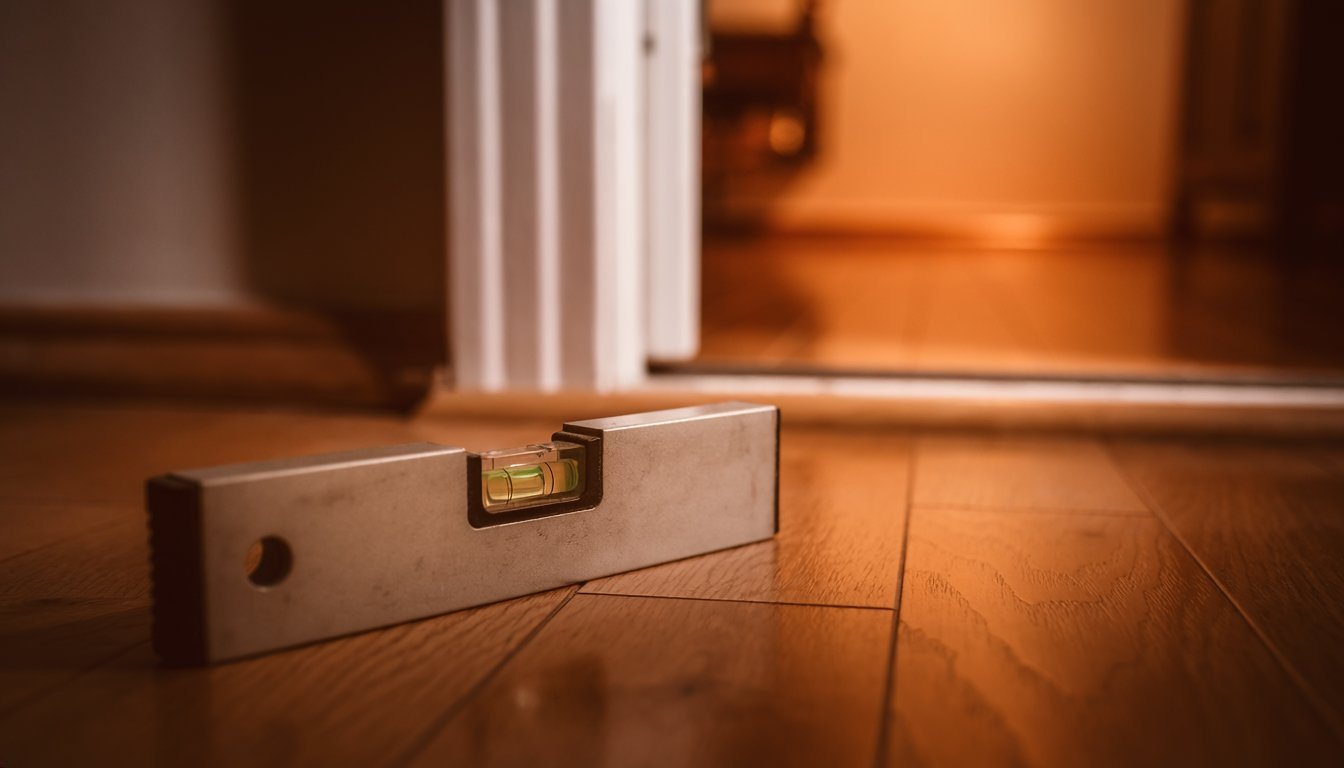
A slope you can feel while walking, or a spot that bounces slightly underfoot, is easy to notice and hard to explain on your own. A simple way to check it without a full inspection: set a marble or a round object on the floor in a few spots and see if it consistently rolls toward the same corner, or run a level along a doorway threshold. Our foundation settling guide explains how to tell whether a floor is still moving.
What it points to depends on the foundation type underneath. On a slab foundation, a localized slope usually means the slab has settled unevenly in one area, often where the soil beneath it lost support. On a raised or pier-and-beam foundation, the answer is less clear-cut: sagging or bouncy floors can point to the support structure under the floor, not the foundation itself. As one foundation and framing company puts it, "framing problems can create many of the same symptoms without significant foundation movement," since the floor system includes joists, beams, posts, and crawl-space supports that can fail on their own, and in that case, the same source notes, "underpinning the foundation would not fix the problem because the movement is happening above it." A sloping floor is worth flagging either way; which one it actually is takes a professional look, not a guess.
Gaps between trim, walls, floors, or the ceiling
The same underlying movement that racks a door frame often shows up in finish materials elsewhere: baseboard pulling away from the floor, a seam opening between drywall and window or door trim, or a visible gap where a wall meets the ceiling. These are cosmetic in the sense that they don't affect how the house functions day to day, but structurally they're the same signal as a sticking door, just showing up in a different material. A single small gap in an older house is common and often not urgent; a new gap that keeps widening, or several appearing around the same time in different rooms, is the pattern worth paying attention to. A useful habit is marking the end of a gap with a pencil line and checking it again in a few weeks; if the gap has visibly grown past the mark, that's a more meaningful data point than the gap's size on its own.
A chimney or porch separating from the house
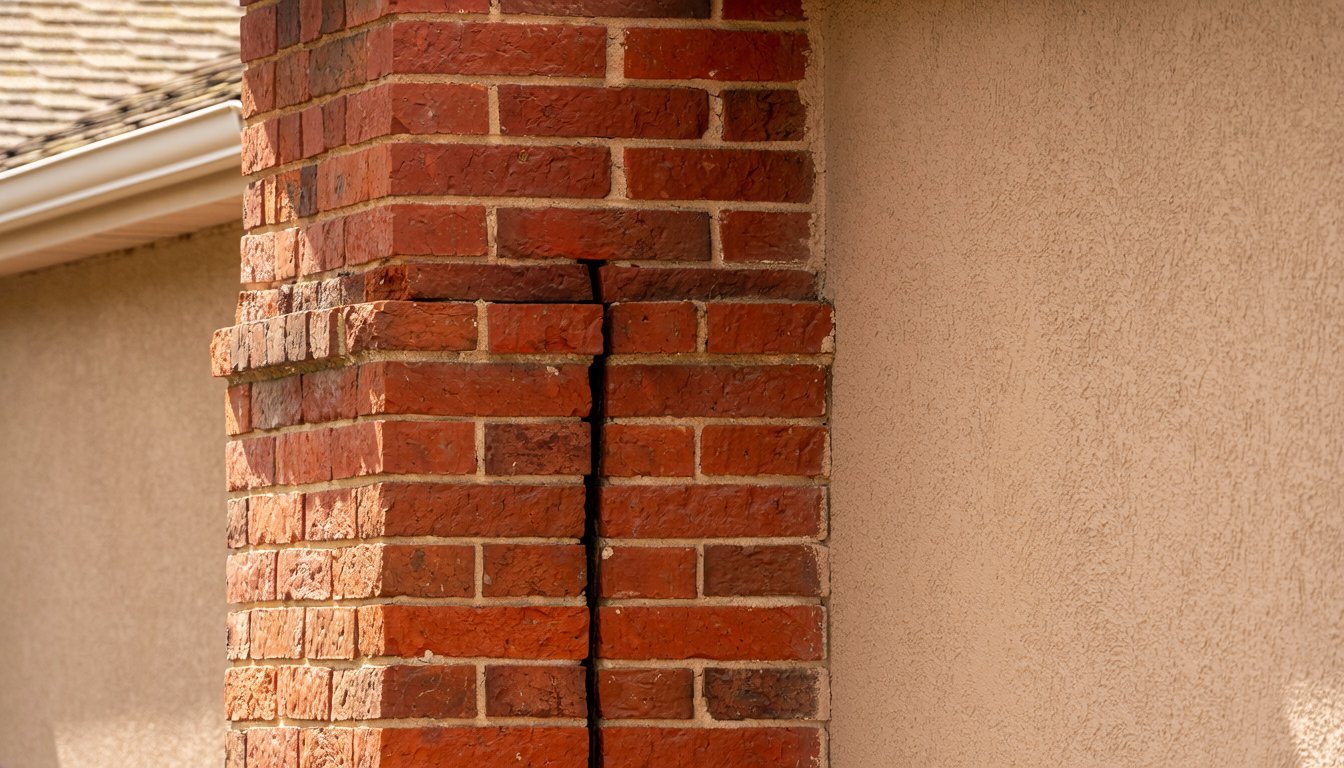
A chimney, and often an attached porch or entry stoop, is typically built on its own separate footing rather than tying into the main house foundation. Because it's structurally independent, it can settle at a different rate than the rest of the house, which is why you sometimes see a chimney tilting slightly away from the roofline, or a visible gap opening where a porch slab meets the front of the house.
This one gets dismissed as cosmetic more often than the others, partly because a leaning chimney doesn't obviously affect anything inside the house the way a sticking door does. But a widening gap between two structures that used to sit flush against each other typically indicates differential settlement, meaning the two footings are moving at different rates, and it's worth the same attention as any other sign on this list rather than being dismissed as an old-house quirk. Because the separation happens where two structures meet rather than in the middle of one continuous wall, it can look small even when the underlying movement isn't. A gap that's wide enough to see daylight through, or one where the chimney visibly leans away from the roofline rather than standing straight, is past the point of just watching it.
Plumbing and drainage acting strangely
A toilet that rocks slightly or won't sit flush against the floor, a drain that's gotten slower without an obvious clog, or a faint gurgling sound after you run water can sometimes trace back to a shifted slab putting stress on a pipe that runs through or under it. This is easy to blame on the plumbing alone, and sometimes it is just the plumbing, but when it shows up alongside any of the other signs on this list, it's worth mentioning to whoever inspects the foundation, not just to a plumber.
Water pooling near the foundation, or a downspout that dumps water right next to the house instead of carrying it away, deserves the same attention, but as a cause rather than a symptom: saturated soil next to a foundation is one of the more common things that starts a lot of these signs in the first place. Soil that's repeatedly soaked and dried next to a foundation generally moves more than soil that stays at a consistent moisture level, and that repeated movement is usually what stresses the structure above it over months and years, rather than any single storm or watering session.
Grading and drainage fixes are their own topic; our yard drainage guide covers what to do about water that isn't draining away from the house. If you're already seeing plumbing symptoms alongside standing water near the foundation, treat the two as connected rather than calling a plumber for one and ignoring the other.
Cracks: the sign most people wait for
Cracks are a real and common foundation warning sign, and often the one that finally gets someone to call for an inspection. But by the time a crack is visible, several of the signs above have usually already been showing up for a while. For crack-specific diagnosis, including which types are typically cosmetic and which warrant a closer look, see our foundation cracks guide.
What's usually behind these signs
Three things tend to be behind this list of signs: soil that expands, contracts, or was poorly compacted before the house was built; water intrusion or poor drainage that undermines the soil supporting the foundation over time; and, less commonly, issues with the original construction itself. Any of the signs above can point to one of these causes, and figuring out which one is exactly what an inspection is for. If you find water under the house, start with our guide to water under a house foundation.
When to get a professional look, and who to call
Context matters more than any single sign on its own. One isolated symptom in an older house, especially one that shows up during a dry summer and doesn't get worse, is usually worth watching rather than acting on immediately. Multiple signs appearing together, a sign that's visibly getting worse over a few months, or any of these signs paired with a crack, is worth a professional inspection rather than a wait-and-see approach.
Deciding who to call first depends on what you're actually seeing. If the signs are mostly structural, doors, windows, sloping floors, trim gaps, a foundation contractor or a structural engineer is the right first call. If the signs showed up alongside a known drainage issue, starting with whoever handles the grading or drainage problem can sometimes resolve things without any structural work at all, though a foundation inspection is still worth confirming once the water issue is fixed. Either way, a written inspection report before any repair work starts gives you something to compare a repair proposal against, rather than taking one contractor's word for the scope of the problem.
Our foundation inspection guide covers what that process actually involves and who's qualified to do it, and our foundation repair cost guide covers what fixing a confirmed problem tends to run once you know what you're dealing with. Medici Construction Group is one licensed option for foundation inspection and repair, holding California A, B and C-10 licenses under CSLB #1114433.
Frequently asked questions
What are the early warning signs of foundation problems?
Doors and windows that stick or develop gaps, sloping or bouncy floors, gaps opening between trim and walls or the ceiling, and a chimney or porch pulling away from the house are all common early signs, and they often appear before any crack is visible.
Can foundation problems cause doors and windows to stick?
Yes. A shifting foundation can rack door and window frames out of square, which binds hardware or opens a gap. The key difference from normal seasonal wood swelling is that a foundation-driven shift doesn't resolve when the weather changes, and it often affects more than one opening on the same side of the house.
Is a sloping floor always a foundation problem?
Not always. On a slab, a localized slope usually does point to uneven settling. On a raised or pier-and-beam foundation, a sagging or bouncy floor can instead point to a failing support post, beam, or joist rather than the foundation itself, so it takes a professional look to tell which one you actually have.
Why is my chimney pulling away from my house?
A chimney is typically built on its own separate footing, so it can settle at a different rate than the main house. A widening gap where it meets the house is a sign of differential settlement between the two structures, not just cosmetic wear.
Can foundation problems affect my plumbing?
Yes. A shifted slab can put stress on pipes running through or under it, which can show up as a toilet that rocks, a drain that's slowed for no clear reason, or gurgling after water runs. Poor drainage around the foundation is also often a cause of foundation movement in the first place, not just a symptom.
How do I know if a foundation problem is serious?
One isolated sign in an older home, especially one that isn't getting worse, is usually worth watching. Multiple signs together, a sign that's visibly progressing, or any sign paired with a visible crack is worth a professional inspection rather than waiting.
Do all foundation problems eventually cause visible cracks?
Not necessarily, and even when they do, a crack is often one of the later signs to appear rather than the first. Doors, floors, trim, and plumbing frequently show something is off well before a crack becomes visible.
What causes foundation problems?
Most trace back to one of three things: soil that expands, contracts, or was poorly compacted before construction; water intrusion or poor drainage that undermines the soil under the foundation over time; or, less commonly, issues with the original construction.