You notice a thin line running across the garage slab, or a crack in the concrete wall under the house. The first question is whether it means anything at all. Often it doesn't. InterNACHI, the home inspectors' association, puts it plainly: "In applications such as concrete slabs and residential foundation walls, cracking is inevitable and expected."
The real question is which cracks you can watch and which mean you should call someone this week. Four checks settle it, and none of them need tools you don't already own.
Quick answers
- Are foundation cracks normal? Many are. Concrete shrinks as it cures, and thin shrinkage cracks are expected.
- When to worry: cracks 1/8 inch or wider, cracks that are growing, horizontal or offset cracks, water coming through, or new sticking doors and sloping floors.
- What to do today: mark the ends of the crack with a pencil, write the date, and take a photo with something for scale.
- Who to call: for a real concern, a structural engineer to diagnose it, then a contractor to carry out the fix.
Why concrete cracks at all
Concrete is mixed with more water than it needs, and it shrinks as that water leaves. InterNACHI explains that "Most of the water will eventually evaporate, causing shrinkage of the concrete slab," and cites the Portland Cement Association: "restraint to shrinkage is the most common cause of concrete cracking."
These drying shrinkage cracks usually show up in the first weeks and months. In InterNACHI's guidance on visual inspection, hairline shrinkage cracks "are not major structural concerns," though they are worth watching for water coming through.
Know what your LA house sits on
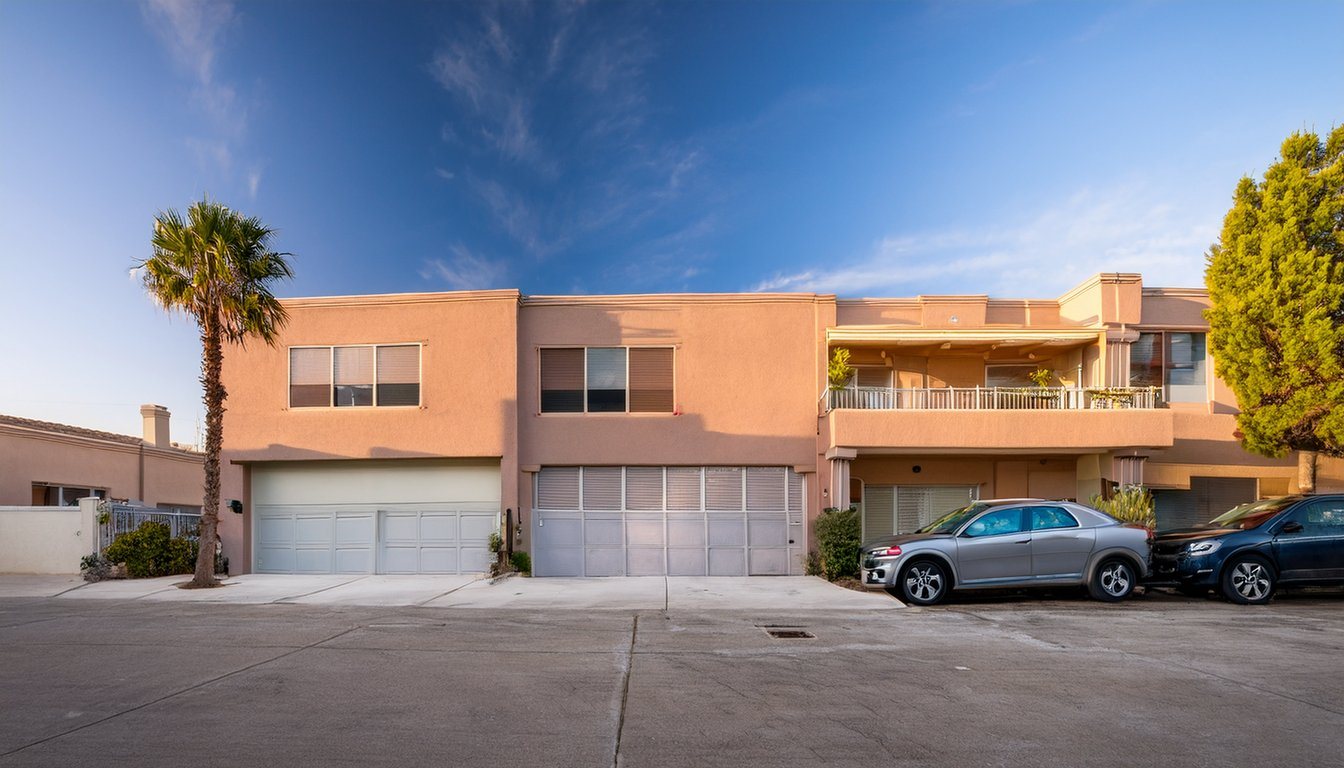
Most crack advice online is written for basements. In our experience, most Los Angeles houses have none, and they sit on one of three kinds of foundation, each with its own places where cracks show up: Post-tensioned slabs need extra care before any repair; see our post-tension slab crack repair guide. For raised houses, our guide to stem wall cracks explains which cracks matter most.
- A slab on grade: a concrete floor poured on the ground, common in newer homes. Cracks show up in the garage floor, under flooring, and at the slab edge outside.
- A raised perimeter foundation: a concrete stem wall around the edge, with a crawl space and wood floor framing above it. Cracks show up in the stem wall and around vents and access openings.
- A hillside foundation: stepped footings, piers or tall posts on a slope, often with an engineer's design behind them.
Knowing which you have tells you where to look. If your house is on a raised foundation, our seismic retrofit guide explains why those homes get extra attention in earthquake country. If you haven't spotted a crack yet but something else feels off, our guide to common foundation warning signs covers the non-crack signs that often show up first.
The four checks
1. How wide is it?
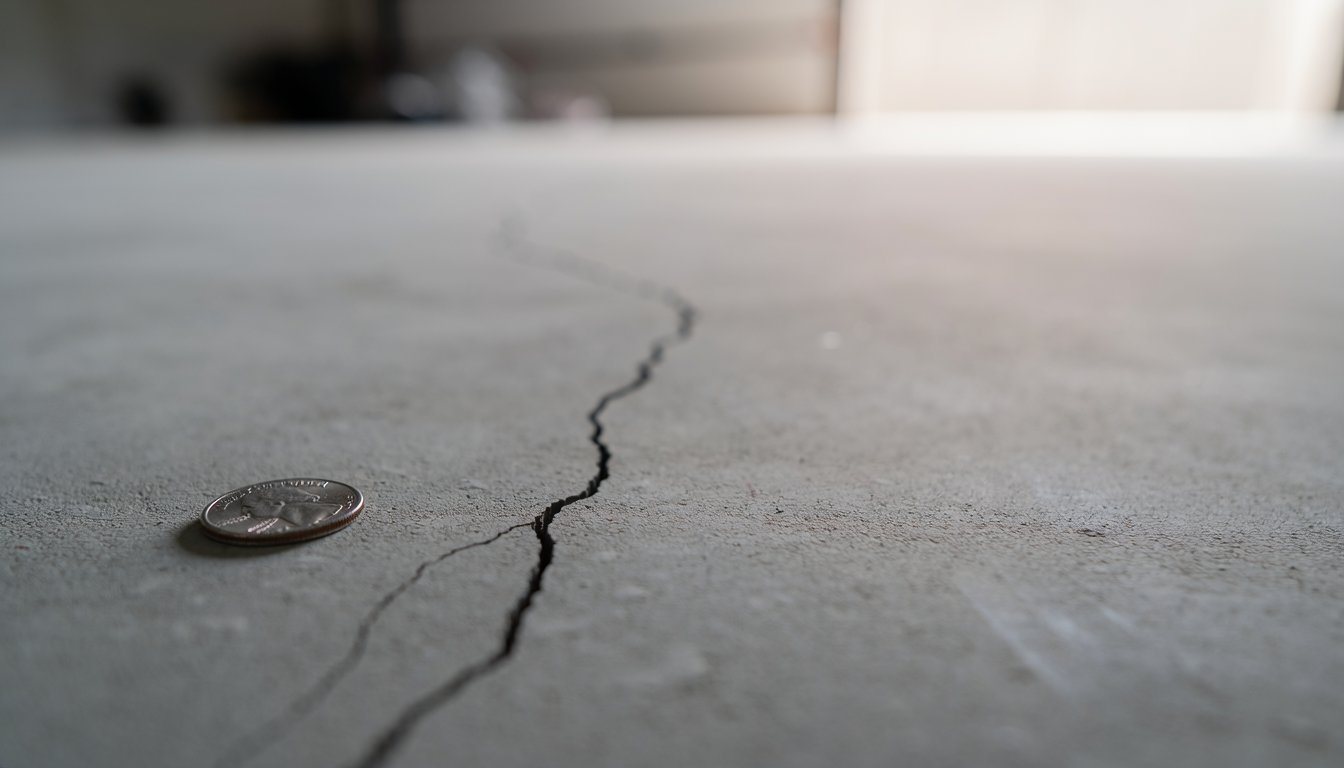
Width is the easiest thing to measure and the first thing an engineer asks about. A Minnesota home inspection firm, Structure Tech, notes that "generally speaking, cracks in poured concrete walls that are less than 1/8″ are not considered to be structurally significant." This Old House's guide to structural engineers says cracks "1/8 inch wide or wider...deserve a closer look," and its foundation crack guide lists "a crack wider than 1/4 inch" among the signs that call for a professional. In our experience, a crack you can slide a credit card into is worth measuring properly; one you can fit a coin into is worth a call.
2. Which way does it run?
| Crack | What it usually suggests |
|---|---|
| Hairline, vertical or random | Shrinkage; usually cosmetic if it stays the same |
| Vertical, getting wider | Movement worth watching |
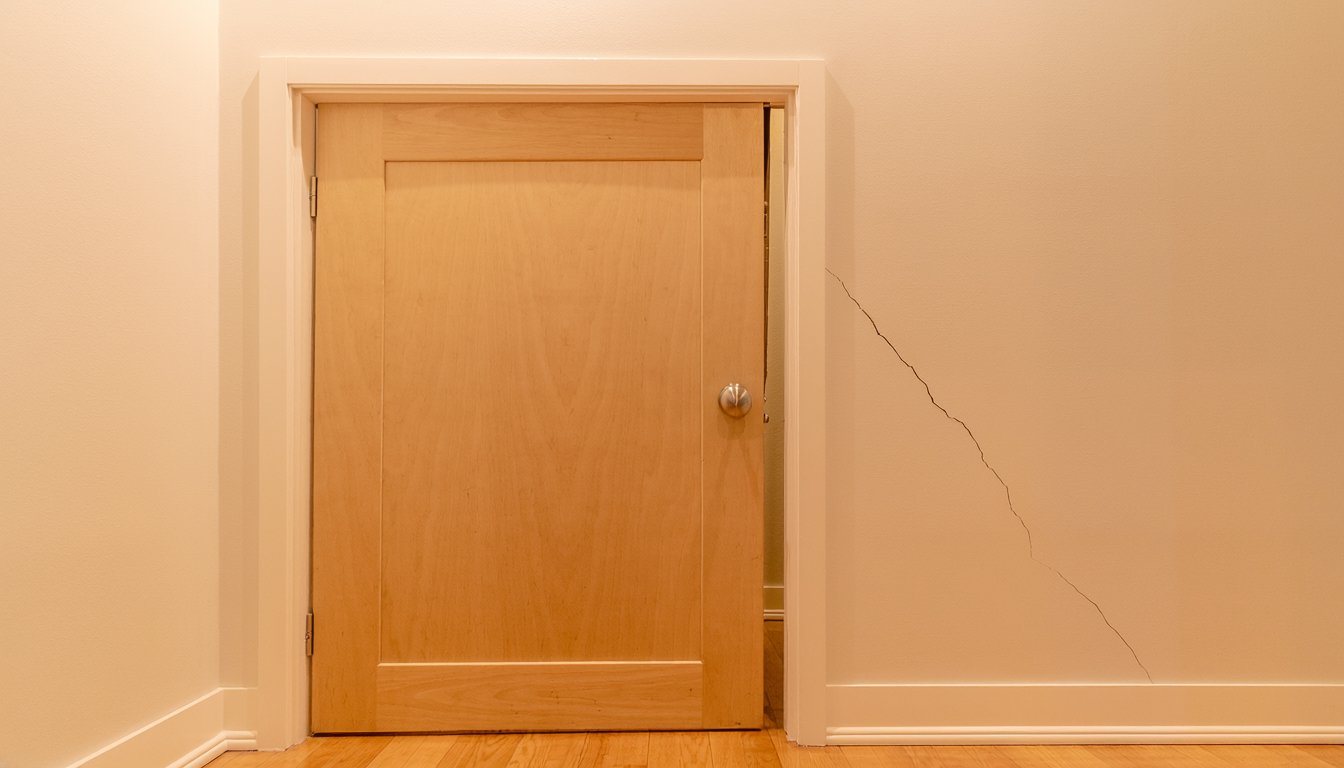
| Diagonal | Uneven settlement of one part of the foundation |
| Horizontal (in a wall) | Soil pushing against the wall; take seriously |
| Offset (one side higher) or wider at one end | Movement, not just shrinkage; get it looked at |
This Old House explains that diagonal cracks "usually form when one part of the foundation settles or shifts differently than another," that "a vertical crack that widens, allows water in, or shows displacement may point to a larger issue," and quotes a structural engineer: "Horizontal cracks indicate that the soil is exerting enough pressure on the wall to make it bulge inward." The last row of the table follows from that displacement point and from our experience: a crack whose two sides no longer line up has moved.
3. Is it changing?
This is the check most people skip, and it matters most. This Old House quotes general contractor Tom Silva: "Any crack that appears suddenly isn't normal, and any crack that continues to grow in width or length isn't normal." Floor elevation readings are the other half of that test; see our foundation settling guide.
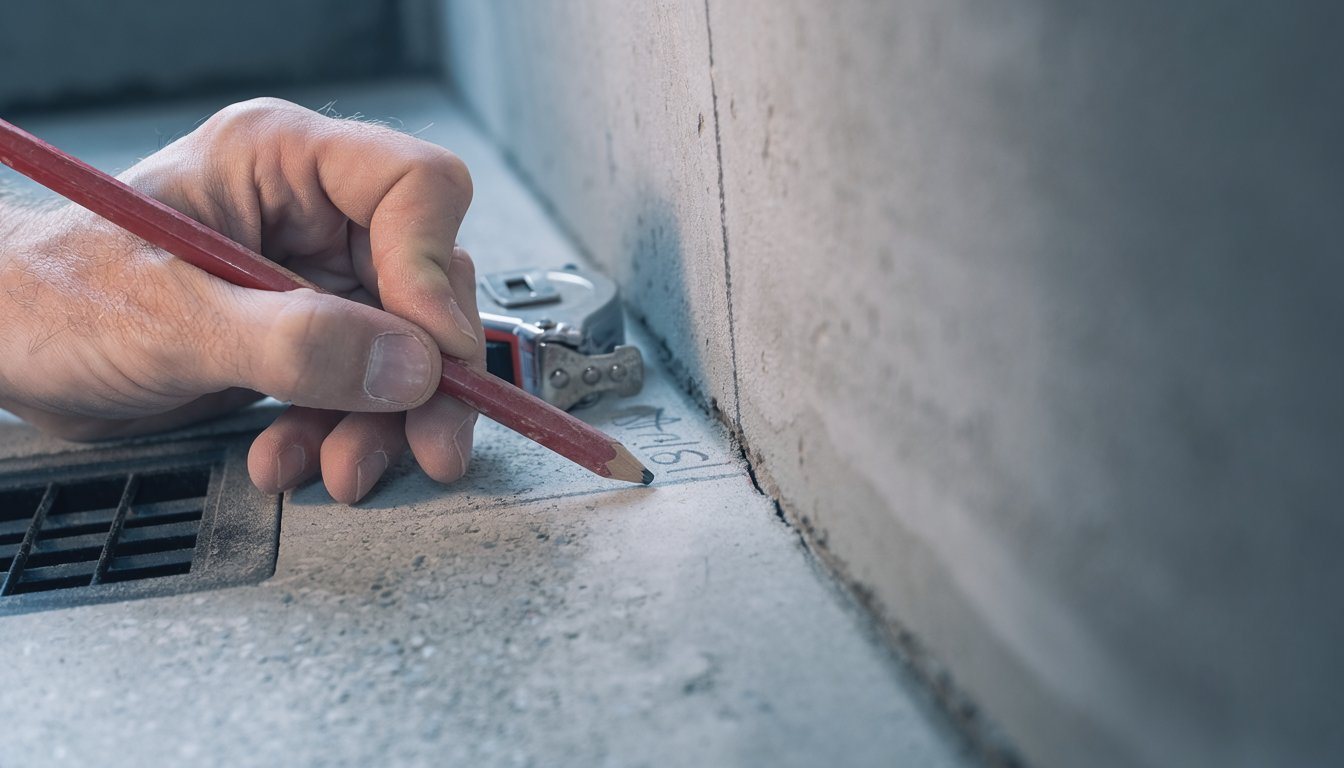
You can track it yourself. Make a pencil mark at each end of the crack, write the date next to it, and take a photo with a ruler or coin for scale. Check it again every few weeks, and after any earthquake or heavy rain. For more precision, InspectApedia describes crack monitors with "moving glass slides that include fine markings" that are fixed across the crack. It also cautions that "small amounts of foundation movement occur in masonry materials as a normal effect of temperature and moisture changes."
4. What else is happening in the house?
A crack on its own tells you less than a crack plus symptoms upstairs. This Old House lists "Sticking doors and windows," "nails coming out of drywall," "gaps between cabinets or countertops and walls," and "uneven or sloping floors" among signs of foundation movement. InterNACHI's inspection standards name the same kind of evidence: "sheetrock cracks, brick cracks, out-of-square door frames, and unlevel floors." If your crack arrived together with a door that suddenly sticks, treat it as more than a cosmetic crack.
LA soil and earthquakes
Two local forces move foundations here. The first is clay soil that swells when wet and shrinks when dry. The Colorado Geological Survey defines expansive soil as soil "which contains clay and which expands to a significant degree upon wetting and shrinks upon drying," and notes the clay mineral responsible "can expand up to 20% by volume when exposed to water." The USDA's soil scientists cite the American Society of Civil Engineers estimate that "half of the homes in United States are built on expansive soils and half of these will have some damage." In our experience, many LA neighborhoods have clay soils, and cracks that open and close with the seasons, or after a wet winter, often trace back to them.
The second is earthquakes. A USGS study of the 2003 San Simeon earthquake found that "For all geologic and topographic conditions, houses with raised foundations are more frequently damaged than those with slab foundations." After any noticeable quake, check your marked cracks first, and if you're on a raised foundation, look at the stem wall too.
Monitor, or call someone this week?
| What you see | What to do |
|---|---|
| Hairline crack, not changing, no symptoms inside | Mark it, date it, check again in a few weeks |
| 1/8 inch or wider, or growing since you marked it | Have a structural engineer look at it |
| Any crack plus sticking doors, sloping floors or new drywall cracks | Have a structural engineer look at it |
| Horizontal crack, offset crack, or water coming through | Call soon; don't wait for the next season |
| New or wider cracks after an earthquake | Get it inspected, especially on a raised foundation |
This table pulls together the thresholds above; the timing reflects our experience with LA homes. This Old House's own list of reasons to call a professional right away includes "cracks that are widening or spreading" and "water entering through any part of the foundation."
Can you seal a foundation crack yourself?
Sometimes, and only for the right crack. This Old House says that for small, stable cracks, "homeowners may be able to seal the crack to improve appearance and prevent minor moisture entry." It names the common materials: "Epoxy or polyurethane injections are commonly used to seal narrow cracks and prevent water intrusion," but adds that these methods "don't address ongoing movement or external pressure."
That last point is the one to hold on to. Sealing is a moisture and appearance fix. It does not make a moving foundation stop moving, and a sealed crack that reopens is a sign the cause is still at work. The same guide draws the line: "If a crack is growing, leaking, or appearing alongside other signs of movement, it's best to consult a professional."
In our experience, two habits make a DIY seal safer. First, monitor the crack for a few months before sealing it, using the pencil marks and dated photos from check 3, so you know it is stable. Second, photograph it with a scale reference right before sealing. Once filled, the crack's original width is hidden, and that photo is the only record an engineer or a future buyer's inspector will have.
Cracks, insurance and selling the house
Owners often hope a policy will pay for crack repair. Usually it won't. This Old House states that "Homeowners insurance does not typically cover foundation crack repair," and suggests checking your policy or talking to your agent. Gradual settling and shrinkage are generally treated as wear rather than a sudden loss. A crack caused by a covered event, such as a burst pipe that washed out soil, can be a different conversation, and earthquake damage depends on whether you carry a separate earthquake policy.
Selling is the other time cracks come up. In our experience, the dated photos and pencil marks you keep for monitoring double as a record for disclosure, and an engineer's letter saying a crack is cosmetic carries more weight with a buyer than any seller's description. If a repair was done, keep the permit, the engineer's recommendation and the contractor's invoice together.
When and who to call for foundation repair
A home inspector is a good first look, but not the final word on structure. InterNACHI's standards say inspectors are not required to "provide any engineering or architectural service" or to "report on the adequacy of any structural system or component."
For a crack that fails the checks above, start with a structural engineer. This Old House points out that a structural engineer has "no financial stake in finding problems," and sums up the roles: "Structural engineers have the expertise to diagnose foundation problems and prescribe solutions. Foundation companies can help you implement those solutions and complete any necessary repairs." You can confirm an engineer's license through the California Board for Professional Engineers, Land Surveyors, and Geologists. Our foundation crack inspection guide explains what that visit covers, what it costs and what the report should include.
Once you know what the crack means, our foundation crack repair guide covers which repair fits which crack, and our foundation repair cost guide covers what it costs. For the contractor side, our guide on how to check a California contractor's license walks through the lookup. Medici Construction Group is one licensed option for foundation crack evaluation and repair, holding California A, B and C-10 licenses under CSLB #1114433. Whoever you call, bring your dated photos.
Frequently asked questions
Are foundation cracks normal?
Many are. Concrete shrinks as it cures, and InterNACHI says cracking in slabs and residential foundation walls is inevitable and expected. Thin cracks that don't change are usually cosmetic.
When should I worry about a foundation crack?
When it is 1/8 inch or wider, growing, horizontal or offset, letting water in, or showing up along with sticking doors, sloping floors or new drywall cracks.
How wide is too wide for a foundation crack?
Cracks under 1/8 inch in poured concrete are generally not considered structurally significant. Cracks 1/8 inch or wider deserve a closer look, and 1/4 inch or wider is a clear reason to call a professional.
What does a horizontal crack in a foundation mean?
In a foundation wall, a horizontal crack usually means soil is pushing on the wall hard enough to make it bulge. Have a structural engineer look at it.
Are vertical foundation cracks normal?
Thin vertical cracks are often shrinkage and not a concern if they stay the same. A vertical crack that widens, lets water in or shows displacement points to a larger issue.
How do I know if a foundation crack is getting worse?
Mark each end with a pencil, write the date, and photograph it with a ruler or coin for scale. Check it every few weeks and after earthquakes or heavy rain. If it gets longer or wider, it is moving.
Should I call a structural engineer or a foundation company for a crack?
For diagnosis, a structural engineer, who has no stake in selling the repair. A foundation company or licensed contractor then carries out the fix the engineer recommends.
Does homeowners insurance cover foundation cracks?
Usually not. This Old House notes that homeowners insurance does not typically cover foundation crack repair, because settling and shrinkage are treated as wear over time. Damage from a covered sudden event, or from an earthquake under a separate earthquake policy, can be treated differently, so check your policy.