Two sewage cleanup invoices for what looks like the same size mess can land thousands of dollars apart, and a single per-square-foot number doesn't explain why. The difference is usually which of five or six separate tasks actually happened, and how many days they ran. This breaks down what's actually being billed for, not just what the total tends to be.
Quick answers
- It's not one number. A cleanup invoice sums separate tasks: extraction, disinfection, demolition/tear-out, drying equipment, moisture monitoring, and contents handling.
- Sewage costs more because of what it triggers, not just its volume. Contamination forces disinfection and demolition tasks a clean-water job skips entirely.
- Drying equipment is billed per unit per day, so a slow-drying space costs more than the square footage alone suggests.
- A legitimate invoice is usually formatted for your insurer (often using standard estimating software), which is a documentation practice, separate from what your policy actually covers.
- This covers what's being billed for. For the three-bill overview (clearing, cleaning, pipe repair) and cost ranges, see our sewer backup repair cost guide.
Why the same square footage can cost very differently
A per-square-foot average assumes a "typical" job. The actual invoice is a sum of specific tasks, and which of those tasks apply, and for how long, is what actually drives the total, not the affected area by itself. Two single-room backups can be nearly identical in size and still land far apart in cost, because one needed three days of drying equipment and the other needed six, or one required tearing out drywall and the other didn't.
What water category has to do with the bill
Restoration work sorts water damage into categories: Category 1 is clean water, Category 2 is gray water (from an appliance or sink), and Category 3 is black water, which includes sewage. Category 3 is described as "grossly contaminated" water that "may contain bacteria, viruses, chemicals, and other harmful agents," with sewage backups named as a common source.
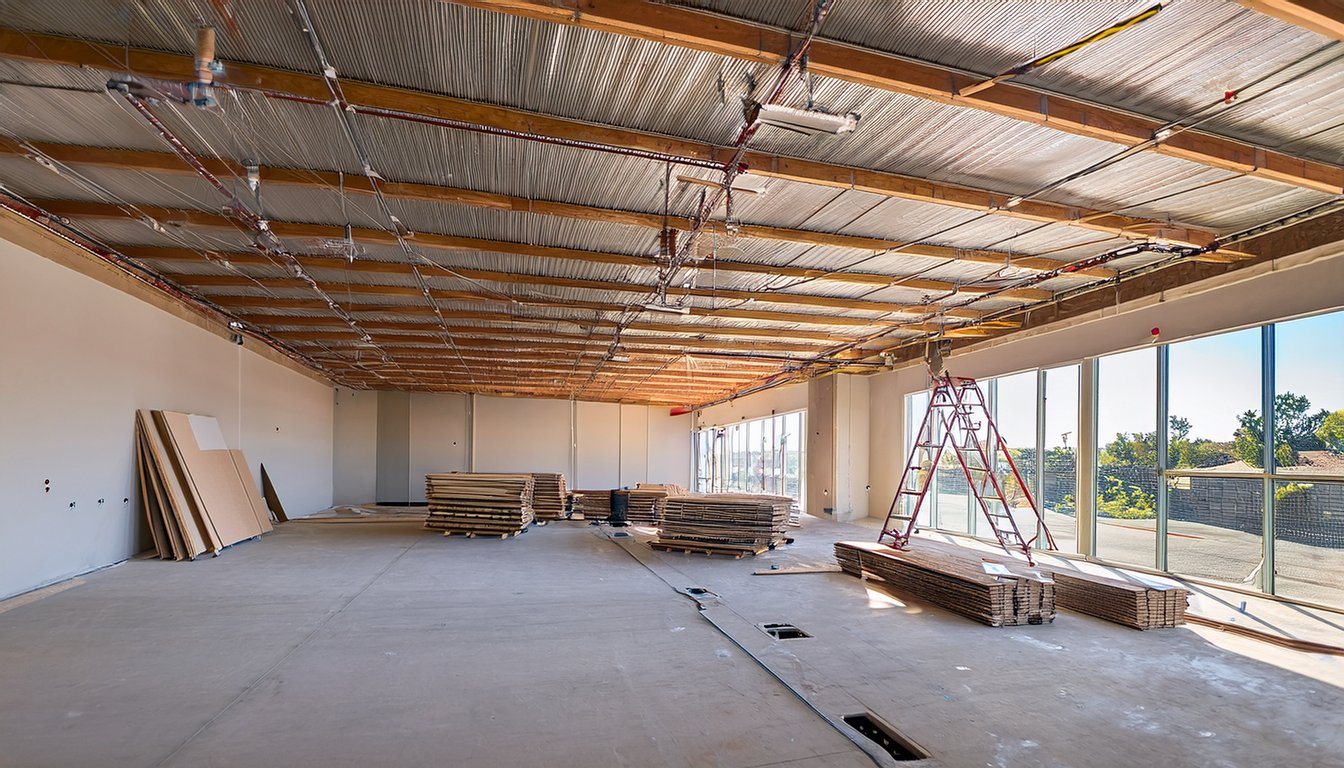
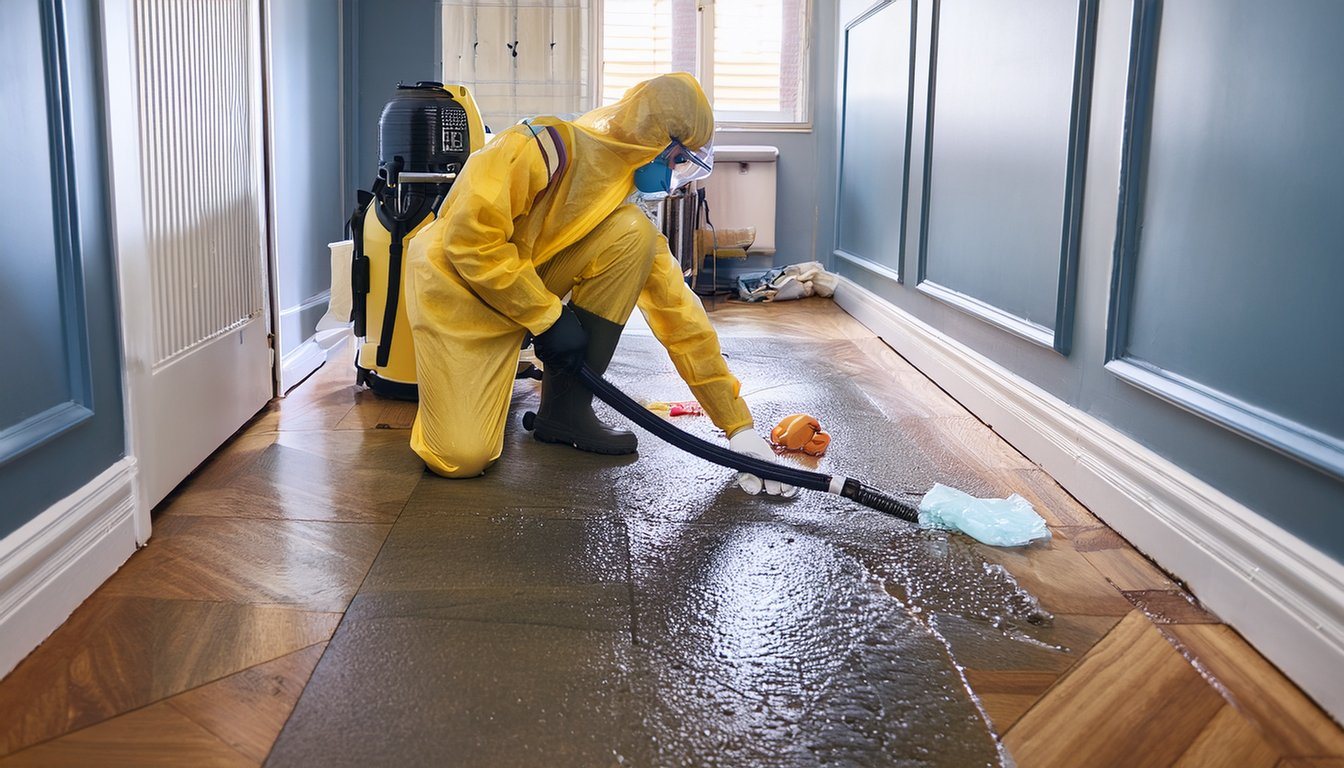
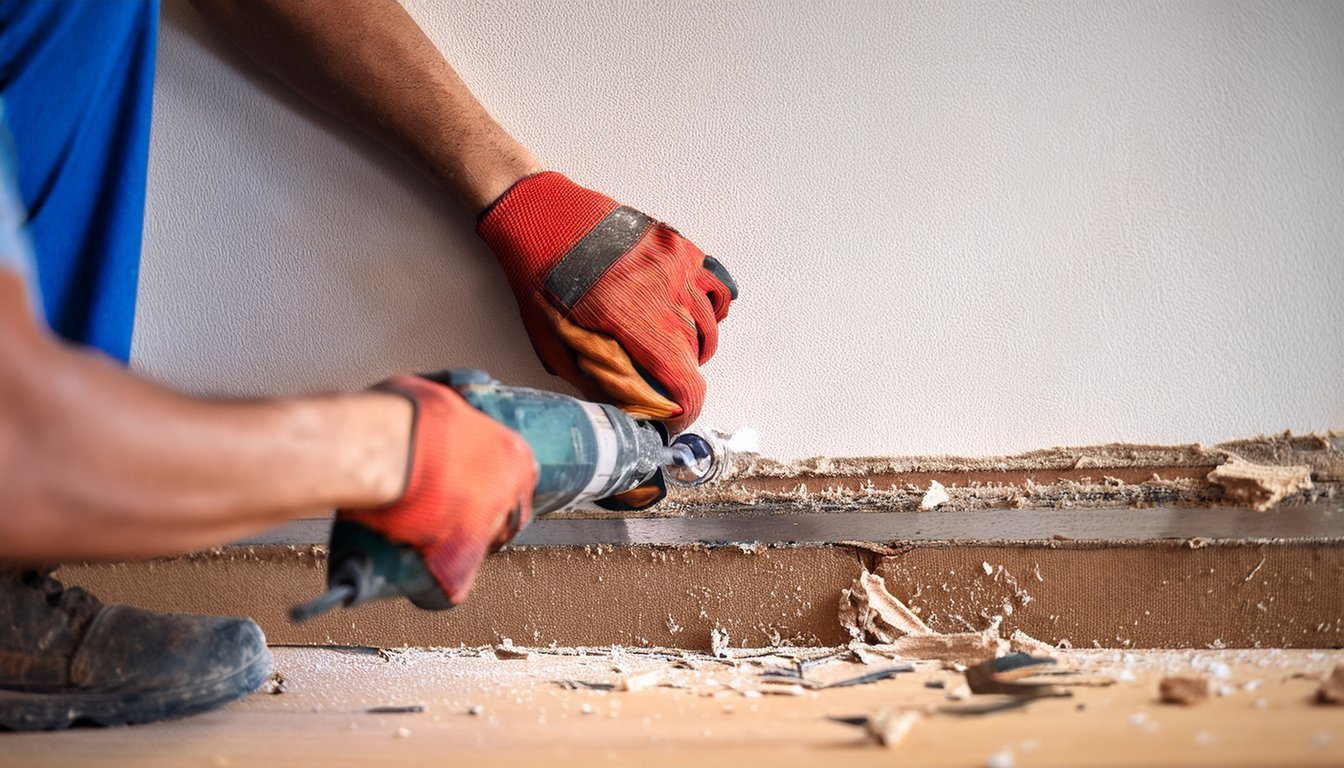
What actually matters for your bill isn't the category label itself, it's what that category forces the crew to do. A Category 3 job requires disinfection and antimicrobial treatment that a clean-water job skips entirely, and it usually means demolishing porous materials (drywall, flooring) that can't be safely disinfected and dried in place, where a Category 1 job might just need drying. Those two extra tasks, not the water category by itself, are the real reason a sewage cleanup costs more than a comparable clean-water job.
The line items in a real cleanup invoice
These figures come from restoration-industry company sites, not a government or trade-association aggregator, so treat them as a starting range to compare a quote against, not a fixed price:
- Extraction. General water extraction runs "$3 to $7 per square foot" by one restoration company's figures, while a sewage-specific breakdown from another puts extraction at "$7 to $12 to $20" per square foot. The gap between those two isn't a contradiction so much as the difference between a general water-extraction rate and a contamination-specific one; expect the higher end for an actual sewage job.
- Disinfection and antimicrobial treatment. A Category 1 job skips this. For sewage, one source lists "Disinfection & Sanitization: $500 to $1,500 to $4,000" depending on the extent of contamination.
- Demolition and replacement of porous materials. The same source lists "Drywall Removal & Replacement: $1,000 to $3,000 to $6,000" and "Flooring Removal & Replacement: $800 to $2,500 to $5,500." This only applies to the materials that actually got wet, not the whole room.
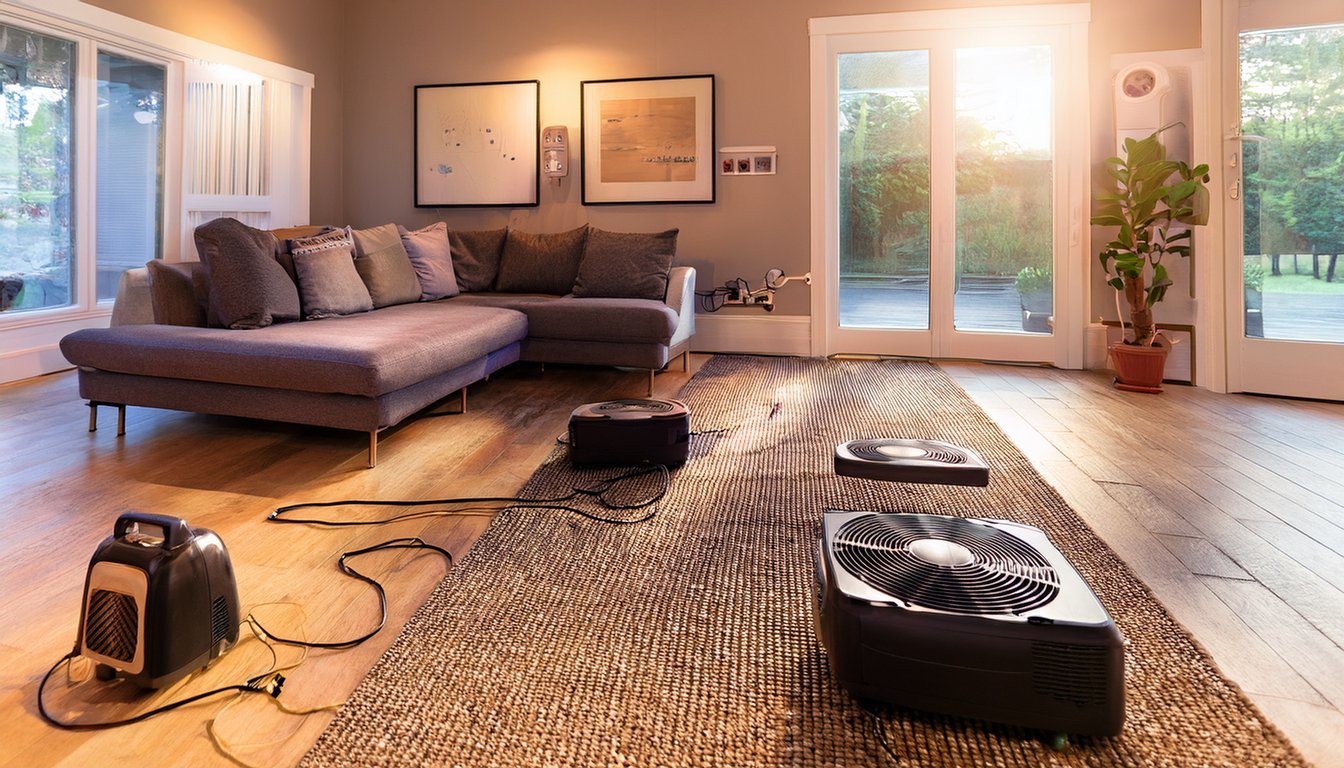
- Structural drying equipment. Billed per unit per day, not a flat rate: "Air movers: $25 to $75 per unit per day. Dehumidifiers: $75 to $200 per unit per day." One source estimates "a typical single room requires 4-6 air movers and 1 dehumidifier for 3-5 days," which is why the drying phase alone can run into the hundreds of dollars before anything else is counted.
- Moisture monitoring visits. "$50 to $150 per visit" for a technician to confirm the space is actually dry with a meter, not a guess, before rebuild starts.
- Contents handling. Moving furniture and belongings out of the way to work runs "$50 to $200 per room." A full pack-out, where contents are removed and cleaned off-site, is a bigger, separate line item on larger jobs, not covered by this per-room figure.
What makes drying take longer, and why that matters more than square footage
Since drying equipment is billed per unit per day, the single biggest lever on a cleanup's total cost is often how many days that equipment stays running, not how many square feet got wet in the first place. A few factors push drying time up: a raised-floor house where water gets into a crawl space, which has to dry separately from the room above it; a subfloor or wall cavity that trapped moisture behind a finished surface, which takes longer to dry than an exposed slab; poor ventilation in the affected area; and how quickly the extraction happened in the first place, since standing water that sits for longer before anyone arrives can soak deeper into materials than water pulled up quickly.
This is also why two invoices for what looks like an identical mess can differ even when every other line item matches: one crew's moisture readings clear in three days, another's take six, and that difference alone is worth several hundred dollars in equipment rental before anything else changes.
Worked example
Take a single-room sewage backup: sewage extraction across a 150-square-foot room, disinfection of the affected surfaces, a strip of drywall removed and replaced, four days of drying equipment (4 air movers plus 1 dehumidifier), one moisture-monitoring visit, and basic contents handling for the room.
| Line item | Basis | Estimated range |
|---|---|---|
| Extraction | 150 sq ft × $7-$12/sq ft (sewage-specific) | $1,050-$1,800 |
| Disinfection | Single-room scope, lower end of range | $500-$1,500 |
| Drywall removal/replacement | One affected wall section | $1,000-$3,000 |
| Drying equipment (4 days) | 4 air movers ($25-$75/day) + 1 dehumidifier ($75-$200/day) × 4 days | $700-$2,000 |
| Moisture monitoring (1 visit) | Single visit | $50-$150 |
| Contents handling | Single room | $50-$200 |
| Illustrative total | Sum of the above | ≈ $3,350-$8,650 |
That range is built entirely from published restoration-industry figures, not a quote, and it excludes flooring replacement, additional monitoring visits if drying runs longer than expected, and any full pack-out of contents, none of which apply to every job. A real invoice for a similar-looking room could land outside this range in either direction depending on how many days drying actually takes and how much material has to come out.
Scale the same math up to a multi-room backup and the gap between "similar-looking" jobs gets wider, not narrower. Take a backup that reaches two rooms and a hallway, 400 square feet total, with drywall and flooring both affected in the worst-hit room, six days of drying equipment (8 air movers plus 2 dehumidifiers, since the larger area needs more units) because a subfloor stayed damp longer than the walls, two monitoring visits instead of one, and contents handling across three rooms:
| Line item | Basis | Estimated range |
|---|---|---|
| Extraction | 400 sq ft × $7-$12/sq ft | $2,800-$4,800 |
| Disinfection | Multi-room scope, mid-to-upper range | $1,500-$4,000 |
| Drywall removal/replacement | Worst-hit room | $1,000-$3,000 |
| Flooring removal/replacement | Worst-hit room | $800-$2,500 |
| Drying equipment (6 days) | 8 air movers ($25-$75/day) + 2 dehumidifiers ($75-$200/day) × 6 days | $2,100-$6,000 |
| Moisture monitoring (2 visits) | Two visits | $100-$300 |
| Contents handling (3 rooms) | Three rooms | $150-$600 |
| Illustrative total | Sum of the above | ≈ $8,450-$21,200 |
None of that is a fixed number: it's what happens when more of the line items above apply, and apply for longer, on the same type of incident. The single-room and multi-room examples use the same per-item rates; what changes is how many rooms, units and days are involved.
Why the invoice is usually written for your insurer, not just for you
Professional restoration companies commonly document a job using standard estimating software, so "the scope of work and pricing align with what your insurer expects to see, reducing disputes and delays in claim processing." That's a documentation practice, not a coverage question: it explains why a legitimate invoice arrives broken into itemized tasks rather than one lump total, but it says nothing about whether your specific policy pays for any of it, what your deductible is, or how to file the claim. Our sewer backup repair cost guide covers who typically pays which of the three bills in more depth; coverage and claims questions are their own topic we cover elsewhere.
What to check on your cleanup invoice
- Is it itemized, or one lump total? Extraction, demolition, disinfection, drying (with unit count and days specified), monitoring, and contents handling should each appear as their own line, not folded into a single number.
- Which water category was it billed as? A sewage backup should be billed as Category 3, which is what justifies the disinfection and demolition line items in the first place.
- Is drying time tracked with actual readings? A monitoring visit with a moisture meter, not a flat number of days picked in advance, is what should determine when drying equipment comes out.
- Does the documentation format match what your insurer expects? This is worth asking about, without needing to understand your policy's coverage details yourself; a company that regularly works with insurers should know the answer.
- Are before-and-after photos included? A crew documenting the affected area before demolition and the finished, dry space afterward can help support both the invoice and any insurance claim if a question comes up later.
- Is the drywall and flooring removal limited to what actually got wet? Industry practice is to follow the visible or measured water line rather than extend further than the contamination did; removal well beyond that line is worth asking about.
- Is there a separate line for a full pack-out, or is it bundled into "contents handling"? Those are different scopes of work at very different price points, and a vague line item can hide which one you're actually being charged for.
Medici Construction Group is one licensed option for the repair side of a sewer backup, holding California A, B and C-10 licenses under CSLB #1114433. Whoever handles your cleanup, get the line items in writing before work starts. Before the work starts, our guide to choosing a sewer backup cleanup company covers what to check and sign.
Frequently asked questions
How much does sewer backup cleanup actually cost?
It depends on which line items apply and for how long, not just the affected square footage. A single-room sewage backup can illustratively run roughly $3,000 to $9,000 once extraction, disinfection, any needed demolition, drying equipment, monitoring, and contents handling are all added together, though real jobs vary.
Why do two sewage cleanup quotes for a similar-size mess cost different amounts?
Usually because they're pricing different combinations of tasks or different durations, not because one contractor is padding the bill. More days of drying equipment, more monitoring visits, or more materials needing demolition all add cost independent of the room's size.
Is sewage cleanup more expensive than regular water damage cleanup?
Generally yes, because sewage is classified as Category 3 (black water) contamination, which triggers disinfection and demolition of porous materials that a clean-water (Category 1) job typically doesn't need at all.
How long does drying equipment need to run after a sewer backup?
It depends on the space and how much moisture got into building materials; one restoration company estimates a typical single room needs several days of air movers and a dehumidifier, confirmed as complete only once moisture monitoring shows the space is actually dry.
What's included in a professional sewage cleanup invoice?
A properly itemized invoice should separately list extraction, disinfection and antimicrobial treatment, any demolition and replacement of porous materials, drying equipment (by unit and day), moisture monitoring visits, and contents handling.
Do I need a separate contents cleaning or pack-out service after a sewer backup?
Moving belongings out of the way to work is usually a smaller, per-room line item. A full pack-out, where contents are removed and cleaned off-site, is a separate and larger service typically reserved for bigger jobs or heavily contaminated belongings.
How much drywall and flooring actually needs to be removed after a sewer backup?
Only the material that got wet or contaminated, generally to a level above the visible or measured water line, not the entire wall or room. A quote that proposes removing significantly more than that is worth asking about before work starts.