It's 2 a.m., there's sewage on the bathroom floor and creeping down the hallway, and every search result promises a crew within the hour. The company that picks up first usually gets the job, and within minutes someone is holding out a tablet for your signature. Most of the regret we hear about after sewer backups starts right there, not because the crew was slow, but because nobody checked who they were hiring or what they were signing. The good news is that choosing a sewer backup cleanup company well doesn't take long. A handful of checks, most of which you can do on your phone while you wait, separate a qualified sewage cleanup company from a carpet cleaner with a truck-mounted vacuum and a big ad budget.
Quick answers
- What to look for: IICRC-certified sewage (Category 3) experience, proof of insurance, and a California contractor license if they'll do any rebuilding.
- Your choice: in California, your insurer can suggest a company but can't require you to use a specific one.
- Before you sign: read the scope, the payment terms and the cancellation terms; don't sign anything blank or open-ended.
- Speed matters: wet materials should be dried within 24 to 48 hours, so vet quickly, but do vet.
What a sewage cleanup company does, and why speed matters
Sewage is a different job from a leaky water heater. The Institute of Inspection, Cleaning and Restoration Certification (IICRC), which maintains the industry's water damage standard, classifies it as Category 3 water: "Category 3 water is grossly contaminated and can contain pathogenic, toxigenic, or other harmful agents and can cause significant adverse reactions to humans if contacted or consumed." Its standard for this work, ANSI/IICRC S500, "describes the procedures to be followed and the precautions to be taken when performing water damage restoration in residential, commercial, and institutional buildings."
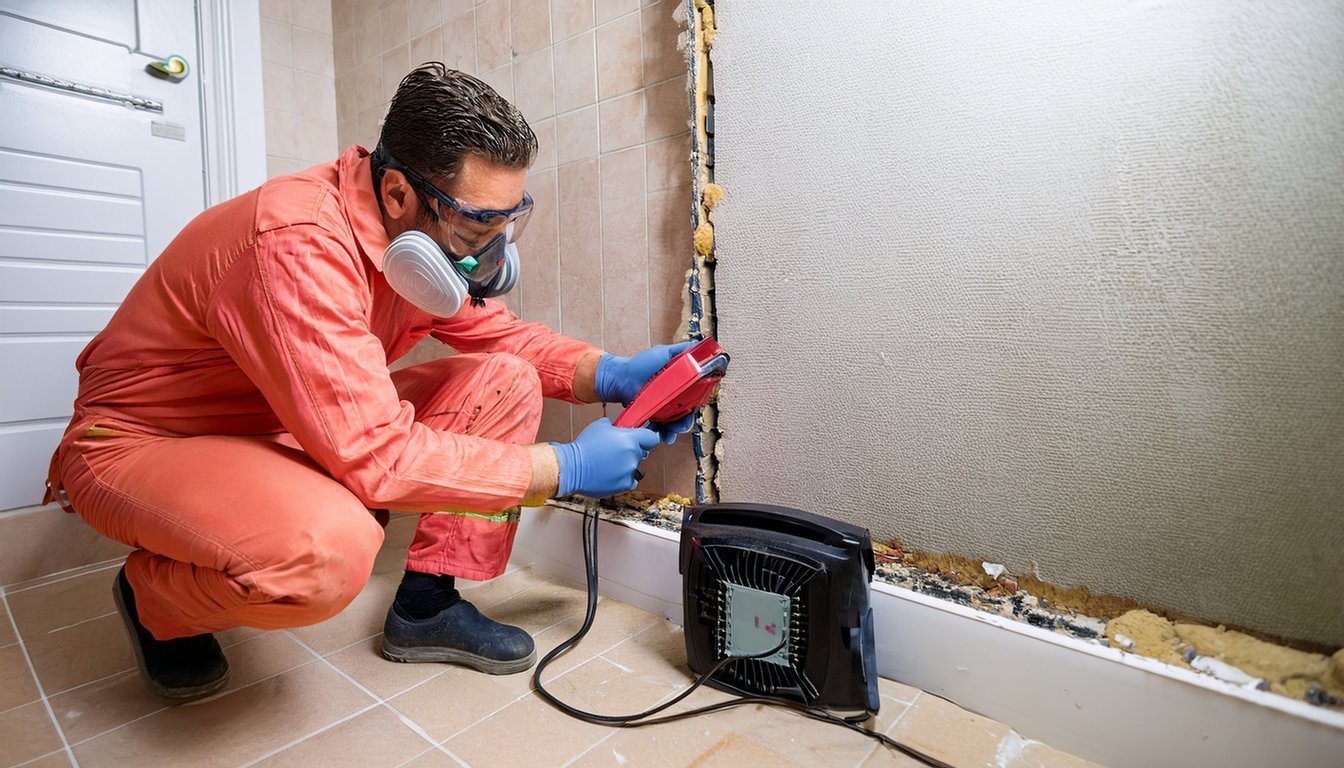
In our experience, a sewage cleanup company contains the affected area, extracts the water and solids, removes contaminated porous materials such as carpet, pad and the lower part of drywall, cleans and treats what can be saved, and dries the structure with monitored equipment until moisture readings are back to normal. That's different from the other two trades involved. A plumber or the sewer utility clears the blockage; our guide on who to call for a sewer backup, and in what order sorts out which comes first. A carpet cleaner cleans carpet, and in our experience sewage-soaked carpet generally isn't something you clean.
Speed matters because water keeps doing damage after the flow stops. The EPA's mold guide says "It is important to dry water-damaged areas and items within 24-48 hours to prevent mold growth." But the fastest company isn't automatically the right one. In our experience, a crew that arrives quickly and does the job poorly, by drying over contaminated materials or leaving before the structure is dry, costs more in the end than one that arrives an hour later and does it properly. Our sewer backup cleanup cost guide explains why drying time drives so much of the bill.
If you haven't yet stopped water use, made the area safe or photographed the damage, start with our first-hour emergency steps, then come back to choosing a company.
The ten-minute vetting checklist
You can run through these while you're on hold or waiting for a callback. A good company will answer all of them without hesitation.
1. IICRC certification for the firm and the crew. Ask whether the company is an IICRC Certified Firm and whether the technicians coming to your house hold water damage certification. The IICRC says its certified firms "provide professional inspection, cleaning, and restoration services to ensure homes and businesses are properly assessed, cleaned, and restored to industry standards after damage or contamination." You can check a firm yourself: the IICRC's Global Locator connects consumers with certified firms and technicians. Certification isn't a guarantee of good work, but it's a baseline that says the company has been trained to the standard for Category 3 water.
2. A contractor license for anything beyond cleanup. Many restoration companies also offer to rebuild what they tear out. That part is construction, and in California it requires a license. The Contractors State License Board states that "anyone in California who contracts for or bids on a construction project valued at $500 or more (combined labor and material costs) must be licensed by the CSLB." Its disaster guide adds: "Ask to see the contractor's CSLB-issued 'pocket license' and a valid photo ID." Check the license number on the CSLB website before anyone starts demolition.
3. Insurance. The Federal Trade Commission's advice for hiring after water damage is direct: "Confirm your contractor's license and insurance." Ask for a certificate of liability insurance and, if they have employees, workers' compensation. A crew working with contaminated water, power tools and wet floors in your house is exactly the situation insurance is for.
4. A written scope before work starts. Even in an emergency, you should get something in writing describing what they'll do tonight: extraction, what materials they expect to remove, drying equipment, and how they'll bill for it. The FTC recommends that a written estimate include "a description of the work to be done, materials, completion date, the price, and the contractor's contact information."
5. How they document. Ask how they'll record the job. In our experience, good companies take photos before and during the work, record moisture readings each day, and keep a drying log. That documentation matters to your insurer and protects you if the bill is questioned later.
6. Mitigation separate from rebuild. Ask whether they'll price the emergency cleanup and drying separately from any rebuilding. You need the cleanup now. You don't need to commit to who rebuilds your bathroom tonight.
7. A real answer at night. "24/7" should mean a person who can dispatch a crew, not an answering service that calls back in the morning. Ask when a crew will actually arrive, and ask again if the answer is vague.
Your insurer's preferred vendor vs your own pick
If you call your insurance company first, they may offer to send a company from their network. That can be convenient, and some homeowners are happy with it. But in California, it's your choice. The state's Fair Claims Settlement Practices Regulations say: "No insurer shall require that the insured have the property repaired by a specific individual or entity."
The same regulation limits when an insurer can recommend a company, and adds a protection if you accept the recommendation. In that case, repairs must "restore damaged property to no less than its condition prior to the loss and repaired in a manner which meets accepted trade standards for good and workmanlike construction at no additional cost to the claimant other than as stated in the policy."
How to decide? In our experience, an insurer's program vendor tends to know that insurer's paperwork and pricing, which can make billing smoother. A company you choose works for you, and you may already know its reputation. Either way, run the same checklist above; being on a preferred list doesn't replace checking the license and certification yourself. Whether your policy covers a sewer backup at all is a separate question worth asking your agent, and we'll cover it in its own guide.
What you sign before they start
Almost every cleanup company will ask for a signature before they begin. Usually it's a work authorization: permission to enter, do the emergency work and bill for it. Read it, even at 2 a.m. A few things to look for:
- A defined scope. The authorization should cover emergency cleanup and drying. Be cautious about any document that also commits you to the company for all repairs and rebuilding.
- Payment terms. Who pays, when, and what happens if the insurer pays less than the invoice. Some forms direct your insurer to pay the company directly; make sure you understand what rights, if any, you're handing over before you sign.
- Cancellation terms. California home improvement contracts generally come with a three-day right to cancel, but emergency service is an exception. The CSLB explains: "With service and repair contracts that are $750 or less and meet other legal requirements, a consumer's three-day right to cancel expires when the work begins." A sewage cleanup often costs more than that, so read the cancellation language in whatever you're asked to sign rather than assuming either way.
- Down payment limits for rebuild work. For any home improvement contract, the CSLB's rule is to "Pay no more than 10% down or $1,000, whichever is less."
- No blanks. Don't sign a form with empty price or scope fields. If it isn't written, it isn't agreed.
How you pay matters too. The FTC advises: "Pay by credit card or check, never by wire transfer, gift card, payment app, cryptocurrency or in cash." A credit card gives you a dispute process if something goes wrong.
Red flags
Most restoration companies are legitimate, but emergencies attract people looking for an easy sale. Walk away, or at least slow down, if you see any of these:
- No license for rebuild work, or a claim that none is needed. The FTC lists contractors who "claim they don't need to be licensed" among its warning signs.
- Payment up front. The same list warns about contractors who "ask you to pay for everything up front."
- Pressure to sign everything tonight. The CSLB's disaster guide advises: "Avoid rushing into repairs, no matter how badly they are needed." Emergency cleanup can't wait, but the rebuild can wait until you've compared bids.
- Vague answers about certification, insurance, or who will actually show up.
- Drying without removing. In our experience, a crew that sets up fans over sewage-soaked carpet and pad without removing them isn't following the standard for Category 3 water.
After the cleanup
Before the company leaves for good, ask for the drying log, the final moisture readings, the photos and an itemized invoice. Keep copies with your claim file. Our cleanup cost guide includes a checklist for reviewing that invoice line by line.
Then fix the cause, or it can happen again. Our guide to sewer backups covers why they happen and how to prevent the next one, and a backwater valve is often part of the answer. For the rebuild, get more than one bid; the CSLB's disaster guide recommends that you "Get at least three bids." Medici Construction Group is one licensed option for the repair and rebuild work after a sewer backup, holding California A, B and C-10 licenses under CSLB #1114433.
Frequently asked questions
Who cleans up after a sewer backup?
A water damage restoration company that handles sewage, which the industry classifies as Category 3 water. A plumber or the sewer utility clears the blockage; the restoration company removes contaminated materials, cleans and dries the structure.
How do I choose a sewage cleanup company?
Check that the firm and its technicians are IICRC certified, that it carries liability insurance, and that it holds a California contractor license if it will do any rebuilding. Get the emergency scope and price in writing and read what you sign.
Do I have to use my insurance company's cleanup company?
No. California's Fair Claims Settlement Practices Regulations say an insurer can't require you to have the property repaired by a specific individual or entity. You can accept their recommendation or choose your own.
Should a sewage cleanup company be IICRC certified?
It's a strong baseline. IICRC maintains the S500 water damage standard and certifies firms and technicians trained to it. You can confirm a company's certification through the IICRC Global Locator.
Does a water damage company need a contractor license in California?
For construction work valued at $500 or more in combined labor and materials, yes. That includes rebuilding drywall, flooring or cabinets after the cleanup. Check the license number on the CSLB website.
Can I cancel a cleanup contract after signing?
It depends on the contract. Home improvement contracts usually carry a three-day right to cancel, but for emergency service and repair contracts of $750 or less, that right ends when work begins. Read the cancellation terms before you sign.
How much does sewage cleanup cost?
It depends on the area affected, how much material has to be removed and how long drying takes. Our sewer backup cleanup cost guide breaks down the line items in a typical invoice and what drives the total.