Two quotes come back for 60 feet of trench. One works out to a few dollars a foot; the other is ten times that. It's easy to assume someone is overcharging, but often the two contractors are pricing different trenches: one a narrow, shallow cut for a low-voltage wire in soft soil, the other a deep, wide trench for a sewer line through hard ground with no room for a machine. The per-foot number on a trenching quote comes from five things you can see before anyone digs: how deep, how wide, what the ground is, how the crew gets in, and how long the run is. This guide gives published per-foot rates by type of job, explains how those prices are built, and walks through each of the five drivers so you can tell whether a quote makes sense.
Quick answers
- Base rate: standard trenching has a published per-foot range, covered in our trenching cost calculator; complex jobs run much higher.
- By job: HomeGuide lists trenching for an electrical panel line at $6 to $14 per linear foot, and sewer lines at $40 to $180.
- The five drivers: depth, width, soil and rock, access, and length.
- The 5-foot line: trenches 5 feet or deeper generally need cave-in protection, and in California a Cal/OSHA permit when workers go in.
Trenching cost per foot by job
The purpose of the trench sets its depth, width and what goes in it, so it's the fastest way to narrow a per-foot range. HomeGuide's trenching cost guide lists these ranges by project type:
| Job | Per linear foot (HomeGuide) |
|---|---|
| Electrical panel | $6 to $14 |
| Gas line | $12 to $25 |
| Drainage system | $10 to $30 |
| Water line | $30 to $50 |
| Sewer line | $40 to $180 |
For what an underground electrical run costs beyond the trench, see our underground conduit cost per foot guide. For how an electrical trench is dug, inspected and backfilled, see trenching for electrical conduit.
The spread tracks the trench. A wire can sit in a narrow, shallow cut; a sewer line needs a trench deep enough to keep the pipe on a steady slope all the way to the street connection. When a quote lands at the higher end of these ranges, ask what's included: jobs like sewer and water lines often bundle pipe, bedding, backfill or surface repair into the per-foot price. For drainage systems specifically, our yard drainage cost per foot guide breaks rates out by system, and for the whole-job math (digging, backfill, surface, permits) use our trenching cost calculator.
How per-foot prices are built
A per-foot price is usually labor plus equipment, spread over the length of the run. Angi's trenching cost guide says "Labor costs around $5.75 per linear foot" and "Equipment costs around $3 to $5 per linear foot, on top of labor costs." Some crews quote by the hour instead: HomeGuide puts trenching labor at "$35 to $65 per hour" on average and says landscapers charge "$50 to $100 per hour" for trenching to add drainage or irrigation systems. For the backfill side, including haul-off of extra soil, see our trenching and backfilling cost guide. New to the terms? Our explainer on what trenching is covers the basics.
Hourly and per-foot pricing meet in the middle once you know how fast the crew can dig. On an easy run, a machine covers a lot of feet per hour and the per-foot price falls. On a hard run, the same hourly rate buys fewer feet. That's why the five drivers below matter more than the headline rate.
The five things that move the rate
There's no universal price chart by depth or soil. ThePricer, a cost-estimating site, puts it plainly: "Depth matters, but there is no reliable national rule that says every trench below a particular depth costs a fixed amount per foot." What you can do is understand which way each factor pushes the price.
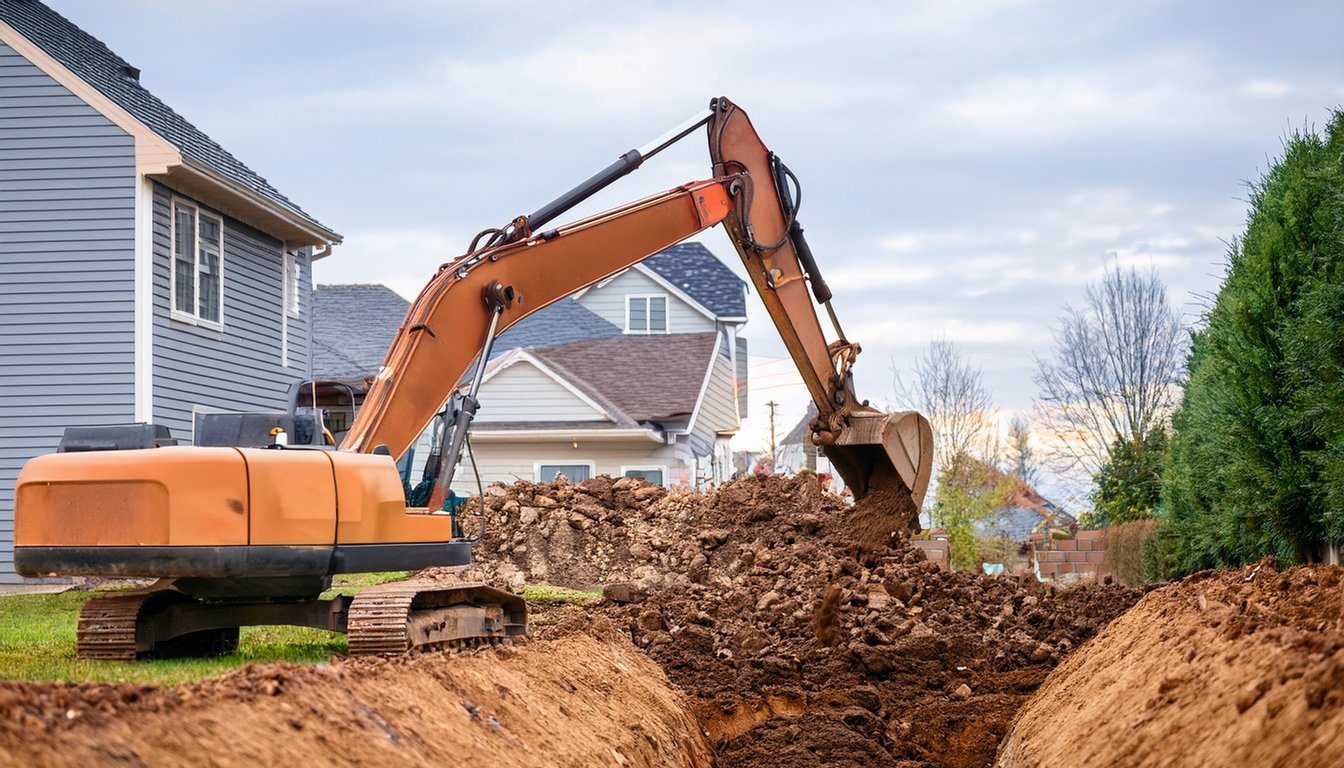
1. Depth. Deeper trenches move more soil per foot and often need a bigger machine. Equipment sets hard limits: Sunbelt Rentals lists a 12/13-inch walk-behind trencher that reaches "maximum digging depths of 13" and a larger model that reaches "maximum digging depths of 30", while Ditch Witch's C16X walk-behind trencher digs up to 36 inches. Past what a walk-behind can reach, the job moves to an excavator, and past 5 feet, safety rules add cost (see below).
2. Width. Every extra inch of width is more soil to dig, haul or put back per foot. A chain trencher cuts a narrow slot suited to wire, conduit and small pipe; an excavator bucket cuts wider, which larger pipe and deeper trenches need anyway. Match the width to the pipe and the depth, not to the machine that happens to be available.
3. Soil and rock. ThePricer notes that "Soft, accessible soil: usually keeps excavation near the lower end," while "Clay: can slow digging and make backfilling and compaction more difficult" and "Rock and boulders: may require different teeth, hydraulic breakers, larger machines, or hand work around obstacles." For a sense of scale on bigger digs, Bob Vila's excavation cost guide says "soil filled with rocks or clay deposits can add anywhere from $200 to $1,200 to the cost" of an excavation project; that's a whole-job excavation figure, not a per-foot trenching rate, but it shows why the same length can price very differently.
4. Access. Angi lists yard accessibility among the factors that affect trenching cost. A narrow side yard, steps, a gate a machine won't fit through or a slope can turn a machine job into a hand job. ThePricer estimates 100 feet of trench takes roughly 2 to 3 hours with a mechanical trencher in good conditions, "compared with up to roughly 10 to 12 hours by shovel," which is why hand digging costs far more per foot than a trencher on open ground.
5. Length and minimums. Longer runs can land at a better per-foot rate than short ones, since setup, equipment delivery and travel get spread over more feet. Short runs work the other way. Bob Vila says that for excavation, "Most contractors require a minimum of one day, or eight hours," and in our experience trenching crews often set similar minimums, so a 15-foot trench rarely costs a quarter of a 60-foot one.
Obstacles and buried utilities
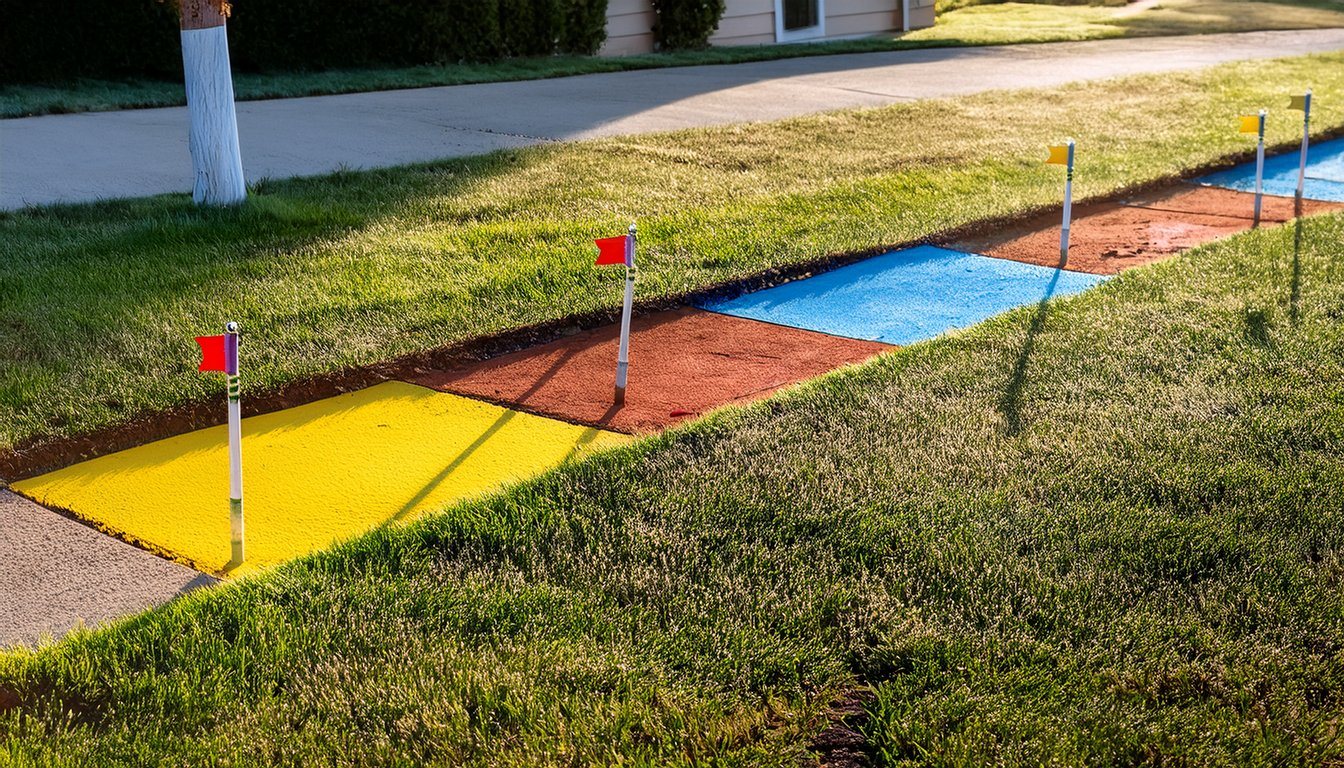
Before any digging, call 811. The national before-you-dig site calls it "the free national before-you-dig service," and utilities will mark their lines at no charge. Those marks can change the price, though. In our experience, every place a new trench crosses a marked gas, water or electrical line gets dug by hand to expose it safely, which slows the crew and adds labor. On crowded crossings, a hydrovac may do that part instead; our guide to hydrovac digging covers when, and our guide to hydro excavation cost covers how that work is billed. Tree roots, sprinkler lines, old foundations and concrete in the path do the same. If the trench runs under a driveway, patio or sidewalk, cutting and replacing that surface is its own line item, covered in our trenching cost calculator.
When a trench is 5 feet or deeper
Five feet is where trenching gets more regulated and more expensive. Federal OSHA's excavation standard, 29 CFR 1926.652, says "Each employee in an excavation shall be protected from cave-ins by an adequate protective system," with exceptions for excavations "made entirely in stable rock" or "less than 5 feet (1.52m) in depth" where a competent person finds no sign of a potential cave-in. In California, Cal/OSHA's permit rule, 8 CCR 341, requires a permit for "Construction of trenches or excavations 5 feet or deeper into which any person is required to descend." For building excavations near property lines, see shoring design.
For the homeowner, that means a deeper trench costs more than the extra digging: shoring, trench boxes or sloped sides, and a contractor who holds the right permit. If your job needs a trench this deep, confirm the contractor has handled it before and that the protection is in the price. Our guide on when shoring is required in a trench walks through the rules depth by depth.
Who digs it changes the rate
The same trench can be priced by very different trades, and each prices it its own way. In California, the license classification built for this work is the C-12. The Contractors State License Board describes it this way: "An earthwork and paving contractor digs, moves, and places material forming the surface of the earth, other than water," so that "a cut, fill, excavation, grade, trench, backfill, or tunnel (if incidental thereto) can be executed." General engineering contractors also do trenching as part of underground work, and plumbers, electricians and landscapers often dig their own trenches as part of their own jobs.
In our experience, that shapes the quote in a few ways:
- A trade digging its own trench (an electrician for a conduit run, a plumber for a water line) usually folds the digging into the price of the install. That's convenient, but it makes the per-foot trenching cost hard to see.
- An earthwork or engineering contractor usually prices the trench on its own, with its own equipment, and is the better fit for long runs, deeper cuts and jobs that cross several utilities.
- A landscaper pricing by the hour is common for shallow irrigation and drainage work, as HomeGuide's hourly range above reflects.
Whichever you hire, ask who is responsible for the 811 ticket, for damage to a marked line, and for the backfill and compaction. Those three answers matter as much as the rate.
Keeping the trench open for inspection
Utility trenches often have to stay open until an inspector sees the pipe or conduit in place. In our experience, that time isn't free. An open trench in a yard needs fencing or covers, one across a driveway may need steel plates, and a rained-in trench can need pumping and cleanup before the inspection. If the inspection date slips, the crew may have to come back to backfill. Ask whether the quote assumes same-day backfill or a return trip, and how a delay is billed.
Alternatives, briefly
Sometimes the cheapest trench is no trench. HomeGuide lists directional boring, which pulls pipe or conduit through the ground under a driveway or landscaping without an open cut, at "$10 to $30 per linear foot." Narrow micro-trenching machines are another option for some cable and fiber runs. Whether either fits depends on what's being installed and what's in the way.
Comparing per-foot quotes
Two per-foot quotes can only be compared if they describe the same trench. Check that each one states the length, depth, width, the soil or rock it assumes, how the crew will get in, and what's included (digging only, or pipe, bedding, backfill and surface repair too). Ask how rock or unmarked obstructions will be charged if they turn up. Medici Construction Group is one licensed option for trenching and underground work, holding California A, B and C-10 licenses under CSLB #1114433.
Frequently asked questions
How much does trenching cost per foot?
It depends on the job. HomeGuide lists trenching for an electrical panel line at $6 to $14 per linear foot, gas lines at $12 to $25, water lines at $30 to $50 and sewer lines at $40 to $180. Our trenching cost calculator covers the standard base range.
How much does trenching cost per hour?
HomeGuide puts trenching labor at $35 to $65 per hour on average, and says landscapers charge $50 to $100 per hour for drainage or irrigation trenching. How many feet an hour buys depends on depth, soil and access.
Why is trenching so expensive in rocky soil?
Rock and boulders can require different digging teeth, hydraulic breakers, larger machines or hand work, and they slow the crew. Clay also slows digging and makes backfill and compaction harder.
Does depth change the cost per foot?
Yes. Deeper trenches move more soil and may need a bigger machine. At 5 feet or deeper, cave-in protection is generally required, and in California a Cal/OSHA permit applies when workers go into the trench.
Is a per-foot trenching quote fair?
Compare it with published ranges for your type of job, then check the five drivers: depth, width, soil, access and length. A quote well above the range should be explained by one of them, or by extras like pipe or surface repair.
Is boring cheaper than trenching?
Often not per foot: HomeGuide lists directional boring at $10 to $30 per linear foot, but it can save money when it avoids cutting and replacing a driveway, patio or landscaping.