The plastic conduit that carries wires underground is cheap. HomeGuide puts half-inch PVC electrical conduit at about a dollar or so a foot for the material. Yet an installed underground conduit run commonly costs somewhere between $6 and $25 a foot. The difference is everything around the pipe: the trench it sits in, the wire pulled through it, the electrician's time, the permit and inspection, and whatever has to be put back on top. This guide breaks down what an installed per-foot price includes, what it costs to run power to a garage, shed or shop, what pushes the number up, and how to compare quotes. For the steps of the job itself, including the open-trench inspection, see our guide to trenching for electrical conduit.
Quick answers
- Installed conduit: HomeGuide lists half-inch PVC electrical conduit at $6.00 to $13.50 per linear foot installed.
- Power to a garage or shed: HomeGuide puts it at $10 to $25 per linear foot of underground line.
- The pipe is the small part: the same half-inch PVC costs $0.90 to $1.50 a foot as material.
- What moves the price: the load, the distance, the depth, what's in the way, and whether the panel has room.
What an installed per-foot price includes
HomeGuide's trenching cost guide says "Installing an underground conduit costs $5.50 to $25.00 per linear foot, depending on the utility and conduit type." For electrical wiring, its table lists half-inch non-metallic PVC conduit at $0.90 to $1.50 per linear foot for the material and $6.00 to $13.50 per foot installed. The gap between those two columns is the work: digging, laying the pipe, and backfilling. Commercial charging sites are a common reason for long conduit runs; our commercial EV charging hub guide explains why.
A complete underground electrical job usually has these pieces, and a quote may include some or all of them:
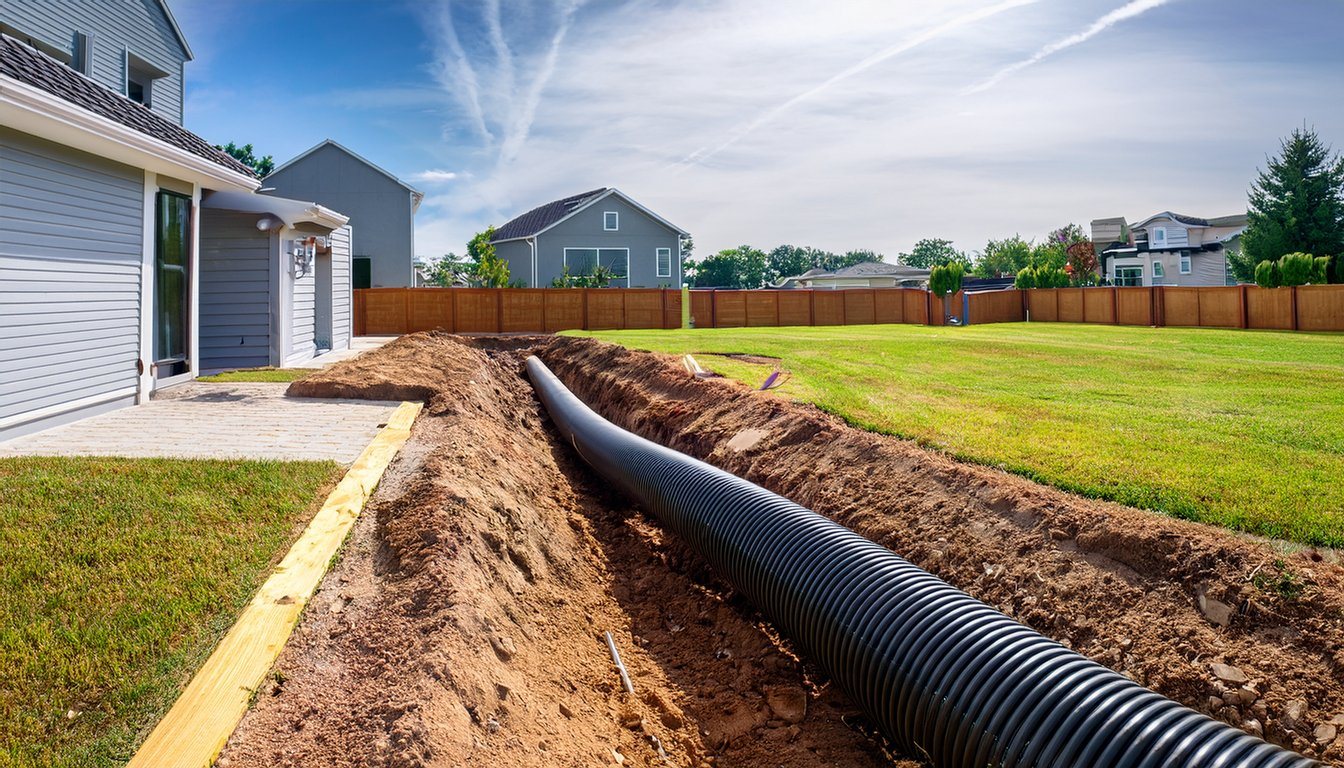
- The trench. Usually the biggest single piece. Our trenching cost per foot guide covers what drives it.
- The conduit. The pipe itself, plus fittings and the sweeps where it turns up out of the ground.
- The wire. Priced by the foot and by size; bigger loads need heavier wire.
- The electrician's time. Pulling wire, making connections at both ends, and tying into the panel.
- Permit and inspection. Usually required for new wiring.
- Surface repair. Patching lawn, planting, concrete or pavers the trench crossed.
When comparing numbers, check which of these each one covers. A low per-foot figure may be conduit and labor only, with trenching, wire or the permit billed separately.
Cost to run power to a garage, shed or shop
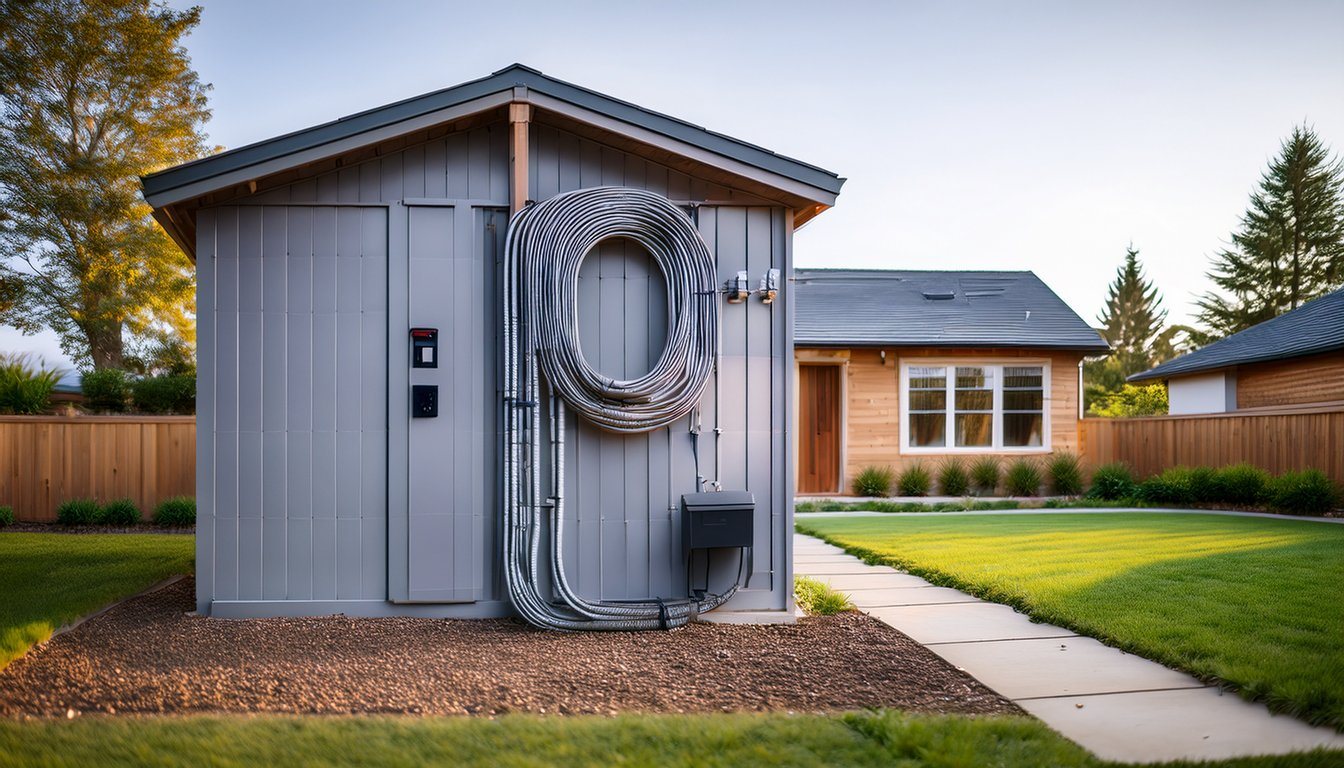
The most common reason homeowners run conduit underground is to bring power to a detached building; our garage sub panel guide covers what a detached garage feeder involves. HomeGuide's guide to the cost to run electricity to a shed, garage or shop says it "is $10 to $25 per linear foot," or "$500 to $3,800 on average for 50 to 150 feet of underground line." For underground runs, it lists 50 feet at $500 to $1,250 and 100 feet at $1,000 to $2,500, "Not including wiring inside the structure itself."
HomeGuide prices this as a run of underground line, so in our experience a quote in that range normally covers digging, conduit, wire and labor together. Don't add a separate trenching rate on top of it unless the quote leaves trenching out. Outlets, lights and any subpanel inside the building are extra. If the run is for an electric vehicle charger, our EV charger installation cost guide covers that circuit specifically.
What moves the per-foot number
1. The load. A single circuit for a light and a couple of outlets costs far less to run than a feeder for a subpanel that will power tools, a heater or a charger. Bigger loads mean heavier wire, and wire is priced by the foot. The electrician should size it for what you plan to plug in, now and later.
2. The distance. Per-foot pricing means the total climbs with every foot. HomeGuide's own examples roughly double from 50 to 100 feet. Placing a shed or garage closer to the panel, or choosing a route that shortens the run, saves money on every piece of the job.
3. The depth. In our experience, some conduit and cable types have to be buried deeper than others, and a deeper trench costs more to dig and backfill, so the conduit choice and the trench price are linked. Your electrician will pick the method allowed for the job; ask how deep the trench will be and why. Our guide to how deep to bury electrical conduit explains the depth table.
4. What's in the way. Crossing a driveway, patio or walkway means cutting and patching concrete or boring underneath, and both add cost. Our trenching guide covers boring as an alternative to an open cut.
5. The panel. A new circuit or subpanel needs room in the main panel. If the panel is full or undersized, an upgrade may come first; our electrical panel upgrade cost guide covers that.
Which conduit goes underground, and what it does to the price
Most residential runs use rigid PVC conduit, and the choice is usually between two wall thicknesses. Cantex, a PVC conduit manufacturer, says Schedule 40 "can also be buried directly into the earth, encased in concrete", and that "For areas where your PVC electrical pipe will be subject to physical damage, you should use Schedule 80 PVC Conduit." It also notes that "The walls of Schedule 80 PVC are actually thicker than than Schedule 40 PVC."
In our experience, that splits a typical run into two parts. The buried length is usually Schedule 40, which is the cheaper pipe. The short risers where the conduit turns up out of the ground and runs up the wall to a panel or disconnect are where Schedule 80 or metal conduit tends to show up, because that's the part a mower, a car bumper or a shovel can hit. Since the risers are a few feet at each end, the heavier pipe adds little to a long run's per-foot price, but it can matter on a short one.
Conduit size moves the number more than the schedule does. A half-inch pipe fits a single small circuit; a feeder for a subpanel with heavier wire needs a larger conduit, and both the pipe and the wire cost more per foot. In our experience, it's worth asking for one size up from the minimum on a run to a garage or shop. The extra pipe cost is small next to digging a second trench later for an EV charger or a heater.
Long runs: why distance changes the wire, not just the footage
On a short run, the per-foot price scales almost evenly with length. On a long one it doesn't. Electricity loses voltage over distance, and to keep the voltage at the far end usable, electricians often step up the wire size on long runs. Heavier wire costs more per foot and may need a larger conduit, so a 200-foot run can cost more than twice a 100-foot run for the same load.
In our experience, three things help keep a long run under control:
- Tell the electrician the real load. The wire is sized for what you'll run in the building, so list the tools, heaters, air conditioning or charger now, not after the trench is closed.
- Shorten the route. A straight line from the panel, or starting from a closer point such as an existing subpanel, can cut both trench and wire length.
- Ask for the wire size in the quote. Two bids for the same length can differ mainly because one sized the wire for distance and the other didn't. The cheaper one isn't a bargain if it leaves you with dim lights and tripping tools.
Electrician time and permits
HomeGuide's guide to electrician rates says "Electrician hourly rates are $50 to $130 on average, with a $100 to $200 service call fee covering the first hour," and that "Electrical permits cost $50 to $350, depending on the project." In our experience, most jurisdictions require a permit for new wiring. In Los Angeles, for example, the building department's electrical permits page says "Electrical Permits are required for any electrical work." In our experience, inspectors want to see the conduit in the open trench before it's backfilled, so the schedule has to allow for that inspection.
Utility service conduit is different
Conduit for the utility's own service line, from the street or pole to your meter, follows the utility's rules, not just the electrical code. PG&E's conduit requirements document says "When conduit, including service conduit, is to be installed for PG&E by others, the conduits must meet the requirements listed in this document." Other utilities have similar specifications. If your project involves new or relocated underground service, check with the utility before anyone digs; our panel upgrade guide covers service changes. Our 400 amp service cost guide explains how a new service run affects a large upgrade. For replacing the service conductors themselves, see the cost to replace service entrance cable.
A worked example
Say you want power in a detached garage 50 feet from the house, feeding a small subpanel. Using HomeGuide's figures:
| Item | Basis | Range |
|---|---|---|
| Underground line | 50 ft (HomeGuide underground run) | $500 to $1,250 |
| Subpanel | HomeGuide subpanel range | $500 to $1,700 |
| Permit | HomeGuide electrical permit range | $50 to $350 |
| Total | $1,050 to $3,300 |
HomeGuide's garage and shed guide puts subpanel installation at "$500 to $1,700, depending on the size, number of circuits, and the amount of wiring involved." This example leaves out the outlets and lights inside the garage, surface repair, and any main panel upgrade. It's an illustration of how the pieces add up, not a quote. Our subpanel installation cost guide breaks down the panel side of the job.
Comparing quotes
Ask each contractor to state the run length, the conduit type and size, the wire size, the trench depth, and whether trenching, surface repair, the permit and the inspection are included. Ask what happens if they hit rock, roots or an unmarked line. Two quotes that answer those the same way can be compared line by line. Medici Construction Group is one licensed option for underground electrical and trenching work, holding California A, B and C-10 licenses under CSLB #1114433.
Frequently asked questions
How much does it cost to install underground conduit per foot?
HomeGuide puts underground conduit at $5.50 to $25.00 per linear foot installed, depending on the type, with half-inch PVC electrical conduit at $6.00 to $13.50 per foot.
How much does it cost to run power to a detached garage?
HomeGuide puts running electricity to a garage, shed or shop at $10 to $25 per linear foot, or $500 to $1,250 for a 50-foot underground run, not counting wiring inside the building.
How much does it cost to run power 100 feet underground?
About $1,000 to $2,500 for a 100-foot underground line to a garage, shed or shop, according to HomeGuide, before interior wiring, a subpanel or surface repair.
How much does it cost to run electrical to a shed?
The same per-foot range applies: $10 to $25 per linear foot, according to HomeGuide. A shed that needs only a light and outlet sits toward the low end; a workshop with a subpanel costs more.
Do I need a permit to run underground electrical?
Usually, yes. In our experience, most building departments require a permit and inspection for new wiring; Los Angeles, for example, says electrical permits are required for any electrical work. HomeGuide puts electrical permits at $50 to $350. Our electrical permit cost guide shows how cities add up the fee.
Is conduit expensive?
The pipe isn't. Half-inch PVC electrical conduit runs $0.90 to $1.50 a foot as material, per HomeGuide. Most of the installed cost is trenching, wire and labor.
Does trenching cost extra?
Sometimes. Some quotes bundle trenching into the per-foot price and some list it separately. Our trenching cost per foot guide covers trenching rates on their own.
What type of conduit is used for underground electrical?
On most homes, rigid PVC. Cantex says Schedule 40 PVC can be buried directly in the earth or encased in concrete, and recommends Schedule 80 where the pipe will be subject to physical damage. In our experience, that usually means Schedule 40 underground and heavier pipe at the risers where the run comes up out of the ground.