The sealer itself costs about 6 to 15 cents per square foot, according to HomeGuide's material prices. A full parking lot sealcoating job with crack sealing and restriping can run 65 to 90 cents per square foot in one contractor's pricing. The gap is where the bid is decided: the cracks that need filling, the oil spots that need priming, the lines that need repainting, and how many times the crew has to come back so the business can stay open.
Quick answers
- Sealcoat only: one paving contractor prices it at $0.20 to $0.50 per square foot; Angi's range is $0.14 to $0.25.
- With crack sealing and striping: the same contractor lists $0.65 to $0.90 per square foot.
- Common add-on: extra crew trips for a phased job cost $750 to $3,500 each, per that contractor.
- How often: every 2 to 4 years for commercial lots, per the contractor; Angi says every 2 to 5.
What sealcoating a parking lot is
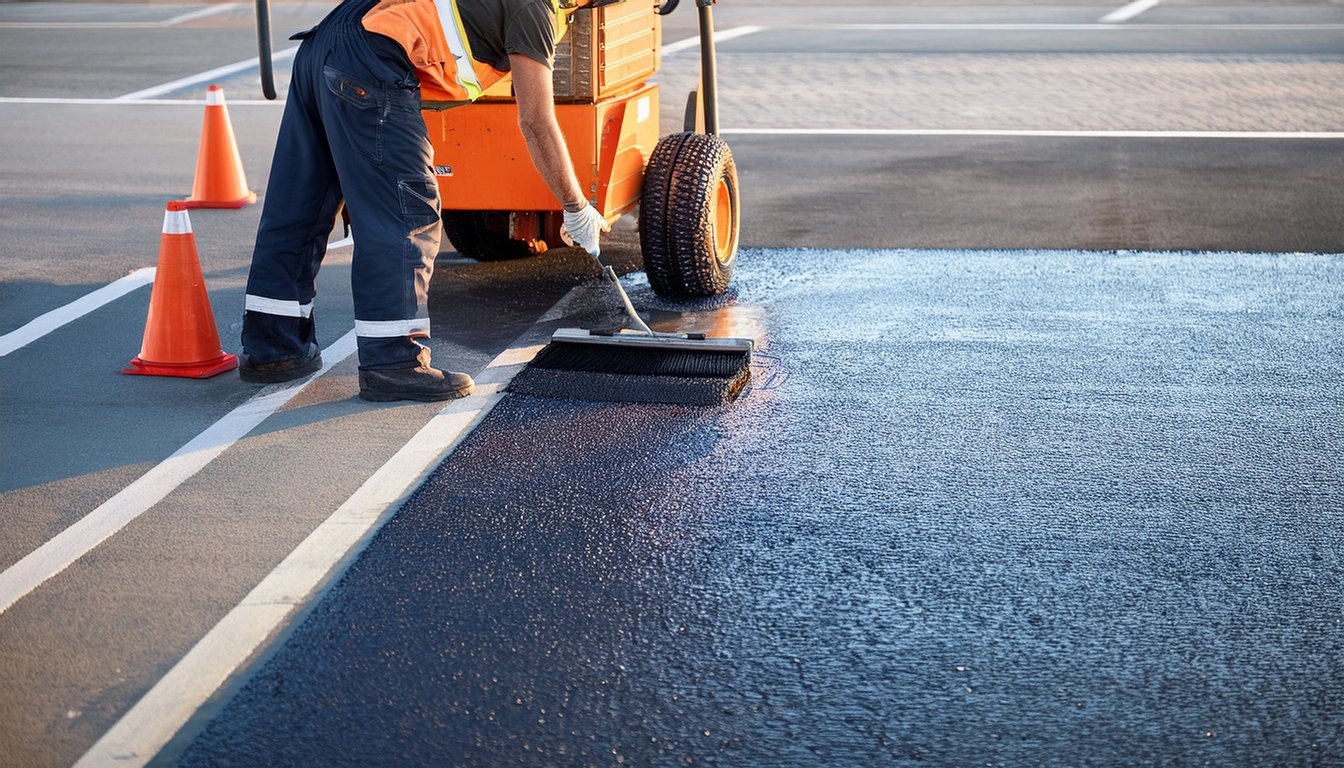
The U.S. Geological Survey describes sealcoat as "the black, viscous liquid applied to many asphalt parking lots, driveways, and playgrounds in North America to protect and enhance the appearance of the underlying asphalt." For commercial lots, one paving contractor recommends two coats of sealer, with a single coat sometimes enough for low-traffic areas.
The price, layer by layer
The clearest breakdown we found comes from a single paving contractor, so treat these as one company's rates, not a market average:
| Scope | Price per square foot |
|---|---|
| Sealcoating only | $0.20 to $0.50 |
| With crack sealing | $0.60 to $0.80 |
| With crack sealing and line striping | $0.65 to $0.90 |
For comparison, Angi puts sealcoating asphalt at $0.14 to $0.25 per square foot. The sealer is a small share of either number: HomeGuide lists the material at $0.08 to $0.15 per square foot for asphalt polymer emulsion and $0.06 to $0.15 for coal tar emulsion.
What moves the bid
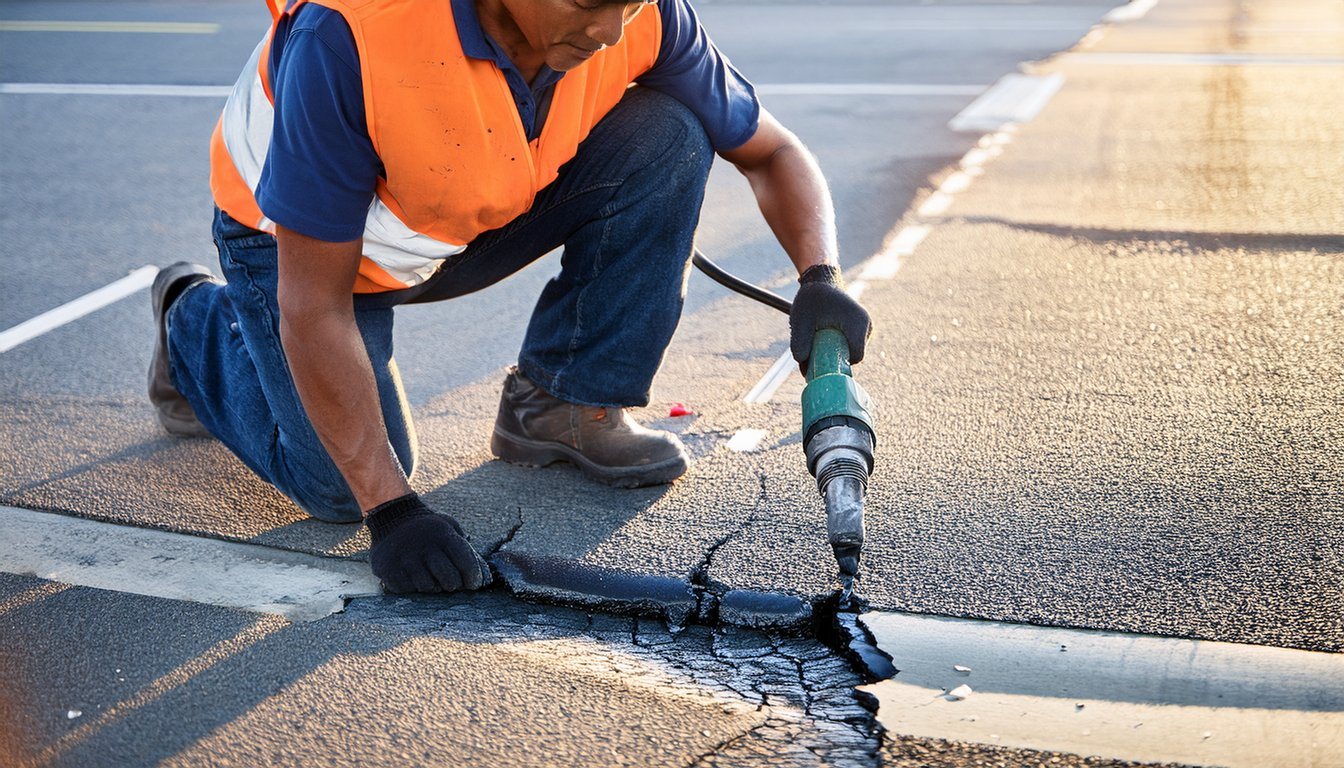
- Crack filling. The contractor prices it at $1.00 to $2.00 per linear foot, so a heavily cracked lot adds up quickly.
- Oil spots. Stained stalls get a primer so the sealer sticks, at $0 to $5 per parking stall.
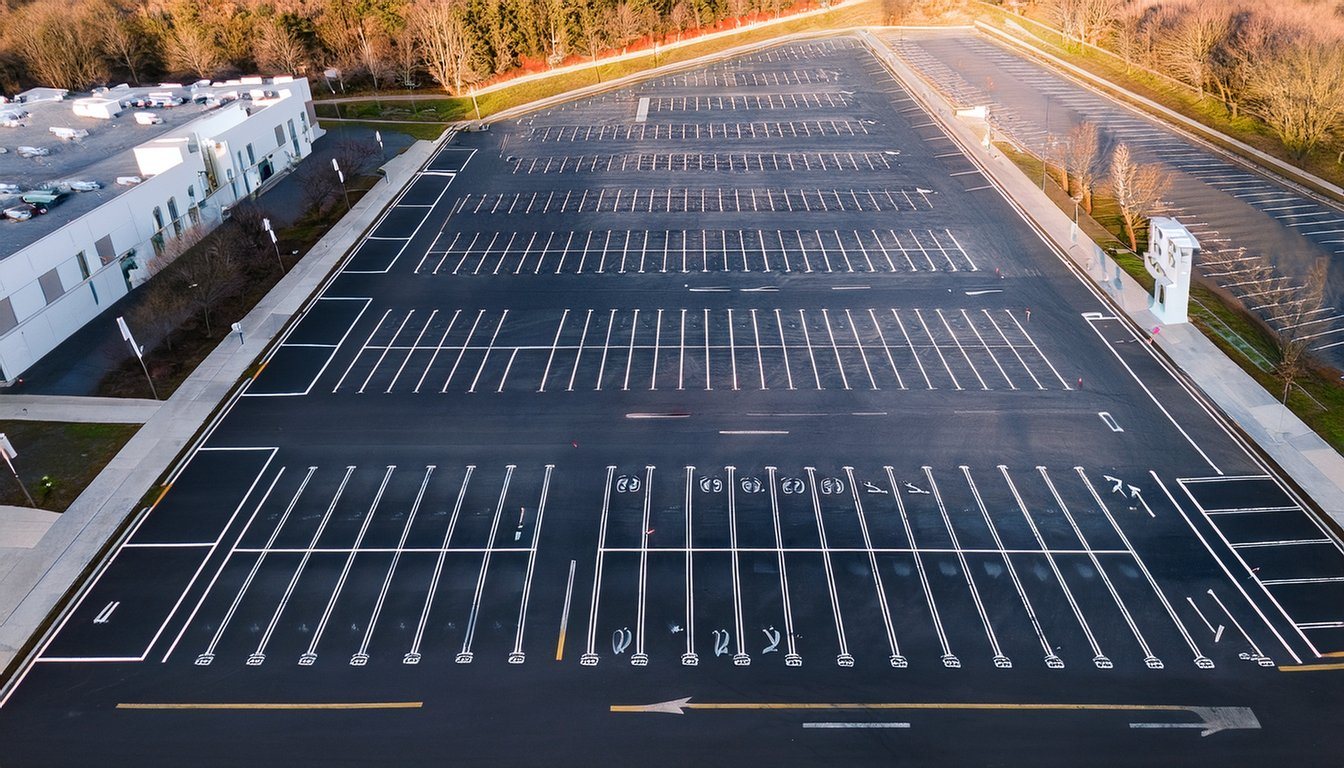
- Restriping. In our experience, fresh sealer covers the old lines, so the lot has to be restriped. The contractor figures $0.02 to $0.06 per square foot of total asphalt area.
- Phasing. A business that can't close its whole lot needs the work done in sections, each left to cure before reopening. The contractor notes busy properties may need two or more work days, and charges $750 to $3,500 for each extra mobilization.
- Size. In our experience, small lots cost more per square foot, because setup and equipment cost about the same whatever the area.
What's in the sealer matters too
Two bids can both say "two coats" and still use different mixes. Sand is the main variable, and it adds texture and traction. An industry publication explains: "Select grades of clean angular, quartz sand or aggregate are commonly added to sealcoatings." It gives typical loading rates of "2 to 2.5 lbs. per gallon of undiluted sealer" for normal textured pavements, and notes that "For rougher pavements, sand loading of 4 to 4.5 lbs. per gallon of undiluted sealer is used..." There's a ceiling, too: "The limit is reached at about 5 lbs. of sand per gallon of sealer."
In our experience, asking a contractor how much sand they add per gallon, and whether they dilute the sealer, tells you a lot about what you're getting. A low price sometimes comes from a thinned mix or light sand loading, which wears faster in drive lanes. If the lot needs more than a coating, our guide to parking lot repair companies explains which crew does which work.
Reading the scope line: coats, method and prep
The sand question is one part of a bigger point: two bids can price different jobs under the same word. SealMaster's sealcoating specification sets out what a full job looks like. On coats: "Apply two coats of sealer. A third coat may be applied to high traffic areas such as entrances, exits and drive lanes." On method: "Pavement sealer can be applied by brush, squeegee, or specialized spray equipment." On prep: "Surfaces must be clean and free from all loose dirt and material," with oil and grease spots treated before sealing.
Each of those is a place where a bid can save money without saying so. In our experience, these are the lines to pin down:
- Coats by area. Two coats across the lot, and whether the drive lanes and entrances get a third. Drive lanes wear first, so a third coat there often costs less than resealing them early.
- Method. Squeegee work pushes sealer into the surface texture and tends to suit rough or older pavement. Spray is faster and more even on smooth pavement. Many crews squeegee the first coat and spray the second. Ask which the price assumes.
- Cleaning. Blowing and sweeping, or power brooming, and how heavily soiled areas such as dumpster pads and loading zones are handled. Sealer over dirt peels.
- Edges and curbs. Whether the crew hand-cuts along curbs, buildings and landscaping, and how they protect concrete and paint from overspray.
Coal tar or asphalt-based sealer
Bids may not say which sealer they include, and it matters. The USGS reports that coal-tar-based sealcoat contains 35,000 to 200,000 mg/kg of PAHs, about 1,000 times more than sealcoat products with an asphalt base, and calls it "a potent source of polycyclic aromatic hydrocarbon (PAH) contamination in urban and suburban areas..." Austin, Texas, became the first U.S. jurisdiction to ban coal-tar sealants in 2006. The USGS notes coal-tar sealcoat is prohibited in some states, counties, and cities, so check local rules. Since HomeGuide's material prices for the two types overlap, asking for an asphalt-based sealer shouldn't change the bid much.
Storm drains and the edges of the lot
Sealer that reaches a storm drain is a problem during and after the job. The USGS explains that sealcoat "after it dries, gradually abrades to a powder and becomes part of the dust on the pavement," and that "Runoff carrying high-PAH sealcoat particles flows into storm drains, where it can be transported to streams and lakes." In our experience, a careful crew covers catch basins and drain inlets before work starts, keeps wash water out of them and removes the covers only when the work is done. Ask whether the bid includes drain protection and how the crew cleans its equipment on site. Many cities and stormwater agencies also restrict what can enter a storm drain, so a contractor who plans for this protects the owner as well as the water. If the property has its own stormwater plan or a maintenance agreement covering its drains or filters, give the contractor a copy before the job so the protection matches what the site is required to do.
When sealcoat won't help
Sealcoat is maintenance, not repair. One striping and sealcoating contractor states plainly that "sealcoats cannot repair alligator cracking" and that "Seal coats are not repair products; they are a type of preventive maintenance product." Alligator cracking, the pattern of small connected cracks that looks like reptile skin, usually points below the surface: the same contractor says "in virtually all cases, the cause of the damage can be traced to the foundation that supports the pavement." For what those repairs cost, see our parking lot repair cost guide. For how to tell whether pavement needs a sealcoat or an overlay, see our overlay vs seal coat guide.
If large areas of a lot look like that, sealcoating them is money spent on appearance. In our experience, the better approach is to get those areas priced for repair first and sealcoat the sound pavement around them.
Scheduling: weather and new pavement
Sealcoating needs warm, dry weather, so a job can slip if the forecast turns, which matters when you're coordinating closures with tenants or customers. A newly paved lot also has to wait before its first coat. Sealer manufacturer SealMaster says "New asphalt should cure a minimum of 30 to 60 days," while one industry publication recommends the surface "be at least 6 months to 1 year old." If your lot was just paved, ask the contractor which guideline they follow.
Worked example: a 20,000-square-foot lot
Using the same contractor's ranges, as an illustration only:
- Sealcoating only: 20,000 × $0.20 to $0.50 = $4,000 to $10,000
- With crack sealing and striping: 20,000 × $0.65 to $0.90 = $13,000 to $18,000
- Plus one extra mobilization if the lot is done in two phases: $750 to $3,500, for about $13,750 to $21,500 in total
The jump from the first line to the last is almost entirely prep, striping, and scheduling, not sealer.
Budgeting sealcoating as maintenance
For a property owner, sealcoating is easier to plan as a recurring line item than as a one-time decision. At the 2-to-4-year interval one contractor recommends, a 20,000-square-foot lot sealcoated for $4,000 to $10,000 works out to roughly $1,000 to $5,000 a year. The add-ons belong in the same budget: at the contractor's restriping rate of $0.02 to $0.06 per square foot, restriping that lot adds about $400 to $1,200 each cycle, and crack filling at $1.00 to $2.00 per linear foot depends on how much cracking has developed since the last round.
Road agencies budget the same way, on a larger scale. A Federal Highway Administration report on pavement preservation notes that in North Carolina, chip seal treatments cost "$25,000 per lane mile, compared to $100,000 per lane mile for a traditional 1.5-inch mill-and-overlay project." Those are highway figures, not parking lot prices, but the budgeting idea is the same: plan for the smaller, regular surface costs so they don't get pushed until a larger project is the only option.
Getting comparable bids
Ask each contractor to state the number of coats, the sealer type, the linear feet of cracks they plan to fill, whether restriping is included, how many phases and mobilizations the price assumes, and, in our experience worth asking, what warranty comes with the work. With those in writing, bids line up. Medici Construction Group is one licensed option for asphalt and parking lot work, holding California A, B and C-10 licenses under CSLB #1114433. For new paving, see our asphalt paving cost calculator.
Frequently asked questions
How much does it cost to sealcoat a parking lot?
One paving contractor prices sealcoating alone at $0.20 to $0.50 per square foot and $0.65 to $0.90 with crack sealing and striping. Angi's range for sealcoating is $0.14 to $0.25 per square foot.
How much does parking lot crack filling cost?
One contractor prices crack filling at $1.00 to $2.00 per linear foot, so the total depends on how many feet of cracks the lot has.
How often should a parking lot be sealcoated?
One paving contractor recommends every 2 to 4 years for commercial lots, and Angi says once every two to five years.
Is coal tar sealer banned?
In some places. The USGS notes that Austin, Texas, was the first U.S. jurisdiction to ban coal-tar sealants, in 2006, and says coal-tar sealcoat contains about 1,000 times more PAHs than asphalt-based products. Check local rules and ask which sealer a bid includes.
How much does it cost to sealcoat a large parking lot?
Using one contractor's rates, a 20,000-square-foot lot runs about $4,000 to $10,000 for sealcoating alone, or $13,000 to $18,000 with crack sealing and striping, plus $750 to $3,500 for each extra mobilization if the work is phased.
Will sealcoating fix alligator cracking?
No. Sealcoat is preventive maintenance, not a repair. Alligator cracking usually traces back to the base that supports the pavement, so those areas need repair before sealcoating makes sense.
How much sand goes into parking lot sealcoat?
One industry publication gives typical loading of 2 to 2.5 pounds of sand per gallon of undiluted sealer for normal pavement and 4 to 4.5 pounds for rougher pavement, with about 5 pounds as the upper limit.
How much should I budget each year for parking lot sealcoating?
Spread over a 2-to-4-year cycle, a 20,000-square-foot lot sealcoated for $4,000 to $10,000 works out to roughly $1,000 to $5,000 a year, before crack filling and restriping.