In our experience, the same charger that works well in an office parking lot can be the wrong choice at a grocery store. At the office, cars sit for eight hours, and a modest charger fills them up while people work. At the store, most visitors are gone in half an hour, and that same charger adds only a small top-up before they leave. Nothing is wrong with the equipment. It just doesn't match how long cars stay.
That's why there's no single best commercial EV charging solution. The right one starts with how long vehicles park at your site. That decides the charging level. Then come three more choices: who owns and runs the chargers, whether they're networked on an open standard, and how the power is managed. If you sell charging to the public in California, payment and metering rules apply too. This guide walks through each decision in that order.
Quick answers
- Start with dwell time: long stays (offices, apartments, hotels) usually suit Level 2; short stops suit DC fast charging.
- Then pick who carries the risk: owning gives control; third-party ownership shifts uptime, software and payment duties.
- Avoid lock-in: chargers that support an open protocol like OCPP can change networks later.
- California rules: public chargers must meet CARB payment rules, and chargers that sell by the kilowatt-hour need type approval and county registration.
Start with how long vehicles stay
Federal guidance on public charging frames the choice around parking time. The Alternative Fuels Data Center says "Level 1 and 2 charging stations should typically be located where vehicle owners are highly concentrated and parked for long periods of time, such as shopping centers, airports, hotels, government offices, and other businesses." For workplaces, it notes that "Level 2 stations are the most commonly used at workplaces, and each Level 2 connector is capable of charging more than one vehicle per day."
DC fast charging is built for short stops. The U.S. DOT's rural EV toolkit says "DCFC equipment can charge a BEV to 80 percent in just 20 minutes to 1 hour". In our experience, actual times depend on the vehicle and the charger.
Here's how that usually plays out by type of site, based on our experience. Treat it as a starting point, not a rule; your own parking patterns are the real input.
| Site type | Typical stay | Usual starting point |
|---|---|---|
| Office or workplace | Most of the workday | Level 2, often with load management |
| Apartments and condos | Overnight | Level 2, shared among residents |
| Hotels | Overnight | Level 2 for guests |
| Shopping centers, gyms, restaurants | One to three hours | Level 2, sometimes a few DC fast ports |
| Quick-stop retail and convenience | Under an hour | DC fast charging |
| Fleet depot | Varies by schedule | Level 2 for overnight fleets, DC fast for vehicles that turn around quickly |
In our experience, the question to ask isn't "how fast can we charge?" but "how much energy does a typical vehicle need before it leaves?" A car parked for eight hours needs a modest charger. A car parked for 20 minutes needs a big one, and that costs far more to install and to run.
Level 2 or DC fast charging
In our experience, Level 2 is the default for most commercial sites because it matches long stays and costs less per port. DC fast charging, sometimes called Level 3, makes sense where turnover is high or drivers need range quickly. At workplaces, AFDC notes that "DC fast charging may be used as part of a strategy to alleviate charging congestion or to allow employees to charge in a very short amount of time."
DC fast charging also changes your electric bill. AFDC warns that "Direct-current (DC) fast charging equipment is more likely to trigger demand charges than Level 1 and Level 2 charging." In our experience, commercial rate options for EV charging differ by utility, so talk to yours before choosing equipment. For what each option costs to install, see our commercial EV charging station cost guide.
Who owns and runs the chargers
The bigger decision is often who carries the risk once the chargers are in: keeping them working, running the software, and handling payments. The U.S. DOT's rural EV toolkit describes the basic options for site hosts: "local businesses may own or operate the EV infrastructure and charge users a fee to plug in." Or they "may provide free charging or otherwise allow the utility, network company, or other third-party to own or operate the EVSE." Public agencies also use public-private partnerships, which the toolkit describes as partnerships "between public agencies (such as local and Tribal Governments and transportation authorities) and private companies".
In our experience, the trade-off looks like this. If you own the chargers, you set prices and access rules, and you're responsible for uptime, software subscriptions and meeting payment rules. If a third party owns or operates them, much of that moves to them, usually in return for less control, a long contract and a share of revenue. Either way, read who pays for repairs, what happens if the operator leaves the market, and who owns the equipment at the end of the term. Our commercial EV charging hub guide covers how larger sites are typically set up.
Networked or standalone, and avoiding lock-in
A networked charger connects to software that handles access, payment and monitoring. AFDC explains that "Networked charging infrastructure can generally be categorized as member-only access or open access." Standalone chargers can still collect fees; AFDC notes site hosts can charge for non-networked equipment through RFID, mobile apps or in-person payments.
If you choose networked chargers, pay attention to the communication standard. The Open Charge Alliance describes its protocol this way: "OCPP is the global open communication protocol between charging stations and charging management systems." It adds that the protocol "helps the EV charging ecosystem build infrastructure that is interoperable, scalable, and less dependent on proprietary systems." In our experience, chargers that support an open protocol give you room to switch software providers later without replacing hardware. Ask every vendor whether that's true for the specific model and contract. It's also worth asking who controls pricing and access rules, what reports you'll get on usage and uptime, and what happens to your data and settings if the contract ends. In our experience, those answers separate a network you can live with for ten years from one you'll want out of in two.
California rules when you sell charging to the public
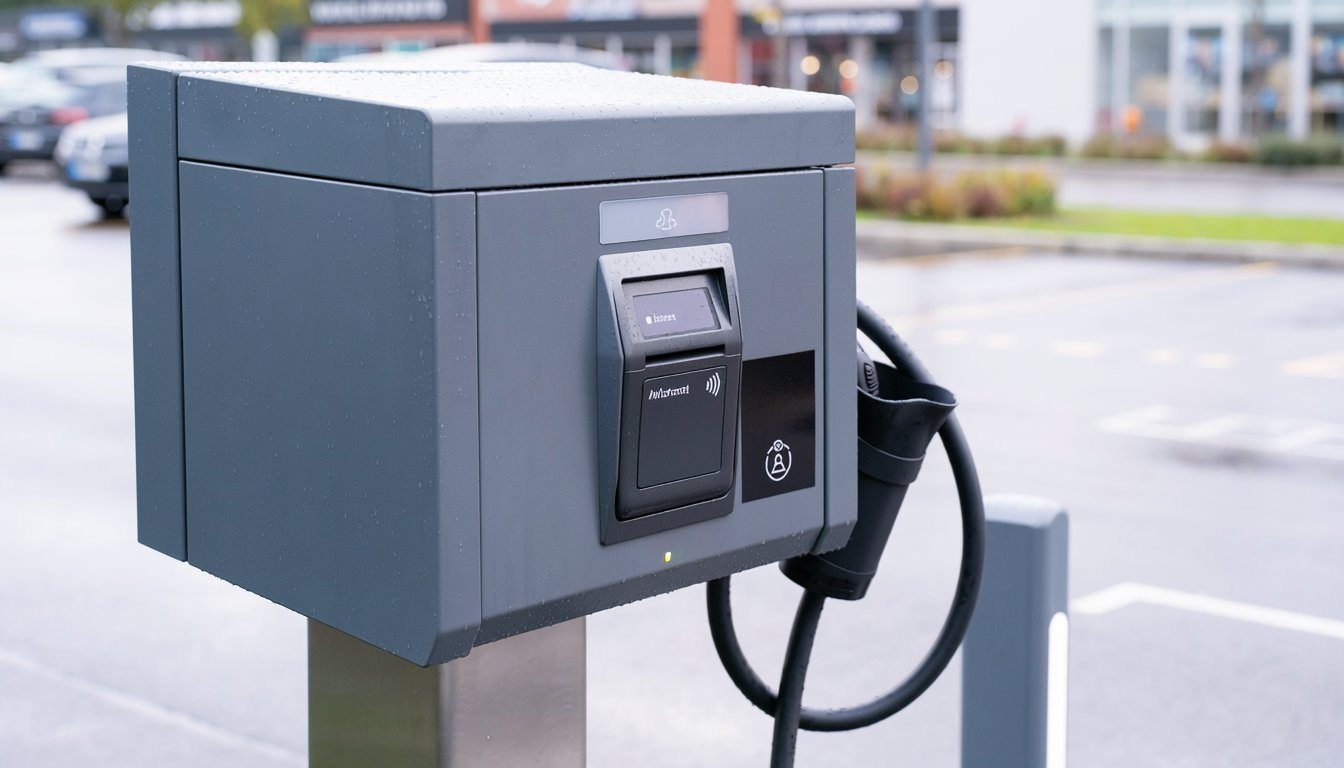
Payment and reporting. If your chargers are open to the public, the California Air Resources Board's EVSE standards apply. For new public chargers, CARB's FAQ lists a "Minimum payment hardware technology of Euro MasterCard Visa (EMV) chip reader for credit cards and near field communications (NFC) reader for mobile payments", and says a charger "Must display a toll-free number for payment processing". CARB's FAQ gives the effective dates for new installations as January 1, 2022 for DC fast chargers and July 1, 2023 for Level 2, with existing public chargers covered upon turnover or upgrade, and no later than July 1, 2033. Reporting has its own requirements, including annual inventory reporting to CARB and station location reporting to the Alternative Fuels Data Center.
Metering. If you sell electricity by the kilowatt-hour, California's weights and measures program treats the charger like a gas pump. The state's Division of Measurement Standards says "EVSE intended for commercial purposes must be type evaluated and approved by either the California Type Evaluation Program or the National Type Evaluation Program." It also says "A business that owns or operates commercial retail EVSE must register each device with the local county office of weights and measures." Chargers covered by the rules carry a county approval seal showing they were inspected, tested and found compliant. The program lists exceptions, including chargers that dispense electricity at no cost and chargers owned and operated by public utilities or government entities, so confirm how your setup is classified. Either way, ask your vendor for documentation that the model you're buying is approved.
Power: the part that decides how many chargers fit
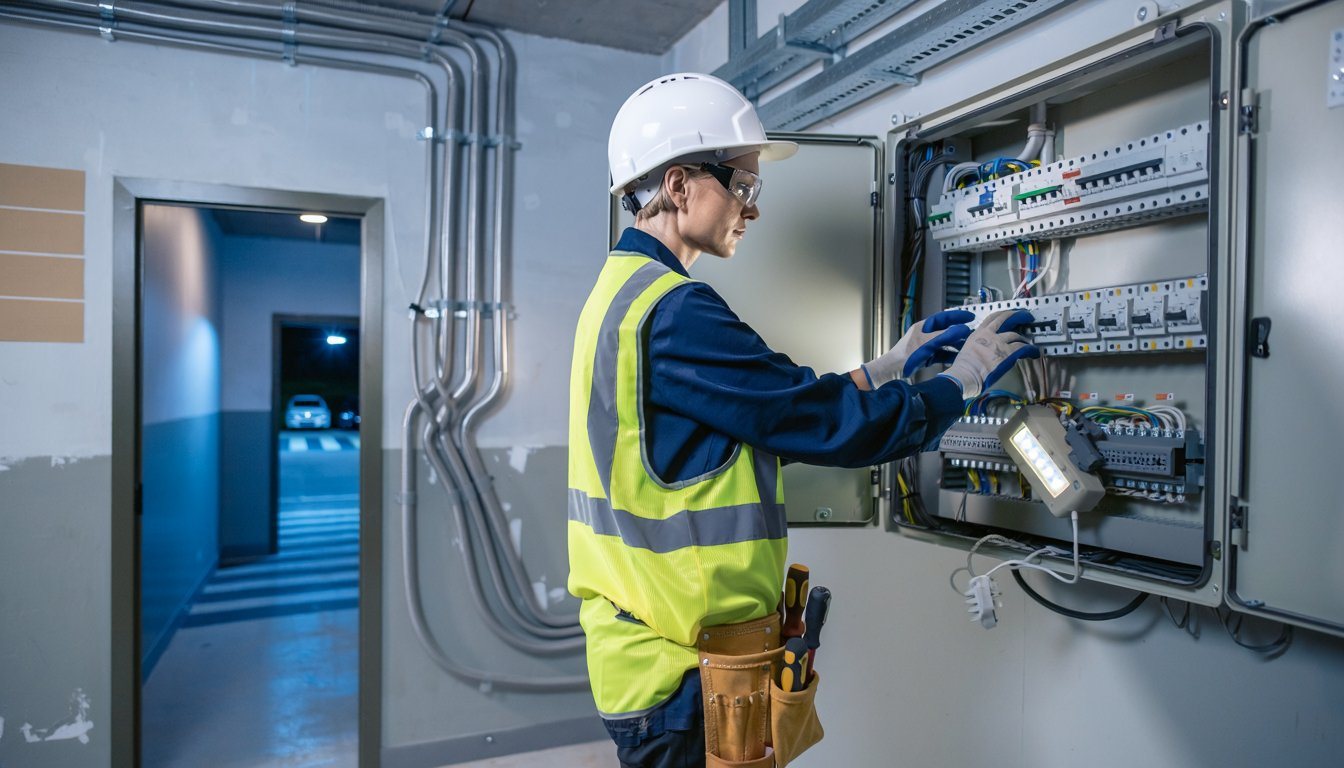
The electrical service usually sets the limit on how many chargers a site can support. Federal guidance for government fleets defines managed charging as "the strategic control of when and how vehicles are charged without compromising the fleets' operational needs." and notes it "Reduces charging electricity costs by avoiding peak pricing or demand charges." In our experience, the same principle applies to commercial sites: sharing power across chargers can let you install more ports on the same service.
When a site needs more capacity, the work reaches back to the service equipment. Our guides to how switchgear works, panel upgrades and underground conduit cover those pieces. In our experience, installing extra conduit during the first phase makes adding chargers later much cheaper.
Incentives in Los Angeles right now
As of September 2026, the two big local programs aren't open to new applicants. SCE's Charge Ready Light Duty page says "the application portal will close on June 30, 2026," a date that has now passed. LADWP's commercial EV charger rebate dashboard shows Level 2 as "Enrollment closed" as of its latest update. Programs change, so check your utility's current offerings before you budget. For the federal tax credit, see our cost guide.
Putting the decisions in order
Demand for charging keeps growing; the California Energy Commission reported in 2025 that "California now has 48% more EV chargers – public and shared private – than the number of gasoline nozzles." In our experience, the sites that get the most from their chargers make the decisions in this order: dwell time, charging level, ownership, network, then power. Brand comes last. Once those choices are made, our commercial EV charger installation guide covers how the build itself runs.
Medici Construction Group is one licensed option for the electrical and site work behind commercial charging, holding California A, B and C-10 licenses under CSLB #1114433. Whoever you work with, ask for a site assessment of your electrical capacity before you commit to a charger count.
Frequently asked questions
Who is the best supplier for commercial EV charging?
There isn't one best supplier for every site. A project usually involves a hardware maker, a network or software provider, an installer, and sometimes a utility program. Choose on fit: the charging level your dwell time needs, open-protocol support, California compliance, service terms and who handles repairs.
Should my business install Level 2 or DC fast chargers?
It depends on how long vehicles stay. Level 2 suits places where cars park for hours, like offices, apartments and hotels. DC fast charging suits short stops and high turnover. See the dwell-time table above.
Should I own the chargers or let a charging company run them?
Owning gives you control over pricing and access but puts uptime, software and payment compliance on you. In our experience, letting a third party own or operate them shifts much of that risk, usually in exchange for less control and a share of revenue. Read the contract terms closely.
Do commercial EV chargers need to be networked?
Not always. Networked chargers connect to software for access and payment, while non-networked units can still charge fees through RFID, apps or in-person payment. In our experience, if you'll bill drivers or manage load across many ports, networked chargers are usually the practical choice.
What rules apply if I charge customers for EV charging in California?
If your chargers are open to the public, CARB's EVSE standards set payment and reporting requirements. If you sell electricity by the kilowatt-hour, the chargers must be type-approved, and the state's weights and measures program requires registration with the county.
Is a commercial EV charging station profitable?
In our experience, it depends on how often the chargers are used, what you pay the utility including demand charges, and how you price the charging. Many hosts treat chargers as part of the business rather than a stand-alone profit line. Our cost guide covers what a station costs to build.
What is the 80/20 rule for EV charging?
It's a rule of thumb, not a regulation. In our experience, fast charging slows down as a battery fills, so many drivers stop around 80 percent on a DC fast charger. That's one reason fast-charging sites are planned around short stops.