A shopping center owner gets a call from a charging company that wants to lease the back row of the parking lot for "a charging hub." The owner pictures a few chargers and some striping. Then the utility gets involved, and its first question isn't how many parking spaces the hub will use. It's how many kilowatts it will draw, all at once, on a busy afternoon.
That question is the heart of what a charging hub is. It's not defined by the number of plugs in a lot but by how much power it can deliver at the same time. That one fact decides whether a site can host a hub, how long it takes to build, and who pays for which part.
Quick answers
- What it is: a site with several fast chargers able to charge multiple vehicles at high power at the same time.
- How big: there's no single legal definition; federally funded corridor stations need at least four fast-charging ports as a minimum.
- What decides feasibility: electrical capacity from the utility, which drives cost and timeline more than anything on the lot.
- In California: cities must offer streamlined permitting for EV charging, and public charging sites need accessible charging spaces.
What makes a site a "hub"
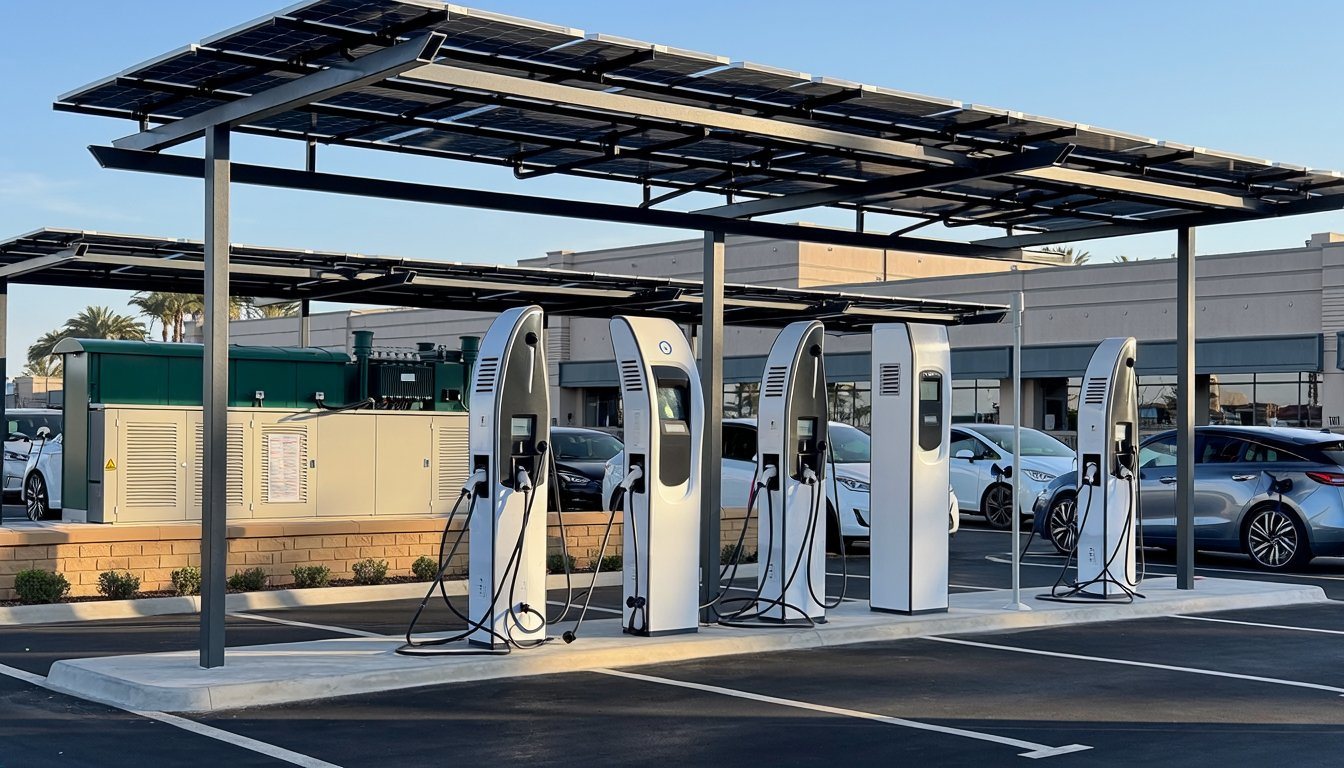
In plain terms, a charging hub is a site built around several fast chargers, designed so many vehicles can charge at high power at once. One charging-industry guide describes it as "a multi-charger site designed for higher traffic and higher power than the lonely pedestal charger behind a hotel." The same guide says a hub "typically has four to a few dozen fast-charging stalls in one place, with enough power on tap to run several at high speed simultaneously."
There's no single legal definition of a hub, but federal rules give a useful benchmark for scale. For stations funded under the federal NEVI program on designated corridors, the regulation says "charging stations must have at least four network-connected DCFC charging ports and be capable of simultaneously charging at least four EVs." Each port "must have a continuous power delivery rating of at least 150 kilowatt (kW)". Four ports at 150 kW each works out to 600 kW at the same time. That's our arithmetic, and it applies only to NEVI-funded stations, but it shows the scale of power involved.
In our experience, a bank of Level 2 chargers at an office or apartment building is useful charging, but it isn't what people mean by a hub. The word usually means DC fast charging, which our commercial EV charging station cost guide compares with Level 2.
Why hubs are spreading
Public charging in California has grown quickly. In its September 2025 count, the California Energy Commission reported "There are now 201,180 fully public and shared electric vehicle (EV) charging ports." The same announcement noted that "Since the CEC's last count, DCFC public and shared charging ports are up 14%."
Much of the demand for hubs comes from vehicles that drive a lot. The Department of Energy's Alternative Fuels Data Center notes that "DC fast charging is projected to increase due to fleets adopting medium- and heavy-duty EVs (e.g., commercial trucks and vans and transit), as well as the installation of fast charging hubs for transportation network companies (e.g., Uber and Lyft) and other applications."
Common types of hubs
Hubs look different depending on who they serve:
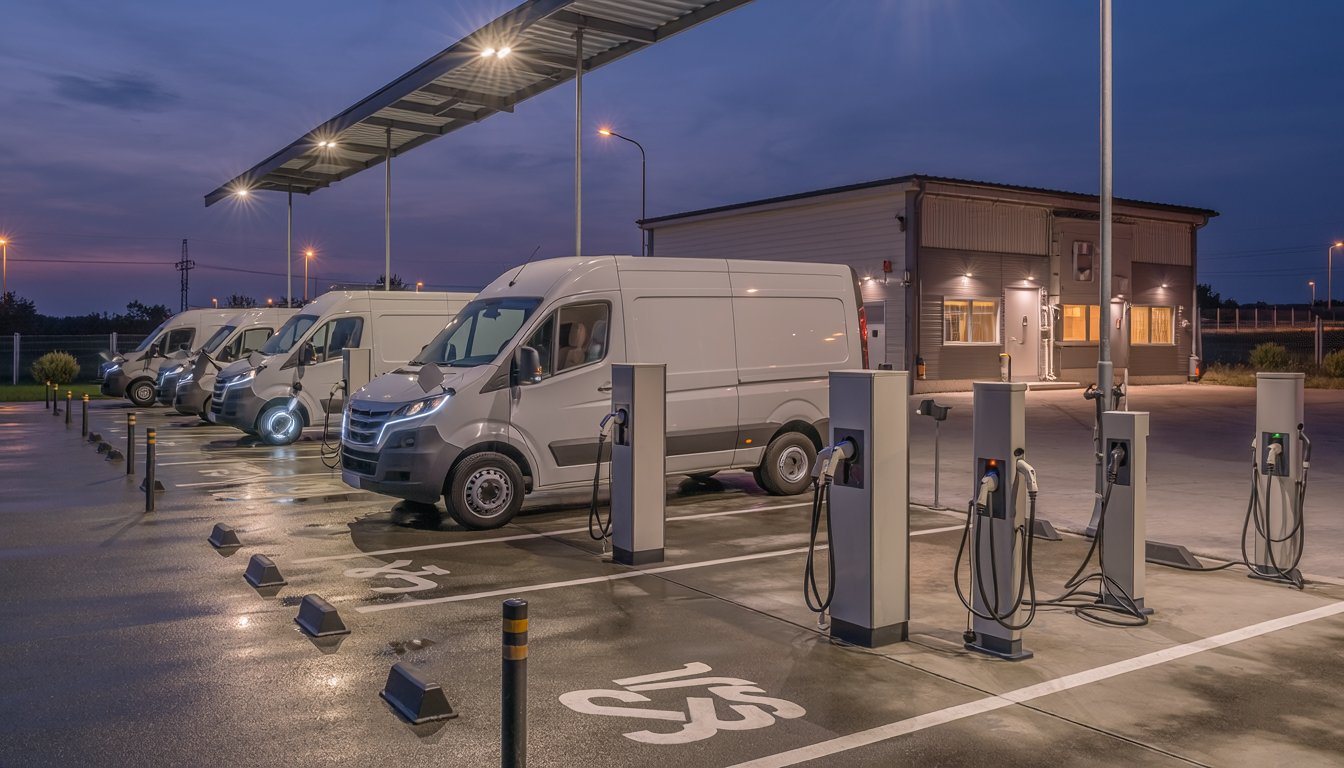
- Fleet depots. Private hubs where a company's vans, trucks or buses charge. The industry guide notes that "Fleet operators increasingly build private charging hubs at depots." In our experience, these are planned around the fleet's schedule, with vehicles charging overnight or between shifts.
- Highway and travel stops. Sites along major routes, built for drivers on longer trips who need to charge quickly and move on, often with food and restrooms nearby.
- Retail and destination sites. Chargers at shopping centers, grocery stores and restaurants, where drivers charge while they shop or eat. For the property owner, the draw is often the customers the chargers bring.
- Urban and rideshare hubs. High-power sites in cities, used heavily by rideshare and delivery drivers and by residents without home charging. The guide notes that for rideshare drivers, a reliable hub with "high‑power DC stalls and 24/7 access can make or break your shift economics."
Each type puts different demands on the site: a truck depot needs pull-through spaces and room to maneuver, a retail hub needs to fit into an existing parking field, and an urban hub needs 24-hour access and lighting.
Power decides everything
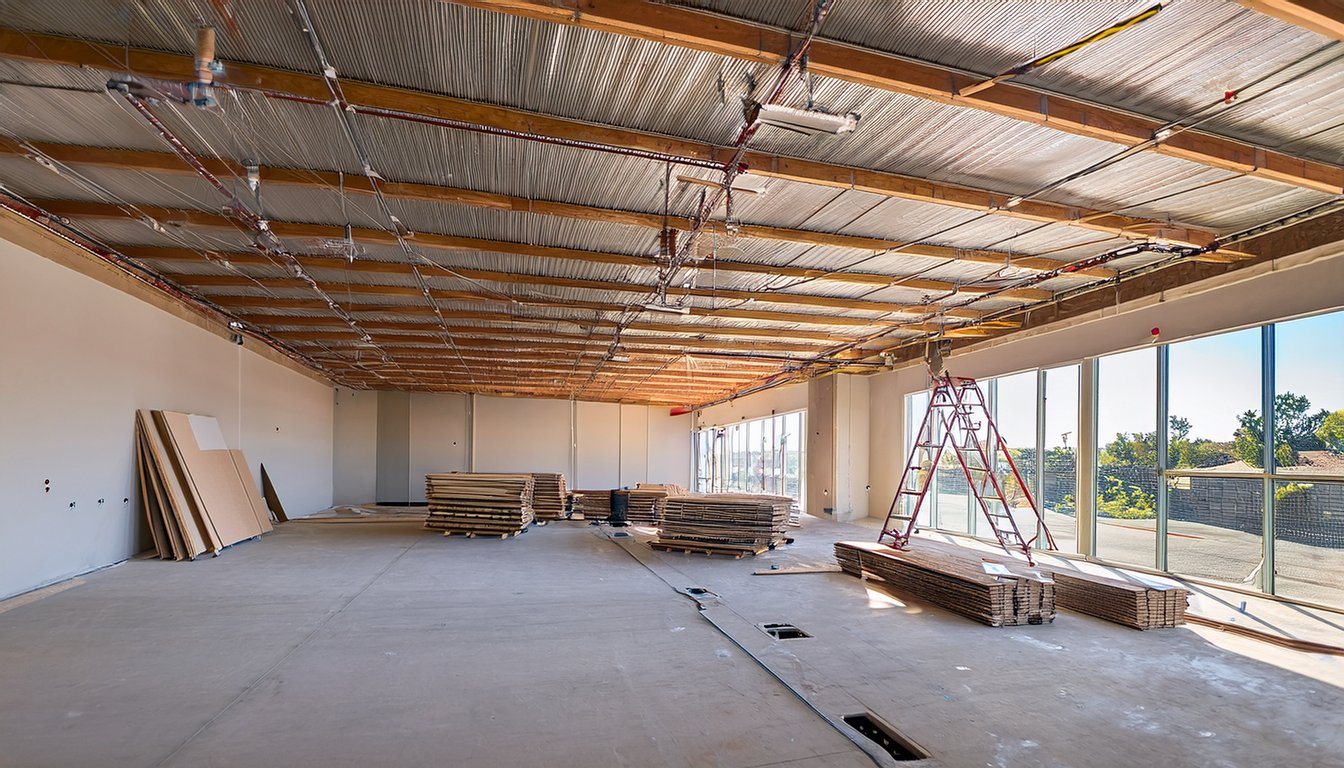
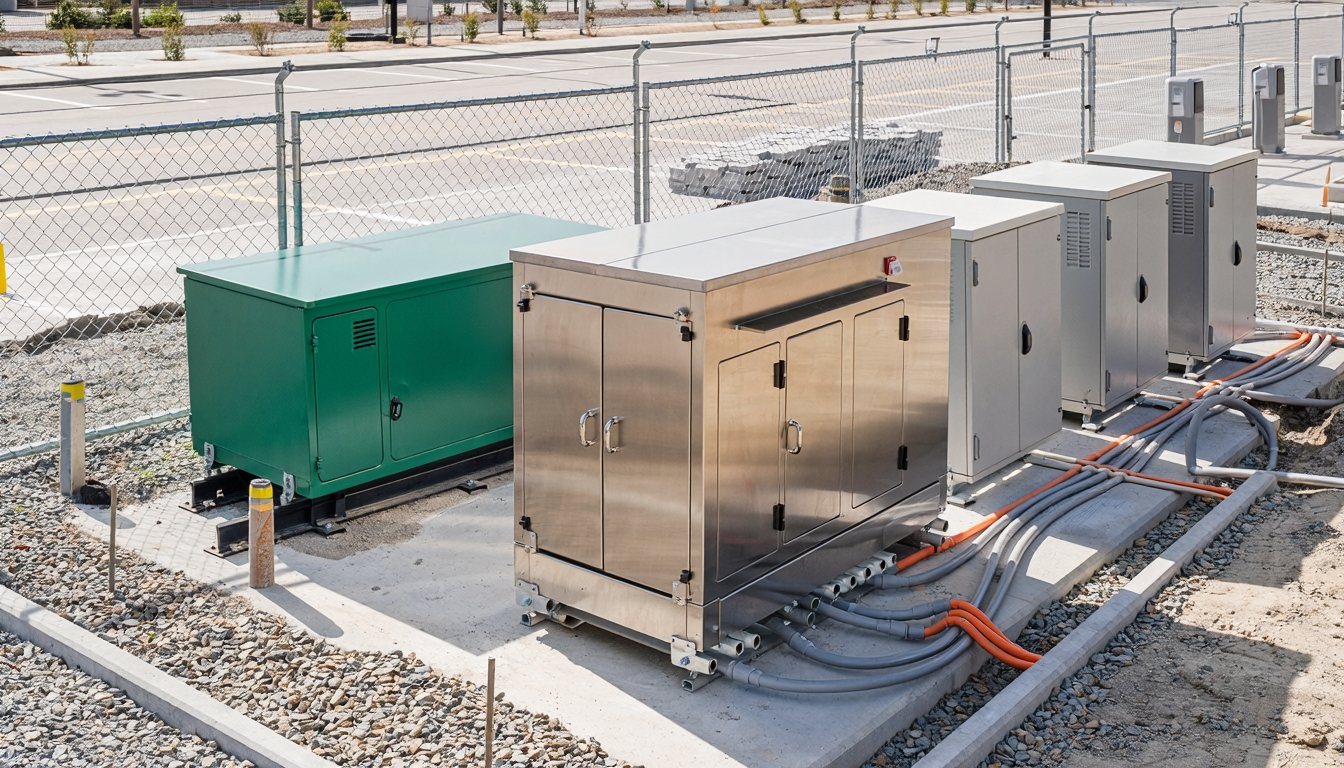
The biggest difference between a hub and a few chargers is electrical capacity. Several fast chargers drawing power at once can need more than an existing commercial building's service can provide. In our experience, that usually means a new utility service, often with a dedicated transformer, new switchgear and a long run of conduit and conductors from the utility connection to the chargers. Our guide to how switchgear works explains what that equipment does, and our commercial EV charger installation guide covers the steps in order.
Utilities have programs for this. PG&E's EV Fleet Program, for example, describes a split in which the utility builds and owns the electrical infrastructure on its side of the meter and the fleet operator handles the side from the meter onward, with the utility covering more in some cases. In our experience, other utilities, including Southern California Edison and LADWP, have their own programs and rules, so which one applies depends on who serves the site.
Two things to plan for early, in our experience:
- Utility lead time. A new service or transformer depends on the utility's engineering, equipment availability and scheduling, which can take longer than building the chargers. Starting the utility conversation first is the most important scheduling step.
- Demand charges. Commercial electricity rates often include charges based on peak demand, and several fast chargers running at once create high peaks. Ask your utility about commercial EV rates and consider load management, which can limit peaks by sharing power among chargers.
The site itself
Once power is solved, the rest of the site has to work for drivers, in our experience:
- Layout. Charging spaces near the electrical equipment keep conductor runs shorter. Trucks and vans may need pull-through spaces.
- Protection and lighting. Bollards or curbs protect chargers from vehicles, and good lighting matters for a site used at night.
- Access. Many hubs are open around the clock, which affects security, lighting and how the site is managed.
- Amenities. Restrooms, food, shade or a canopy make a difference when drivers wait 20 to 40 minutes.
- Trenching and restoration. Running conduit across an existing parking lot means cutting and patching pavement; our underground conduit cost guide covers that part of the work.
Permits and accessibility in California
California requires local governments to streamline EV charging permits. State law required every city and county, by 2016 or 2017 depending on population, to "adopt an ordinance, consistent with the goals and intent of this section, that creates an expedited, streamlined permitting process for electric vehicle charging stations." Cities also have to "adopt a checklist of all requirements with which electric vehicle charging stations shall comply to be eligible for expedited review." Ask the city for that checklist at the start.
Public charging sites also need accessible charging spaces. The California Building Code's accessibility provisions, as excerpted by the Division of the State Architect, say "Where EVCS are provided for public use or common use, EVCS complying with Section 11B-812 shall be provided in accordance with Table 11B-228.3.2.1." That table sets how many van-accessible, standard accessible and ambulatory charging spaces a site needs based on its total number of charging spaces. Confirm the requirements against the code edition in effect when you apply, since editions are updated.
In our experience, accessible spaces affect layout more than owners expect, because they're wider, need an accessible route to the charger and the rest of the site, and often have to be on level ground.
Questions to ask before a hub goes on your property
Whether a charging company approaches you or you're planning a hub for your own fleet, a few questions early can save months later. In our experience, these are the ones that matter most:
- How much power is available, and how much is needed? Ask the utility for a capacity check at the address, and get the planned charger count and power levels in writing.
- Where will the transformer and equipment go? Utility equipment needs its own space, clearances and access for the utility's trucks, and it can take parking spaces.
- Who pays for which part? Utility programs, the charging company and the property owner may each cover different pieces, from the utility connection to the pavement patch.
- How long is the commitment? For leased sites, check the term, who removes the equipment at the end, and what happens to the parking spaces meanwhile.
- What does the city require? Get the streamlined permit checklist, and ask whether the project also needs planning review for signs, canopies or changes to parking.
- How will the site be maintained? Broken chargers frustrate drivers fast, so ask who responds to outages and how quickly.
Answers to these usually show quickly whether a site is a good fit, before anyone spends money on design. Keep them in writing; they become the basis for the lease, the design and the contractor bids that follow.
Who owns and runs a hub
In our experience, there are two common models. In one, a charging company leases space from the property owner, builds and owns the equipment, and runs it. In the other, the property owner or fleet owns the chargers and hires a network provider to manage payments and maintenance. The lease model asks less of the owner up front; the ownership model gives more control over pricing and use. Either way, the electrical and civil work on the site has to be designed and built to the same standard. Our guide to commercial EV charging solutions covers who carries the risk under each.
If you're evaluating a site, start with the utility's capacity and the city's permit checklist, then look at cost. Our commercial EV charging station cost guide covers per-port pricing and what a quote should include. Medici Construction Group is one licensed option for the electrical and site work behind commercial charging, holding California A, B and C-10 licenses under CSLB #1114433.
Frequently asked questions
What is a commercial EV charging hub?
It's a site built around several fast chargers so many vehicles can charge at high power at the same time. Hubs serve fleets, travelers, shoppers and rideshare drivers, and they need far more electrical capacity than a few standard chargers.
How many chargers make a charging hub?
There's no single legal definition. Federally funded NEVI corridor stations must have at least four fast-charging ports, and industry guides describe hubs as having four to a few dozen fast-charging stalls.
How much power does an EV charging hub need?
It depends on the number of chargers and their power levels. As one reference point, a NEVI-funded corridor station needs at least four ports rated at 150 kW each; larger hubs need more. The utility confirms what a site can get.
What kinds of businesses host charging hubs?
Fleet operators, shopping centers, grocery stores, restaurants, travel stops and parking operators are common hosts, along with charging companies that lease space from property owners.
Do EV charging hubs need special permits in California?
They need permits, but California requires cities and counties to offer an expedited, streamlined permitting process for EV charging stations, with a checklist of requirements. Ask your city for its checklist early.
Do charging hubs need accessible parking spaces?
Yes, when charging is provided for public or common use. The California Building Code sets how many accessible charging spaces are needed based on the total number of charging spaces at the site.
How much does a commercial EV charging hub cost?
It depends on the number and type of chargers, the utility work and the site. Our commercial EV charging station cost guide covers per-port pricing and what a quote should itemize.