In our experience, the first surprise with cast iron pipe lining is the math. A homeowner reads a per-foot range online, multiplies it by the short run of drain under the slab, and then sees a quote far above that number. The quote isn't necessarily padded. With cast iron, the liner is rarely what you're paying for. The pipe is.
This guide covers what cast iron pipe lining costs, why old cast iron costs more to line than newer pipe, and how scale, branches and bends decide whether lining is the right fix at all.
Quick answers
Fixr, updated January 31, 2025, says "The pipe relining cost per foot is around $50 to $250, depending on the exact pipe type". An installer's 2026 guide from NuFlow breaks it down by size:
| Line size | NuFlow 2026 range |
|---|---|
| Small residential laterals, 3 to 4 inches | Roughly $80 to $200 per linear foot |
| Medium lines, 4 to 6 inches | Roughly $100 to $250 per linear foot |
In our experience, cast iron tends to sit toward the higher end of these ranges because of the cleaning, the branch connections and the access inside a house.
What the cost guides say
Fixr's drain line repair guide gives the national relining range above and notes why cast iron comes up so often: "Most older homes have cast iron drain pipes as they were a standard up until the 1960s." In our experience, that describes a large share of Los Angeles housing stock.
NuFlow, a pipe lining company, published its 2026 cost guide on January 27, 2026. It describes its per-foot ranges as generally covering basic cleaning, installation, curing and post-lining inspection, and it adds that "minimum setup, mobilization, and equipment costs still apply even for short sections." That second point explains much of the gap between a per-foot range and a short-run quote.
These are national figures from a consumer cost site and an installer, not Los Angeles quotes. In our experience, they're most useful for checking whether a bid is in a reasonable neighborhood and for asking what's included. Our sewer pipe lining cost guide covers general lining pricing, permits and the city rebate for the lateral outside the house.
Why cast iron costs more to line
The short answer is preparation. NuFlow's cost guide notes that "Clay and cast iron can be more labor‑intensive to clean and prep than newer PVC."
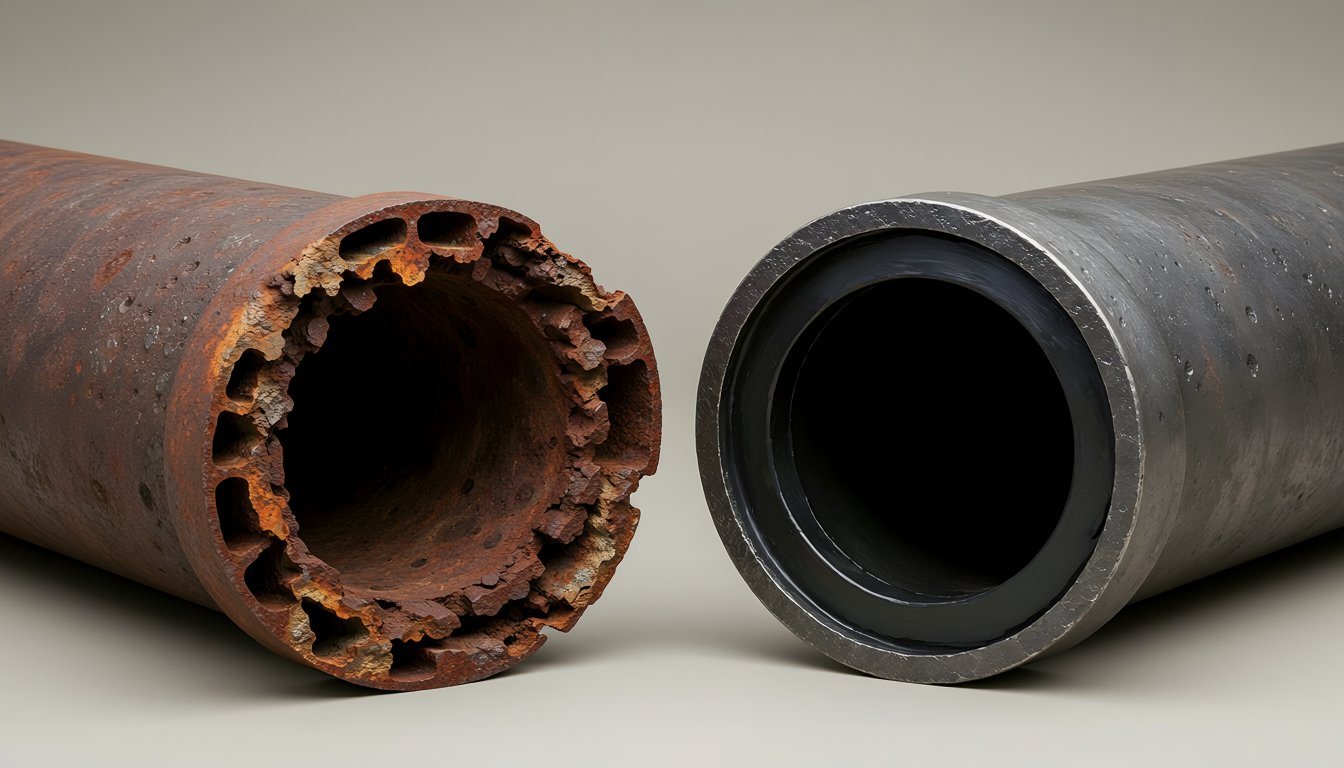
In our experience, old cast iron corrodes from the inside and builds up rough scale, called tuberculation. A liner has to sit against a clean wall. Cleaner magazine, writing about cast iron cleaning in 2017, puts it bluntly: "Lining or coating over heavy tuberculation is the equivalent of painting over old exterior paint without any preparation." A lining installer's epoxy FAQ makes the same demand in technical terms: "The host pipe must be cleaned (to NASSCO Standards) including the removal of deposits settled and all internal debris" before lining.
In our experience, cleaning cast iron properly takes more passes and more time than cleaning PVC or clay, and heavy scale can take much more. That time is in the price whether the quote lists it as a separate line or not. Our guide to descaling cast iron sewer pipe covers that step and what it costs on its own.
Start with the camera, not the quote
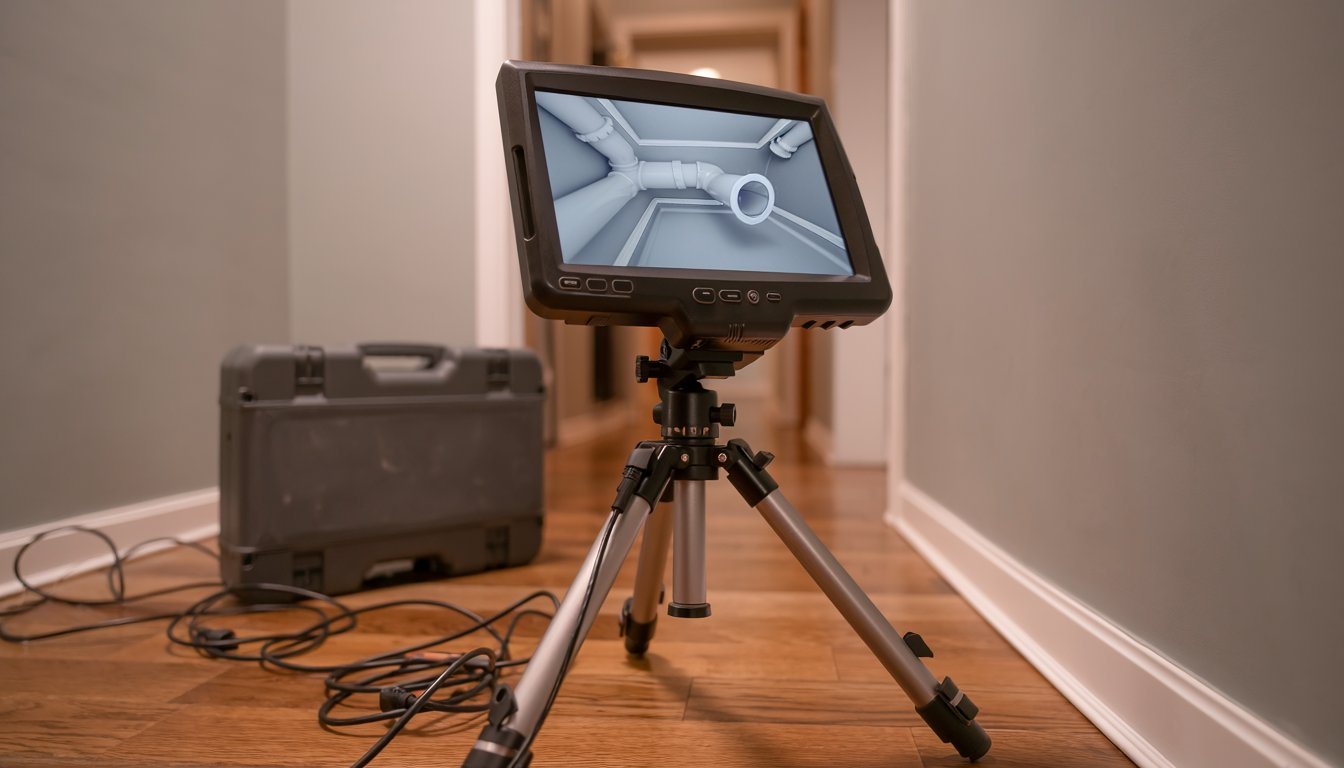
In our experience, the most useful money spent on cast iron is the inspection before anyone prices lining. A camera run through the drains shows how much scale there is, where the branches join, where the bends are, and whether any section has lost its bottom or shifted at a joint.
Two details make that inspection more useful:
- Look again after cleaning. Heavy scale can hide cracks and holes. In our experience, the pipe's real condition often shows only once it's clean, which is why some installers price cleaning and a second camera pass before committing to a lining price.
- Get a map, not just a video. A rough sketch of where each run goes, how long it is and where the branches connect makes quotes far easier to compare.
Our guide to sewer camera inspection covers what that inspection involves and what to ask for.
Where the pipe runs inside the house
In our experience, much of the cast iron in older homes isn't the sewer line in the yard. It's the drain system inside: lines under the slab, branches in the walls and vertical stacks. Each has its own lining challenges.
- Under-slab drains. In our experience, these are the most common reason homeowners consider lining at all, because the alternative is breaking up floors.
- Small branch lines. NuFlow's guide to diameter limits warns: "In 2″–3″ lines, branch connections are tight. You must be sure reinstatement cutting or masking techniques won't leave you with partially blocked tees or wyes." Every branch that feeds into a lined pipe has to be reopened, and in our experience each one adds labor.
- Vertical stacks. The US Pipelining FAQ notes that "Vertical stacks (roof drains, sanitary risers, vent risers) are generally accessed from the rooftop." In our experience, roof access, and how many floors the stack serves, changes the setup.
Liner or coating: what the pipe's shape allows
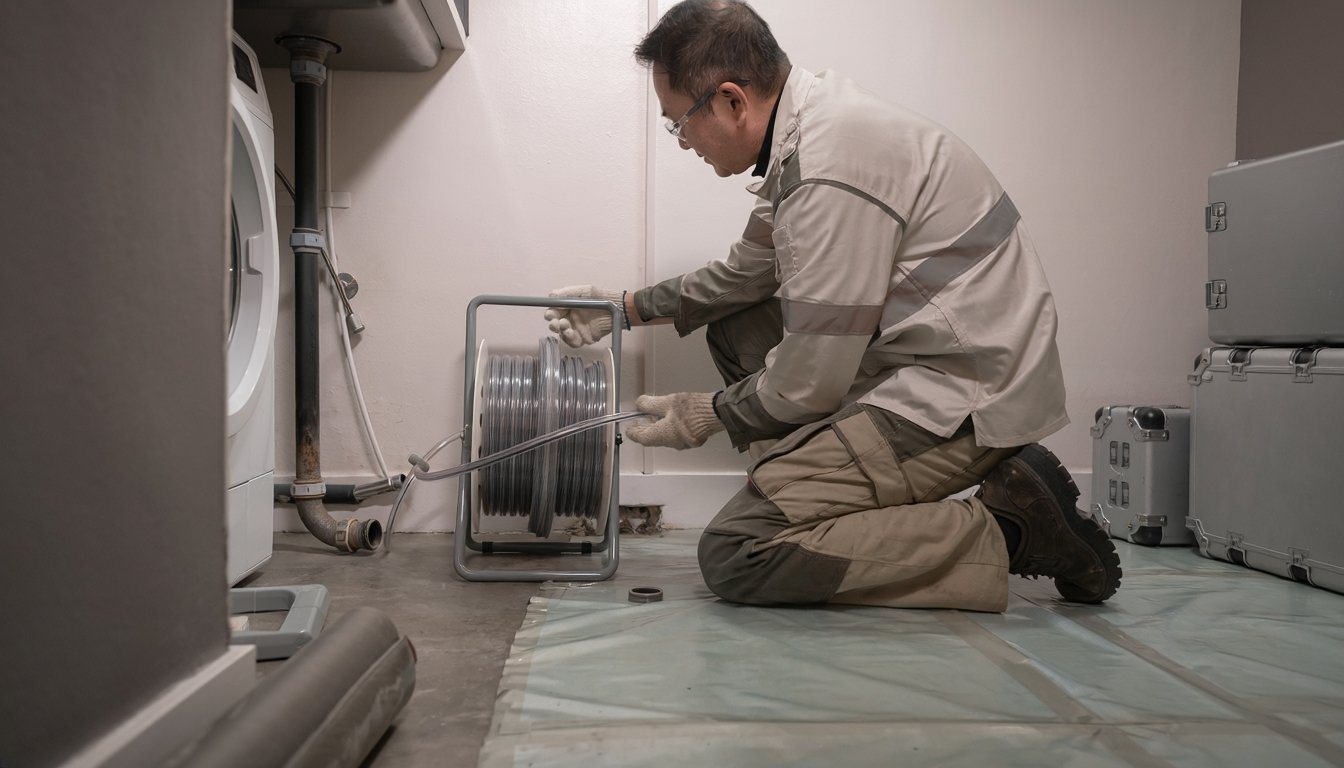
Cast iron drain systems are full of bends, tees and wyes, and that shape often decides the lining method. NuFlow notes that "Tight-radius bends in small-diameter building drains can limit the use of continuous liners and may require sectional CIPP or epoxy coatings." In our experience, coating systems suit that kind of geometry; US Pipelining says its epoxy system is "designed to line through directional changes, turns and bends in the host pipe of up to 90 degrees."
In our experience, the right choice depends on your pipe layout more than on which method is newer or cheaper, and some systems combine both. Ask each installer why their method fits your layout, and where it would switch to something else.
When cast iron is past lining
A liner needs a host pipe to work with. In our experience, these cast iron conditions usually need repair or replacement first, at least at the problem spots:
- A missing bottom. Cast iron under a slab can corrode through along the bottom of the pipe, where water sits. If the camera shows soil instead of pipe, there is nothing for a liner to span in that section.
- Collapsed or separated hub joints. Old cast iron joints can shift or open. A badly offset joint can block a liner or leave a weak point.
- A belly. A sag in the line holds water and debris. A liner follows the pipe, so it keeps the sag.
Our guides to cracked cast iron sewer pipe, cast iron repair options and cast iron replacement cost cover those paths, including how replacing under a slab is priced.
Line or replace: a quick way to think about it
In our experience, the comparison that matters is not the per-foot price of lining against the per-foot price of new pipe. It's the total cost of each path, including what has to be torn up and put back.
- Lining tends to make sense when the pipe is intact after cleaning, runs under finished floors or a slab, and has a manageable number of branches.
- Replacement tends to make sense when the pipe is failing in several places, when the floor or wall is already open, or when a remodel will expose it anyway.
- A mix is common. Replace the worst section, line the rest.
What lining asks of the household
In our experience, lining avoids demolition but isn't invisible, and homeowners should plan for:
- Fixtures out of use while the work is underway. Drains that feed the lined section can't be used until the installer says so.
- Access points. Installers work through cleanouts, toilet flanges, roof vents or sometimes a small new opening, so the rooms around them need to be clear.
- Some noise and odor. Cleaning equipment is loud, and resins have an odor during installation. Ask how the installer ventilates the work area.
- A final camera run. Plan to be available to watch it, or ask for the recording.
What a cast iron lining quote should spell out
In our experience, two cast iron lining quotes are only comparable when they answer the same questions:
- How the pipe will be cleaned. The method and whether a camera check after cleaning is included before lining begins.
- Footage by section. Which runs are lined, from where to where, and what isn't.
- Branch reopenings. How many branch connections will be reinstated and how.
- Method by section. Where a liner is used, where coating is used, and why.
- Access. Which cleanouts, fixtures or roof openings are used, and whether any new access has to be cut.
- Minimums. Whether a setup or mobilization charge applies, which matters most on short runs.
- What happens if the camera finds a section that can't be lined. Whether repair of that spot is priced or excluded.
- The final video. Our guide to relining clay sewer pipe covers what before-and-after footage should show; the same idea applies here.
In our experience, a low quote often skips items 1 and 3 or leaves them vague. Those are the two items that most affect whether cast iron lining works.
The bottom line
National guides put pipe lining in the range of tens to a couple hundred dollars per foot. With cast iron, the price is driven by the pipe: the scale that has to come out, the branches that have to be reopened, the bends that decide the method and the access inside the house. Line the pipe that's still a pipe, and repair or replace what isn't. Medici Construction Group is one licensed option for cast iron drain and sewer work, holding California A, B and C-10 licenses under CSLB #1114433.
Frequently asked questions
How much does cast iron pipe lining cost?
Fixr, updated January 31, 2025, puts pipe relining at around $50 to $250 per foot. Installer NuFlow's 2026 guide lists roughly $80 to $200 per linear foot for 3- to 4-inch lines. In our experience, cast iron jobs land higher in those ranges once cleaning and branch work are counted.
Is it worth lining cast iron pipes?
In our experience, it can be when the pipe is still round and mostly intact, and the alternative is breaking up a slab, floors or finished walls. It's a poorer value when the pipe is badly deformed, missing its bottom or has many small branches to reopen.
Can all cast iron pipes be lined?
No. In our experience, a pipe with a missing bottom, a collapsed section, separated hub joints or a large sag needs repair or replacement at those points first. A camera inspection after cleaning is what tells you which kind of pipe you have.
Why does lining cast iron cost more than lining PVC?
Mostly preparation. NuFlow notes that clay and cast iron can be more labor-intensive to clean and prep than newer PVC. In our experience, branch connections, tight bends and access inside a house add to that.
Does cast iron need to be descaled before lining?
Yes. Cleaner magazine compares lining over heavy tuberculation to painting over old paint without preparation. In our experience, the liner can only be as smooth and well-bonded as the pipe wall it sits against. Our descaling guide covers that step.
Does lining reduce the pipe's diameter or flow?
In our experience, a liner takes up some space inside the pipe, so the opening gets slightly smaller, and the smoother wall usually offsets that for flow in household drains, but it's worth asking the installer about the liner thickness for small branch lines.
Will lining stop cast iron from corroding or scaling?
In our experience, a liner separates the flow from the old iron wall, so scale no longer builds up on the inside where the liner covers it. Sections that aren't lined, such as unlined branches or fittings, keep behaving like old cast iron.