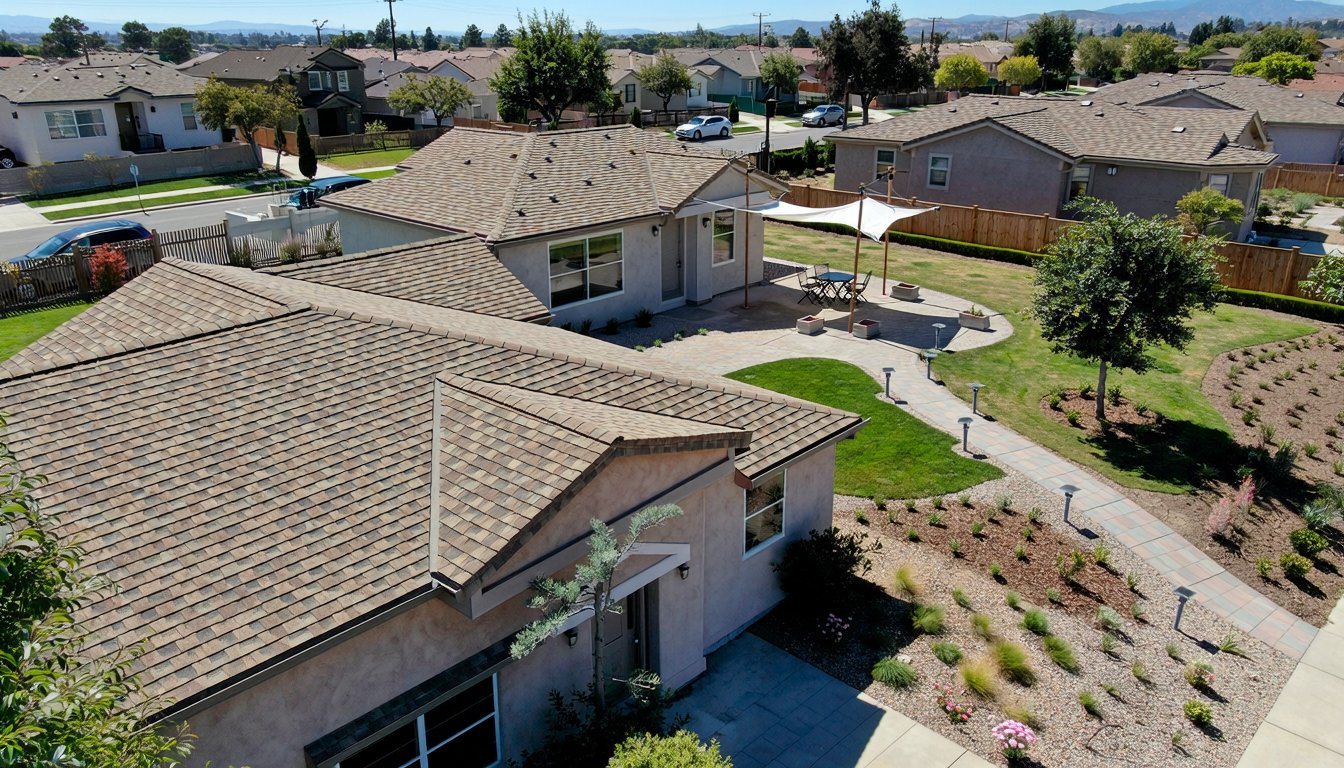
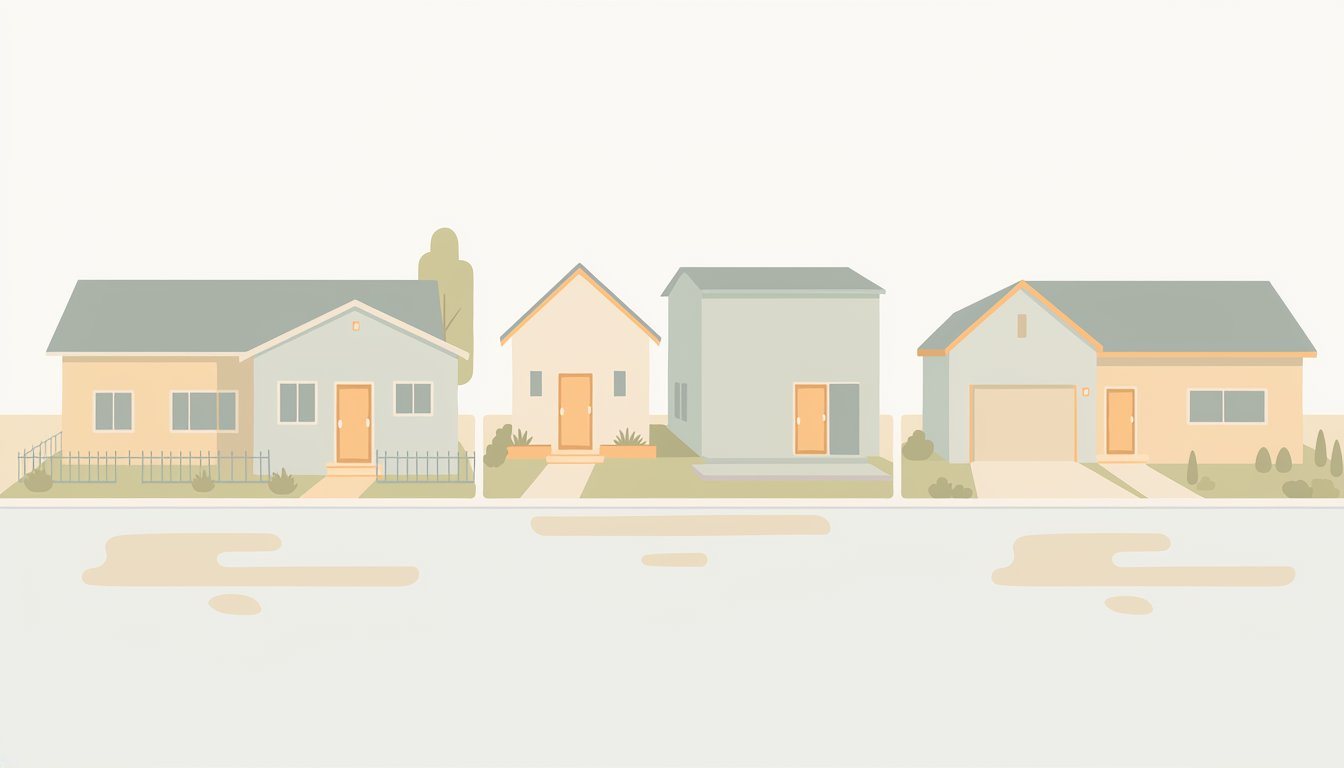
Three neighbors on the same block all say they "added an ADU." One built a small cottage at the back of the lot. One turned the old detached garage into a studio. One added a one-bedroom unit onto the back of the house, sharing a wall with the kitchen. All three are accessory dwelling units, and all three went through different rules. Only the first is what most people picture when they say "detached ADU," and even the second is a closer call than it looks.
"Detached" is one word, but it does a lot of work. It tells you where the unit sits, not how big it is or who lives in it, and it changes which rules apply, how the unit is built and what it can't be. Here's what the term means, with the edge cases that trip people up. For what makes any unit an ADU in the first place, see our guide to ADU meaning.
Quick answers
- Definition: a detached ADU is a complete, independent home in its own building, separate from the main house on the same residential lot.
- It must be a full dwelling: a place to live, sleep, cook and bathe; a room without a kitchen is a guest house, not an ADU.
- Different from attached and converted units: attached ADUs share the main house's structure; converted ADUs reuse existing space.
- It changes the project: its own foundation and roof, utility lines across the yard, and its own set of size, height and setback rules.
The short definition
California's housing department defines the category first: "An ADU is a secondary dwelling unit with complete independent living facilities for one or more persons". It then breaks ADUs into types, and describes the detached one simply: "Detached: The unit is separated from the primary residential structure".
Los Angeles County's planning department puts the "complete" part in plain terms: "An accessory dwelling unit, or ADU, is a unit with a full kitchen and bathroom that is accessory to residential."
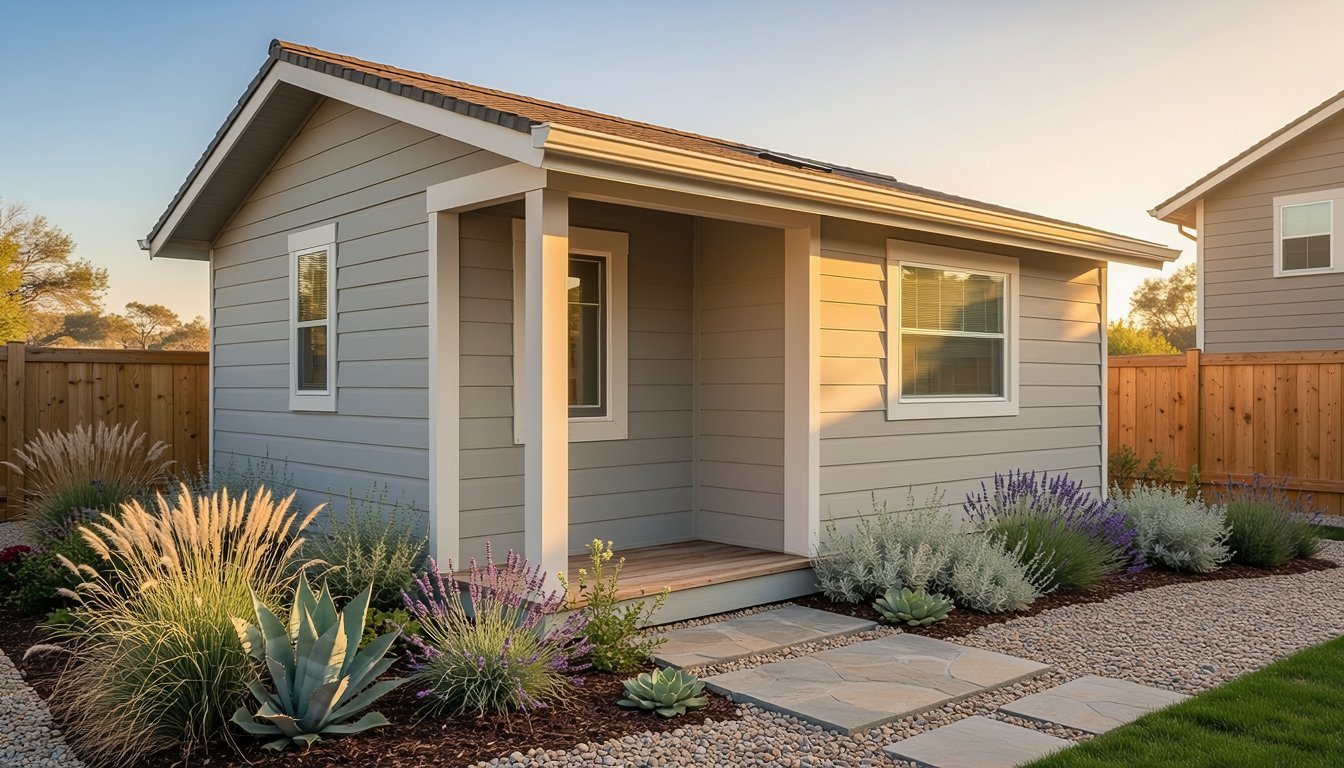
Put those together and a detached ADU is two things at once. It's a dwelling: a home someone can live in independently. And it's detached: it sits in its own building, not inside or attached to the main house. People call it a backyard cottage, a casita, a granny flat or a backyard home, but those are nicknames. The legal category is the same.
Detached vs attached vs converted
HCD's list of ADU types has three entries, and seeing them side by side is the easiest way to understand "detached":
- "Detached: The unit is separated from the primary residential structure"
- "Attached: The unit is attached to the primary residential structure"
- "Repurposed Existing Space: Space (e.g., master bedroom or garage) within the primary residence is converted into an independent living unit"
In practice, in our experience:
- A cottage built in the back yard is a detached ADU.
- A unit added onto the side or back of the house, or built above an attached garage, is an attached ADU.
- A bedroom suite or attached garage turned into a separate unit is a converted ADU.
There's also the junior ADU, a smaller unit that has to be created inside the main house. It's a separate category with its own rules; our guide to JADU vs ADU covers the differences.
What makes it a dwelling, not a guest house
A detached building in the back yard isn't automatically an ADU. The difference is whether someone can fully live there. The City of Davis puts it well: "An ADU will always contain everything someone needs to live, including a kitchen, bathroom, and place to sleep." Guest quarters are different; the same page says they "may have bathroom facilities (toilet, sink, tub/shower) and shall have no kitchen facilities."
San Diego's definition of an ADU spells out the same requirement: complete independent living facilities, "including permanent provisions for living, sleeping, eating, cooking, and sanitation".
So a pool house, a home office or a studio with a bathroom but no kitchen is usually permitted as an accessory structure or guest house, not an ADU. In our experience, that distinction matters later: if you want to rent the space as a separate home or add a kitchen, expect the city to require it to be permitted as an ADU. Our guide to guest house vs ADU covers LA's accessory living quarters rules, including lot-size minimums.
Is a converted detached garage a "detached ADU"?
Physically, yes: it's a separate building, so the finished unit is detached from the house. But the rules treat building new differently from converting what's already there.
State law lists new detached construction as its own category of ADU that cities must approve on a single-family lot, describing it as "One detached, new construction, accessory dwelling unit that does not exceed four-foot side and rear yard setbacks". Converting an existing detached garage follows the rules for converting existing space instead, and in our experience the old building then has to be brought up to code for a home, including its slab, walls and roof.
That's why, when you ask a city about "a detached ADU," it helps to say whether you mean a new building or a conversion. Our garage to ADU cost guide covers the conversion side.
Does a breezeway or covered walkway make it attached?
This is one of the most common gray areas. Owners often want a covered path or a shared roof between the house and the back unit, and then wonder whether that makes it "attached."
There isn't one statewide answer for zoning purposes. For the energy code, the California Energy Commission's guidance on ADU additions describes the attached type as dwelling units that "share a common wall, floor, or ceiling with another dwelling unit". That's an energy-code definition, not the test your planning department uses to decide which ADU rules apply. In our experience, cities differ on whether a roof, trellis or breezeway connection changes the classification, and the answer can affect height, size and setback limits. Ask your city before you design a connection, not after.
How being detached changes the project
Because a detached ADU is its own building, it comes with its own set of practical differences, in our experience: For the full set of state and local rules, see ADU requirements.
- It's built like a small house. A new detached unit needs its own foundation, walls, roof, and connections to water, sewer and power. That's why our guide on how to build an ADU treats it as a form of new construction.
- Utilities run across the yard. The lines have to reach the unit, and depending on the agency, a new unit may get its own connection. Our ADU permit guide and ADU cost guide cover the rules and fees.
- It has its own size, height and setback rules. State law sets an outer size limit for detached units and minimum sizes cities must allow; our 1,000-square-foot ADU guide walks through those figures. Cities can set their own limits within state law. San Diego's own ADU definition, for example, covers units that are "1,200 square feet in size or less". For setbacks and height, see our backyard ADU ideas.
- Distance from the house matters. Buildings close together need fire-rated construction. Los Angeles County's ADU guidelines, for example, list "Detached – min. 6 ft. away" in their table of fire-rated wall requirements. Check the distance your building department uses before you site the unit.
- Sprinklers follow the main house. State law says "Accessory dwelling units shall not be required to provide fire sprinklers if they are not required for the primary residence."
- It may get its own address. In unincorporated Los Angeles County, the guidelines say "An ADU can be permitted under the existing address. However, if a separate address is desired, a request for a ½ fractional number to the existing main address needs to be requested from Mapping and Property Management Division (MPM)." Other cities have their own process.
Can a detached ADU be sold separately?
Usually an ADU stays with the property, but California now gives cities an option. State law says a local agency "may also adopt a local ordinance to allow the separate conveyance of the primary dwelling unit and accessory dwelling unit or units as condominiums." The key word is "may": it depends on whether your city has adopted that ordinance. Our JADU vs ADU guide covers the related owner-occupancy rules.
Questions to ask your city about a detached ADU
Because so much of the detail is local, the fastest way to get a clear answer is to bring specific questions to your planning or building counter. In our experience, these five cover most of what changes the design:
- New or conversion? Tell them whether you're building a new unit or converting an existing detached structure, since the rules differ.
- How big, and how tall? Ask for the local maximum size and height for a detached unit on your lot, and whether being near transit changes it.
- How far from the house? Ask what separation triggers fire-rated walls, and whether a breezeway or shared roof would change the classification.
- What about utilities? Ask whether the unit can share the main house's water, sewer and electrical service, or needs its own.
- What else is on the lot? Easements, trees, slopes and overlays such as hillside or historic districts can limit where a detached unit can go.
Write the answers down with the date and the name of the person you spoke with. Designers and contractors can work from that list instead of guessing, and it saves a round of plan-check corrections later.
Is a detached ADU the right choice?
In our experience, owners choose detached units for privacy and flexibility: a separate entry, no shared walls, and a home that works for a renter, a parent or an adult child without changing the main house. The trade-offs are that it uses yard space, it's a full building project with its own foundation and roof, and utilities have to reach it.
If your lot has room in back and you want the most independence for whoever lives there, a detached unit is often the natural fit. If yard space is tight, or you have a garage or a large room you rarely use, an attached or converted unit may make more sense. Our backyard ADU ideas show what detached units can look like.
Medici Construction Group is one licensed option for detached ADUs, holding California A, B and C-10 licenses under CSLB #1114433.
Frequently asked questions
What is a detached ADU?
A detached ADU is a complete, independent home in its own building on the same lot as a main house. It has its own kitchen, bathroom and place to sleep, and it's separated from the primary residential structure.
What is the difference between an attached and a detached ADU?
An attached ADU is connected to the main house, such as a unit added onto the back or built over an attached garage. A detached ADU is a separate building. The two can have different size, height and setback rules.
Is a converted garage a detached ADU?
If the garage is a separate building, the finished unit is detached from the house. But converting an existing garage follows the rules for converted space, which differ from the rules for building a new detached unit.
Is a guest house an ADU?
Not unless it has a kitchen. An ADU must have complete living facilities, including a kitchen, bathroom and place to sleep. A guest house without a kitchen is usually permitted as an accessory structure instead.
How big can a detached ADU be in California?
State law sets an outer size limit for detached ADUs and minimum sizes cities must allow, and cities can set their own limits within that range. San Diego's definition, for example, covers ADUs of 1,200 square feet or less. Our 1,000-square-foot ADU guide walks through the state figures.
Does a breezeway make an ADU attached?
It depends on your city. For energy-code purposes, attached ADUs share a common wall, floor or ceiling with another dwelling, but planning departments may classify a roof or breezeway connection differently. Confirm with your city before designing one.
Can you sell a detached ADU separately?
Only if your city allows it. California law lets cities adopt an ordinance allowing the main house and ADU to be sold separately as condominiums, but it's a local option, not a default right.