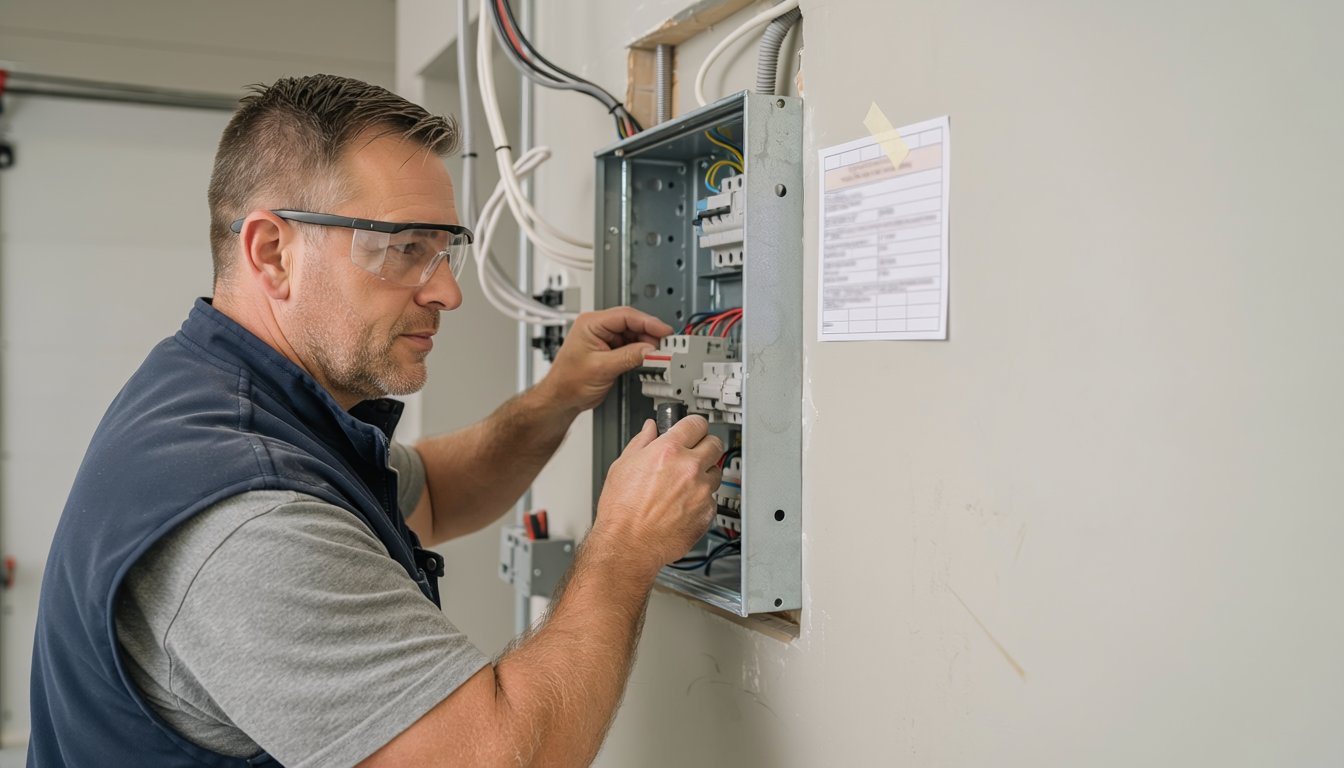
Take one ordinary job: replace a 200-amp panel and add two new 20-amp circuits. Priced from the published fee tables of four California building departments, the electrical permit comes to roughly $100 in Long Beach, about $98 in the City of Los Angeles, about $152 in unincorporated Los Angeles County and about $353 in San Diego. Same work, a few freeway exits apart. The reason is that an electrical permit has no sticker price. Each department adds it up from its own fee table: a base or issuance fee, a charge for each outlet, circuit or service, sometimes a plan check fee, then small state surcharges. This guide shows how those tables work, puts four of them side by side, and walks through the math so you can estimate your own.
Quick answers
- National range: Angi says electrical permits "cost anywhere from $10 to $500."
- How it's built: a base or issuance fee, plus a charge per outlet, fixture, circuit or service, plus plan check when a department requires it, plus state surcharges.
- California examples: Los Angeles County charges $41.35 to issue a permit, Long Beach has a $100 minimum, and San Diego charges $176.57 for the first five circuits on a house.
- State surcharges: usually a dollar or two on a small residential job.
How an electrical permit fee is built
Angi's building permit cost guide (updated August 2026) says "Electrical permits are required when you rewire or add new wiring, circuits, or outlets, and they cost anywhere from $10 to $500." That spread makes sense once you see how the fee is calculated. Most departments use some mix of four parts: For which jobs need a permit in the first place, and what's exempt, see our electrical permit guide.
- A base, issuance or minimum fee. A flat charge to open the permit, or a floor the total can't go below.
- Per-item fees. A charge for each outlet, switch or light fixture, each new branch circuit, each service or panel, and so on. The more you're doing, the more lines you add.
- Plan check. A separate fee when the work needs drawings reviewed before the permit is issued. Many small residential jobs don't, but larger ones do.
- Surcharges. Percentages or small fixed amounts the city or the state adds on top.
Two jobs with the same labor cost can have very different permit fees if one involves a single service change and the other adds twenty outlets and six circuits. And the same list of items costs different amounts in different places, because each department sets its own rates.
Four fee tables side by side
Here are the residential line items from four California departments. The dates matter: each schedule is revised on its own cycle.
- Los Angeles County (unincorporated areas): 2026-27 County Electrical Code Fees, effective July 1, 2026.
- City of Los Angeles: the electrical permit fee schedule LADBS currently posts on its fee schedules page is dated December 2016. Check LADBS for current amounts before relying on it.
- Long Beach: electrical permit and plan check fees, effective October 1, 2025.
- San Diego: Information Bulletin 103 (May 2026), single family, duplex and townhouse column.
| Line item | LA County (2026-27) | City of LA (Dec 2016) | Long Beach (Oct 2025) | San Diego (May 2026) |
|---|---|---|---|---|
| Base, issuance or minimum | $41.35 to issue each permit | $90 minimum for 2+ items or one item over $55 ($55 for one item under $55); $23 issuing fee if the subtotal is over $90 | $100 minimum per permit | No separate line found; circuits priced in blocks |
| Outlets, switches, fixtures | $3.22 each for the first 20, $2.18 each after | $18 for 1-5 units, $22 for 6-10, $11 per additional 10 | $1.39 each up to 20, $1.00 each after | Not listed separately |
| New general-use branch circuits | $25.96 each for the first 10 (15-20 amp, 120 volt) | $17 each for 1-10 (120 volt general use) | No branch-circuit line | $176.57 for the first 5 (15-45 amp); $52.39 each for 6-10 |
| Service or panel (residential size) | $58.35 per service or panelboard up to 399 amps | $41 per service, 100-400 amps, on runs under 100 feet (longer runs billed per foot); $16 per panelboard up to 200 amps | $23 per service up to 200 amps; $17 per panel | $176.57 per panel replacement or upgrade up to 200 amps |
| Plan check, when required | 70% of the permit fee, $164.02 minimum | Not on this schedule | 100% of the permit fee, $216 minimum | Assessed separately |
The City of Los Angeles schedule also adds two surcharges to the permit subtotal: 3% for its development services center and 6% for its systems surcharge. San Diego adds a $12.16 mapping fee when plans or drawings are part of the review.
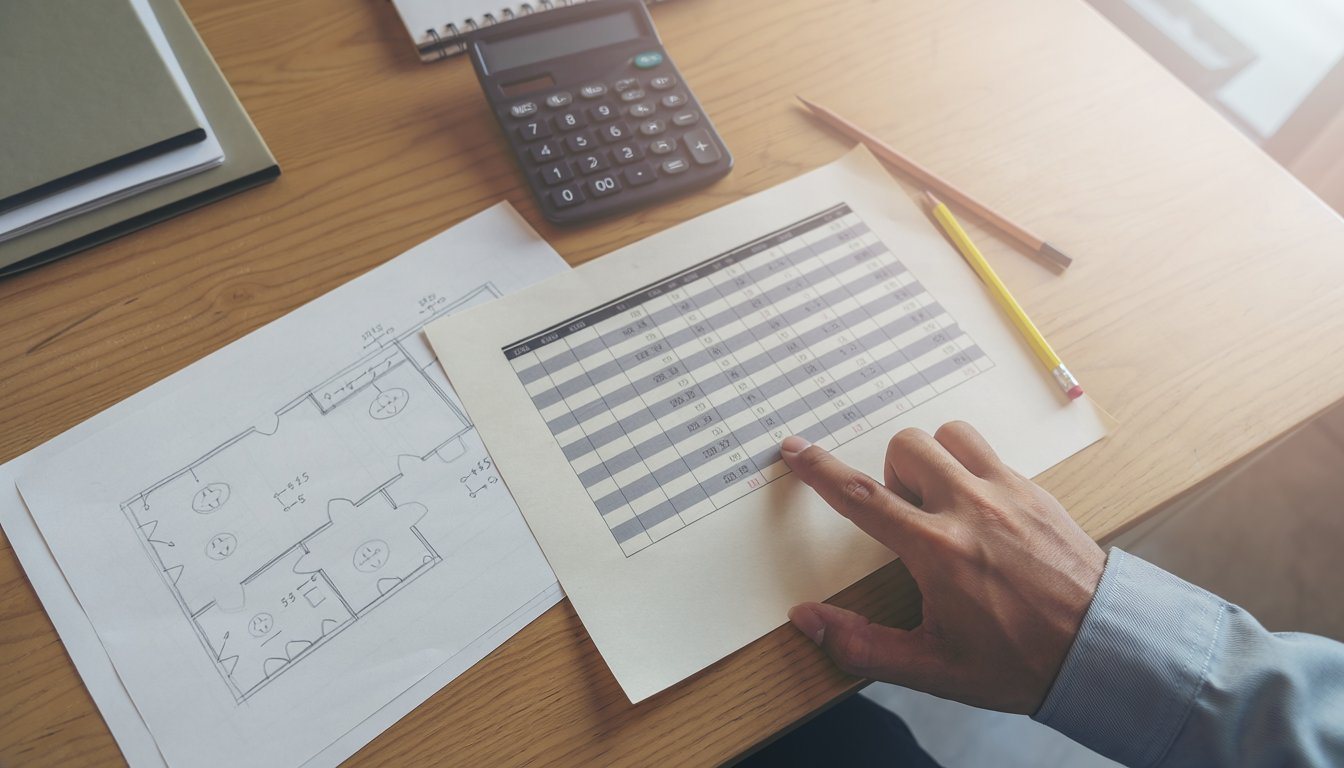
Worked example: one job, four prices
The job: replace a 200-amp panel and add two new 20-amp circuits in a single-family house, with no plan check. To keep it simple, we count one service or panel line in each jurisdiction. Some departments may also charge a separate panelboard line on a service change, so treat these as illustrative, not quotes. For a larger service, see our 400 amp service cost guide.
| Jurisdiction | Math | Estimated permit fee |
|---|---|---|
| Long Beach | $23 service; no circuit line; below the minimum | $100 (minimum) |
| City of Los Angeles | $41 service + 2 × $17 circuits = $75, raised to the $90 minimum; + 3% and 6% surcharges | About $98 |
| LA County | $41.35 issuance + $58.35 service + 2 × $25.96 circuits | $151.62 |
| San Diego | $176.57 panel upgrade + $176.57 first five circuits | $353.14 |
Two patterns show up. Minimums dominate small jobs: in Long Beach and the City of Los Angeles, the line items don't reach the floor, so the floor is the fee. And block pricing favors bigger jobs: San Diego's first-five-circuits charge costs the same for two circuits as for five. If your job adds more work, run the same math with more lines and the order can change.
For the other costs on those two jobs, see our electrical panel upgrade cost guide and our underground conduit cost guide. The EV charger installation cost guide covers charger circuits.
Bigger jobs: new buildings, solar and equipment
Per-item tables work for a panel and a few circuits. Larger jobs are often priced a different way, and the same department can switch methods depending on the work. Long Beach's electrical fee schedule shows three of them:
- By floor area. New single-family and multi-family construction, including attached and detached garages and carports, is charged "$0.21 /sq. ft." On a new 1,500-square-foot house, that is $315 for the electrical permit before plan check, instead of counting every outlet.
- By system size. Residential rooftop solar is $219 for 0 to 10 kW and $450 for 10 to 15 kW, plus $15 per kW above 15 kW.
- By equipment rating. Appliances, motors and other apparatus rated in horsepower, kW, KVA or KVAR start at $9 each up to and including 1, with higher tiers of $13, $21, $39 and $79 as the rating goes up.
Single lines can differ a lot between departments too. Long Beach lists a "Temporary pole with panel (excluding service)" at $19 each. San Diego's Information Bulletin 103 lists a "Temp Pole (Construction Power)" at $176.57 each. If your project needs construction power before the permanent service is energized, check that line early.
In our experience, the method matters more than the rate on large jobs. An addition priced by square foot in one city may be priced by outlet and circuit in the next, so ask the department which table applies before estimating.
Why the fee can come in higher than your estimate
Most surprises we see come from scope, not arithmetic. In our experience, these are the usual causes:
- Items the estimate missed. A panel swap that also moves the meter, adds a subpanel or replaces a service mast picks up more lines than "replace the panel" suggests.
- Plan check triggered. A load calculation, a larger service or a commercial occupancy can require drawings, and plan check can equal or exceed the permit fee itself.
- Combined permits. Electrical work that is part of a remodel or an addition is often issued under, or alongside, the building permit, and the building permit carries its own fees.
- Corrections and revisits. A failed inspection can add a fee and a delay. Clear access to the panel and finished labeling help the first visit pass.
The simplest protection is a written scope. Before applying, list every outlet, fixture, circuit, panel and piece of equipment the job touches, then match each one to a line on the department's schedule. If a line on the permit receipt doesn't match anything on that list, ask the department or the contractor what it covers.
State surcharges on top
California adds two small surcharges to building permits, both based on the project's valuation rather than the city's fee.
- Strong motion (SMIP) fee. The California Geological Survey's SMIP fee schedule sets the formula for residential buildings of one to three stories as "(Valuation Amount) X 0.00013 = Fee Amount," or 13 cents per $1,000 of valuation.
- Building standards fee. The California Building Standards Commission's guide to permit surcharge fees quotes the statute: "four dollars ($4) per one hundred thousand dollars ($100,000) in valuation," with a minimum of one dollar.
On a $5,000 job, that works out to 65 cents for SMIP and the $1 minimum for the building standards fee. They show up on the receipt, but they won't change your budget.
Costs besides the fee
- Plan check. When a department requires drawings to be reviewed, the plan check fee can outweigh the permit itself. Los Angeles County charges 70% of the permit fee with a $164.02 minimum; Long Beach charges 100% with a $216 minimum.
- Extra inspections. If an inspection fails or an extra trip is needed, some departments charge again. Los Angeles County's fee schedule lists $49.62 for each extra inspection resulting from defective workmanship or materials.
- The contractor's time. In our experience, preparing the application, scheduling inspections and meeting the inspector takes real hours, and contractors either build that into their price or list it separately. Ask which.
How to estimate your own fee
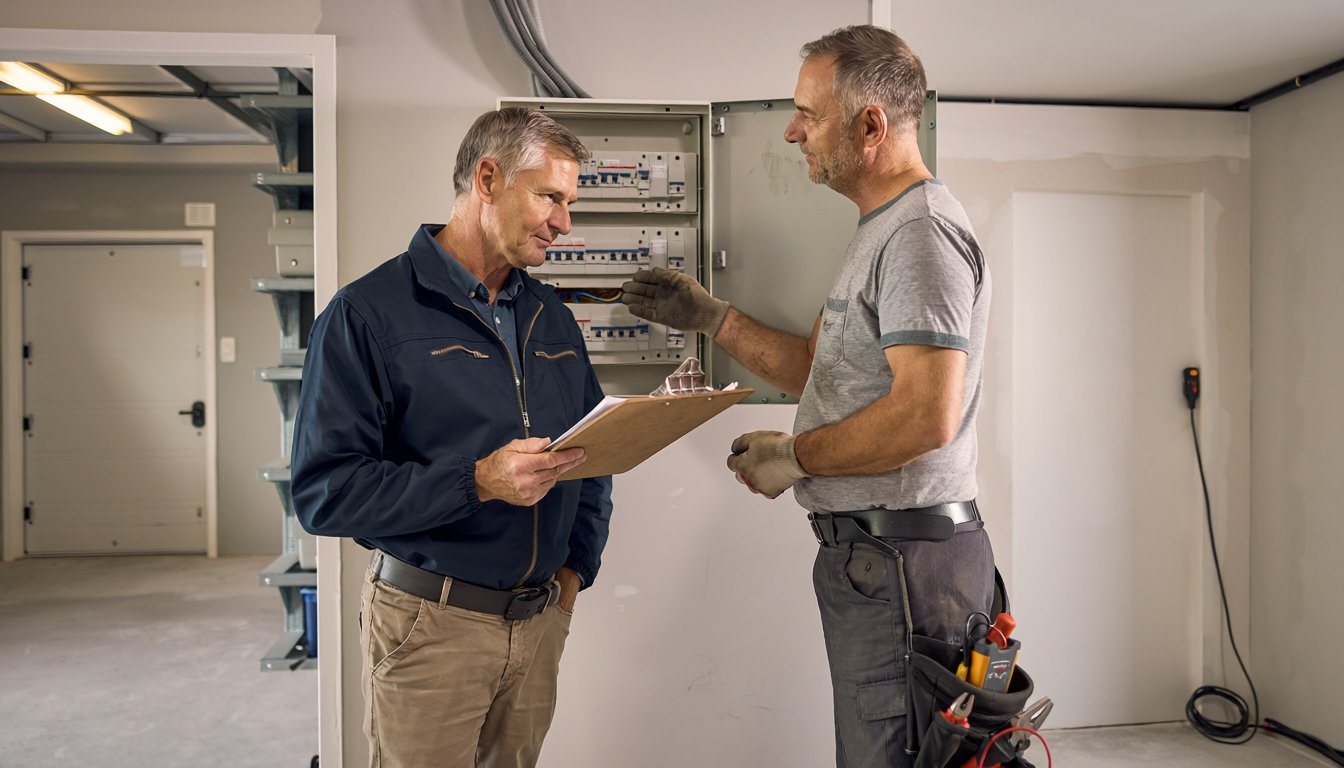
The math is the same everywhere. Find your building department's current electrical fee schedule, count the items your job involves (outlets and fixtures, new circuits, services or panels), apply the issuance fee or minimum, and add any listed surcharges. If the work needs plan check, add that on top. When you compare contractor bids, check whether the permit fee is included or billed separately, since that alone can explain a gap of a few hundred dollars. Who is allowed to pull the permit is a separate question from what it costs. For building permits, our guide to the LADBS permit fee calculator explains how valuation drives the fee.
Medici Construction Group is one licensed option for electrical and general construction work, holding California A, B and C-10 licenses under CSLB #1114433.
Frequently asked questions
How much is an electrical permit?
Angi puts electrical permits at $10 to $500 nationally. In California examples, a panel replacement with two new circuits works out to about $98 to $353 depending on the department, based on published fee tables.
Why do electrical permit fees vary so much?
Each building department sets its own fee table and structure. Some charge per item, some in blocks, and some have a minimum that covers most small jobs, so the same work adds up differently.
What is an electrical permit fee based on?
Usually a base or issuance fee plus per-item charges for outlets, fixtures, circuits, services and panels, with plan check and surcharges added when they apply.
Is plan check included in the electrical permit fee?
No, when it's required it's a separate fee. Los Angeles County charges 70% of the permit fee with a $164.02 minimum, and Long Beach charges 100% with a $216 minimum.
Are there state fees on an electrical permit in California?
Yes, two small ones based on valuation: the SMIP fee (0.00013 times valuation for one- to three-story residential) and the building standards fee ($4 per $100,000 of valuation, $1 minimum).
Does the electrician's quote include the permit?
Sometimes. Ask whether the permit fee, plan check and inspection visits are in the price or billed separately.