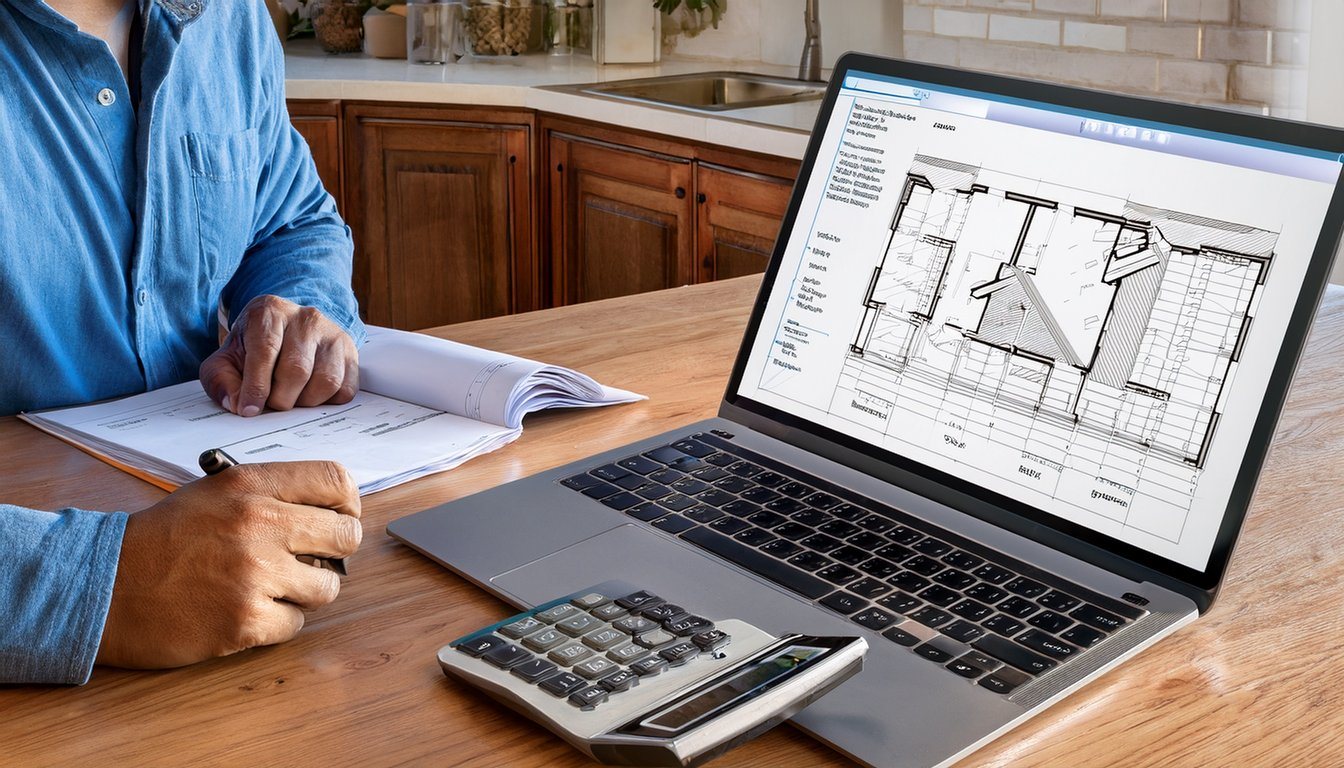
A homeowner planning a 600-square-foot addition opens the LADBS Permit Fee Calculator, picks a building type, enters the numbers, and gets a fee. It goes into the budget as "permits." Months later, the total paid at permit issuance is noticeably higher. The calculator did what it was built to do: estimate the City of Los Angeles Department of Building and Safety's own plan check and permit fees. It doesn't estimate the school district's fee, other city departments' charges, or the separate trade permits. And the number it produces starts from a valuation that LADBS assigns from its own table, which may have little to do with what your contractor will charge. Knowing those two things makes the calculator useful instead of misleading.
Quick answers
- What it covers: LADBS's own plan check and permit fees for building, electrical, mechanical and other permit groups, as an estimate.
- What drives the number: for building permits, the project's valuation, which LADBS sets from a per-square-foot valuation table.
- What it leaves out: school district fees, fees from other city departments, and anything you pay designers or engineers.
- How to use it: as a floor for the LADBS portion of your budget, run once for each permit you'll need, not as an all-in permit cost.
What the calculator is and what it asks for
The Permit Fee Calculator link on the LADBS website opens the city's Plan Check Fee Estimate System. It walks you through a short series of choices: a group (Building, Electrical, Mechanical or Non-Building), an application type, a building type, and a fee period, meaning whether you want the plan check fee or the permit fee. Depending on those choices, it then asks for the details it needs, such as floor area or the number of fixtures or devices.
The fee period choice matters because the two fees are paid at different points. Generally, the plan check fee is paid when plans are submitted for review, and the permit fee is paid later, when the permit is issued. Run it for both, or you've only estimated half of the LADBS charge.
The system is clear about its own limits. Its disclaimer reads: "The fee amounts calculated using this application are estimates based on the current fee ordinance and are subject to change without notice. Final fees will be determined when the application is submitted." If the project changes during plan check, the fee can change with it.
For people who prefer to see the underlying numbers, LADBS publishes them. Its fee schedules page says "Fee schedules and valuation tables can be downloaded here," and lists the building permit valuation table along with separate fee schedules for electrical, plumbing, mechanical, fire sprinkler and grading work.
The calculator estimates money, not time. How long plan check takes depends on the project, the type of review and the department's workload, a separate question from the fee.
Where the number starts: valuation
For a building permit, the most important input isn't a fee rate. It's the valuation. LADBS states it plainly: "Building permit fees are calculated based on the valuation of the project." A higher valuation means a higher permit fee and a higher plan check fee.
The valuation LADBS uses comes from its building permit valuation table, which assigns a dollar value per square foot to different kinds of construction. The current table is dated August 17, 2015. A few rows that matter for residential work:
- Dwelling - Average V - Standard: $101 per square foot
- Dwelling - Good V - Standard: $137 per square foot
- Dwelling - Average III - Standard: $111 per square foot
- Dwelling - Good III - Standard: $154 per square foot
- Dwelling - Exceptional Home V or III: $184 per square foot
- Patio Cover: $16 per square foot
- Pool Concrete: $43 per square foot
- Retaining Wall & Fence Concrete: $14 per square foot of wall
- Retaining Wall & Fence Masonry: $10 per square foot of wall
The "V" and "III" refer to construction types in the building code. Most houses in Los Angeles are wood-framed, which generally falls under Type V. "Average," "Good" and "Exceptional" reflect the quality level of the construction.
First, the valuation isn't your contract price. It's a standardized figure so every applicant building the same kind of thing pays on the same basis. Because the table dates from 2015, in our experience the valuation for a typical project today can sit well below what it will actually cost to build. That's why a permit fee estimate can't be used to back into construction costs; for real construction numbers, see our guides to home addition costs and ADU construction costs. For a rough construction budget on a new house, use our home construction cost calculator instead.
Second, the category you pick moves the number a lot. The table has no separate row for an addition, and in our experience, plan checkers generally apply the matching dwelling rate to residential additions. Choosing "Good" instead of "Average" for the same wood-framed addition raises the valuation by more than a third. The plan checker makes the final call, so pick the category that matches the plans, not the one that gives the lowest fee.
Worked example: valuations for common projects
Here is how the valuation table math works for a few typical residential projects. These are valuations, the starting point the fee is calculated from, not fees and not construction costs. Plug the valuation into the calculator to see the estimated LADBS fee.
| Project | Table row | Size | Valuation |
|---|---|---|---|
| Addition, average quality | Dwelling - Average V ($101/sf) | 600 sq ft | $60,600 |
| Addition, good quality | Dwelling - Good V ($137/sf) | 600 sq ft | $82,200 |
| Concrete pool | Pool Concrete ($43/sf) | 400 sq ft | $17,200 |
| Patio cover | Patio Cover ($16/sf) | 300 sq ft | $4,800 |
| Concrete retaining wall | Retaining Wall Concrete ($14/sf of wall) | 60 ft long x 4 ft high (240 sq ft of wall) | $3,360 |
The same 600-square-foot addition carries a $21,600 difference in valuation depending on the quality category. For the retaining wall, note that the table measures the face of the wall, length times height, not the ground area it sits on. If your wall needs engineering or a soils report, those reviews add their own fees; our soils report cost guide covers what the city charges to review one.
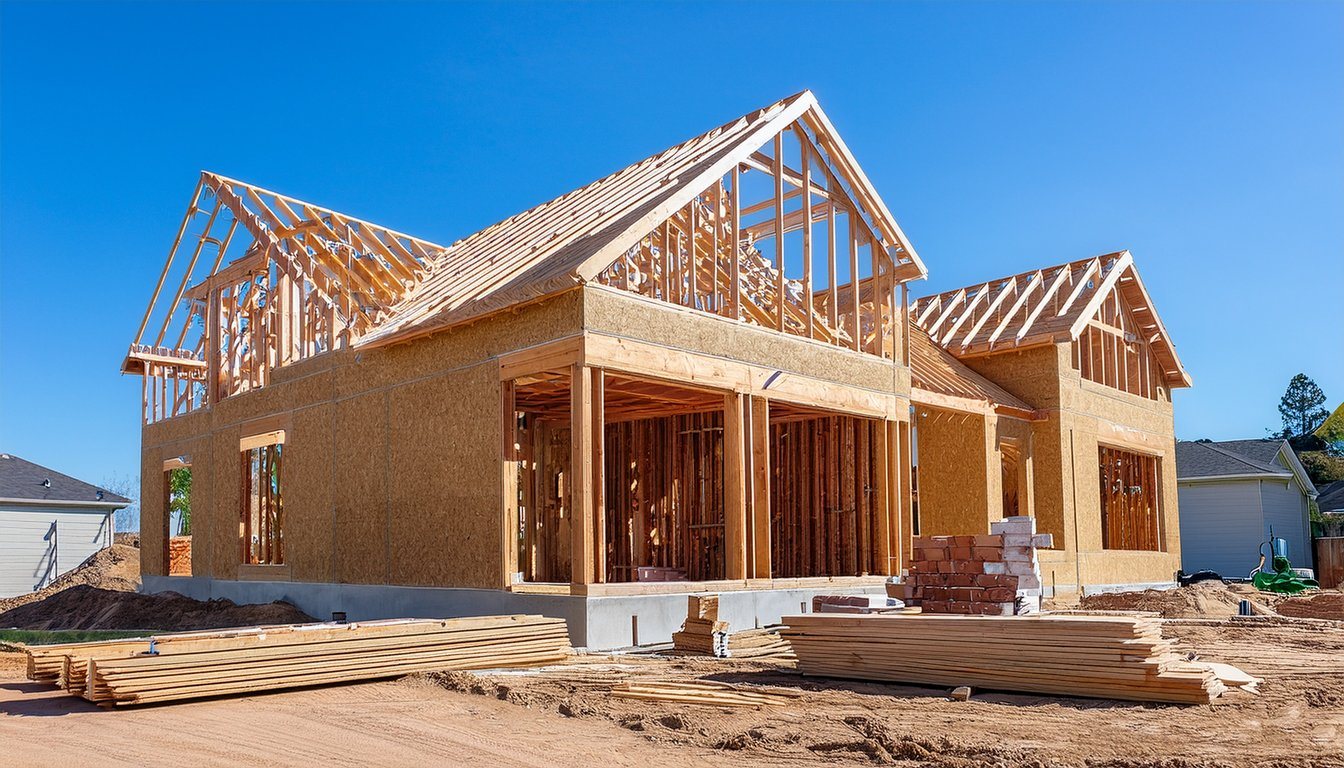
At 600 square feet, the addition is also over the threshold for school fees, the biggest item the calculator leaves out.
What the calculator leaves out
If your project starts by tearing something down, the calculator also won't show the air district notice, asbestos survey or sewer cap permit that come with a demolition; our demolition permit cost guide covers those.
School fees. The Los Angeles Unified School District charges developer fees on new residential space. Its developer fee page states that "Fees apply to all new construction and additions, except for residential projects of less than 500 square feet." The district also notes it has a contract with the City of Los Angeles to collect these fees "as a condition of the issuance of a building permit for developments within the City of Los Angeles." So the fee is due before your permit is issued, but it isn't part of the LADBS estimate. For how these fees fit into a lot split budget, see our SB 9 lot split cost guide.
How much? The state sets a maximum rate. According to a January 2024 alert from the law firm Atkinson, Andelson, Loya, Ruud & Romo, the State Allocation Board "increased the maximum Level 1 Statutory School Fee from $4.79 to $5.17 per square foot for residential construction." If the full maximum applied to the 600-square-foot addition above, the school fee would be $3,102. Districts adopt their own rates, so confirm the current LAUSD rate before you budget. On a larger project, this single fee can rival or exceed the LADBS fee itself.
State surcharges. Building permits in California carry small state surcharges, including one that the California Department of General Services describes as "a surcharge on both residential and nonresidential building permits." The City of Los Angeles adds its own surcharges as well. Our electrical permit cost guide walks through the city and state surcharges line by line, so we won't repeat those figures here.
Separate trade permits. A building permit doesn't cover electrical, plumbing or mechanical work. Each is its own application with its own fee schedule, which is why the calculator asks you to pick a group first. An addition with a new bathroom, new circuits and a mini-split may need a building permit plus electrical, plumbing and mechanical permits, and each one needs its own run through the calculator.
Other city departments. Depending on the project, other agencies may charge fees too. In our experience, the ones that come up most on residential work are sewer connection charges when you add plumbing fixtures, park fees when a project adds a new dwelling unit, and Planning Department fees when a project needs a planning review. None of these show up in the LADBS calculator. For ADUs specifically, our ADU construction cost guide covers which of these fees state law limits.
Your own professionals. Architects, engineers and surveyors aren't city fees, but they belong in the same part of the budget.
How to get a closer number
The calculator gets much more useful with a few habits:
- Run every permit. Building, electrical, plumbing and mechanical, each for both plan check and permit fees.
- Use the valuation table, not your bid. Multiply the square footage by the matching table rate so your inputs look like what the plan checker will use.
- Be honest about the category. Picking a lower quality class than the plans show only delays the correction.
- Add the outside fees yourself. School fees, and any sewer, park or planning fees that apply, go on a separate line.
- Ask at intake. Once your plans are submitted, LADBS staff calculate the actual plan check fee, which is the first firm number you'll get.
Los Angeles isn't unusual in treating early numbers as estimates. San Diego's construction permit fee bulletin says its tables "are designed to assist applicants in estimating construction permit fees," and notes that project information is verified during review and that changes during review may result in additional plan check fees.
Fees after you pay: refunds and expediting
If a project stalls or you abandon it, some of the money may come back. LADBS's refund page says that when no work has been done and the city hasn't made an inspection, review or hearing, "80% of the fees paid will be refunded (20% is retained to cover clerical and administrative costs)." If a permit's valuation was reduced, "100% of the difference will be refunded." Claims generally have to be filed within one year of paying the fee, or within one year of the expiration of any permit extensions. In our experience, once plan check review has started, the plan check portion is spent.
Paying to speed things up is the other common add-on. For electrical plan check, LADBS states that the "Plan check expedite fee is 150% of the original plan check fee." Express permits and expedited review have their own rules; for budgeting, the point is that speed costs extra and the base estimate doesn't include it.
Using the estimate in a budget
Treat the calculator's result as the floor for the LADBS portion of your permit costs. Add the trade permits, the school fee if your project adds 500 square feet or more of residential space, any other departments' fees, and a contingency for changes during plan check. On a small job the LADBS fees may be most of the total; on an addition or ADU, the outside fees often matter more.
If you're working with a contractor, ask them to separate city fees from their own price in the bid so you can see which numbers are firm and which are estimates. For the steps from application to sign-off, our ADU permit guide explains the review process for accessory dwelling units. Medici Construction Group is one licensed option for permitted residential construction in Los Angeles, holding California A, B and C-10 licenses under CSLB #1114433.
Frequently asked questions
What do I need to use the LADBS permit fee calculator?
You'll choose a permit group (building, electrical, mechanical or non-building), an application type, a building type and whether you want the plan check or permit fee. Have the project's square footage and valuation category ready, or for trade permits, the count of fixtures, circuits or equipment.
How are LADBS permit fees calculated?
Building permit fees are based on the project's valuation, which LADBS sets using its per-square-foot valuation table for the type of construction. Plan check and permit fees are separate, and city and state surcharges are added on top. Trade permits use their own fee schedules.
Is the LADBS fee estimate accurate?
It's a reasonable starting point, but only an estimate. LADBS says final fees are determined when the application is submitted, and changes during plan check can change the fee. It also covers only LADBS fees, not other agencies.
Does the calculator include school fees?
No. LAUSD collects developer fees on new construction and additions of 500 square feet or more of residential space, as a condition of permit issuance. Those fees are separate from the LADBS estimate and can be larger than the LADBS fee.
How much is a building permit in Los Angeles?
It depends on the valuation. A 600-square-foot addition valued at $101 per square foot has a $60,600 valuation, and the fee is calculated from that. Run the valuation through the calculator for the LADBS fee, then add trade permits, school fees and other charges.
Can I get a refund on LADBS fees?
Often, if no work was done and the city hasn't inspected or reviewed the project. LADBS refunds 80% of fees in that case and keeps 20% for administrative costs. Claims generally must be filed within one year of payment.
Does the calculator cover electrical and plumbing permits?
Yes, but separately. Electrical, mechanical and other trade permits each have their own group or fee schedule, so you need to run the calculator once for each permit your project requires, and once more for each fee period.