Most project budgets we see have one line for soils: "soils report." Then the report goes to the city, and the city charges a fee to review it. Plan check sends back corrections, and the soils engineer bills time to answer them. Then construction starts, and the same engineer's office comes out to look at the footing excavations and test any fill before concrete goes in. None of that is unusual, and none of it is in the report price. This guide walks through each stage with published numbers: what the report itself costs and covers, what drives the price, what a city charges to review it, and the site visits that follow.
Quick answers
- The report: a Houston firm's 2018 fee sheet prices a basic residential soils report with two borings to 15 feet at $1,050; a San Diego firm lists $3,000 to $8,000 as the typical range for its drilling and exploration work.
- The city review: the LADBS Grading Division fee schedule (revised 2017) lists $363 to review a single soils report and $726 for a combined soils and geology report, plus surcharges.
- The site visits: the same San Diego firm says individual testing visits in Southern California typically run $350 to $650 per trip.
- What moves the price: how many borings, how deep, how easy the site is to reach, which lab tests are run, and whether a geology report is needed too.
What the report fee covers
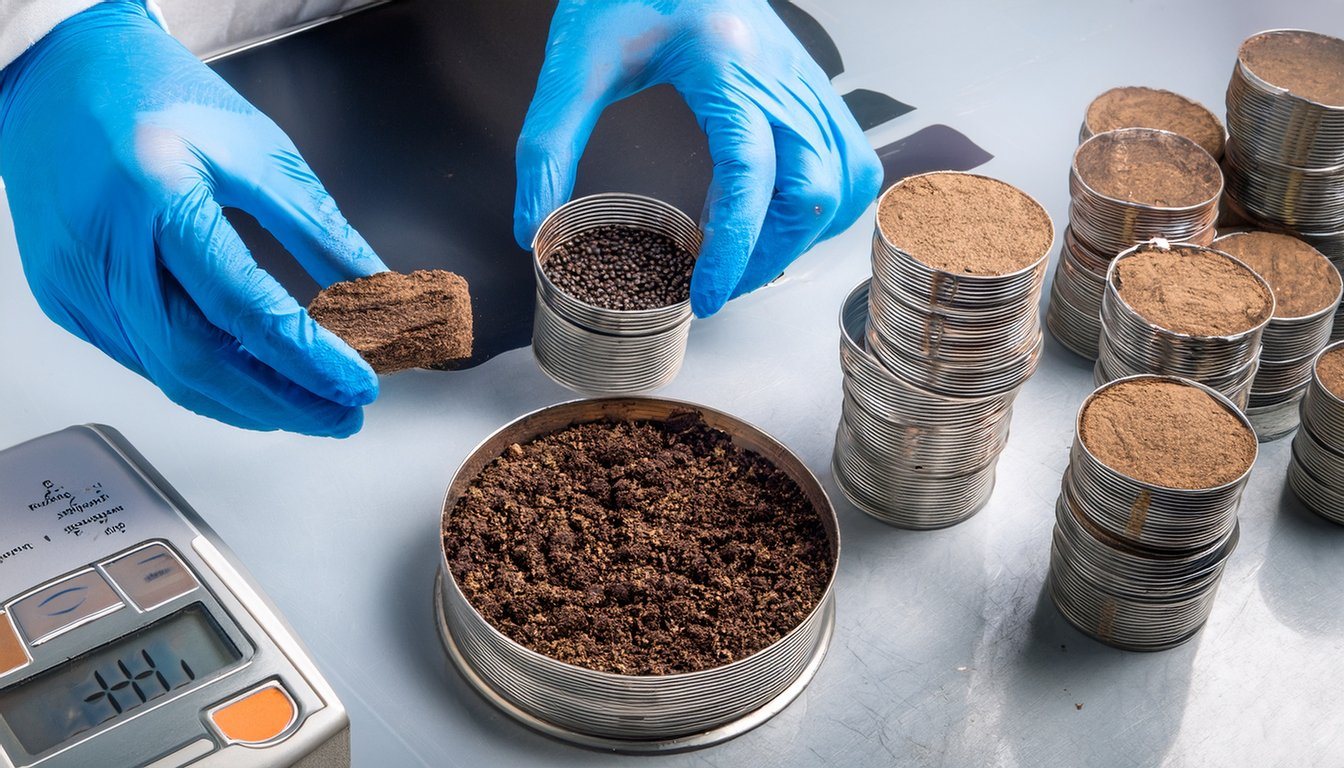
A residential soils report fee usually pays for three pieces of work. First is the field exploration: someone drills or digs into the site and pulls samples. Second is lab testing on those samples. Third is the engineer's analysis and the written report, which gives the foundation designer the numbers to design from. Our house foundation cost guide explains how those recommendations decide the foundation type, and what national cost guides say reports cost on average.
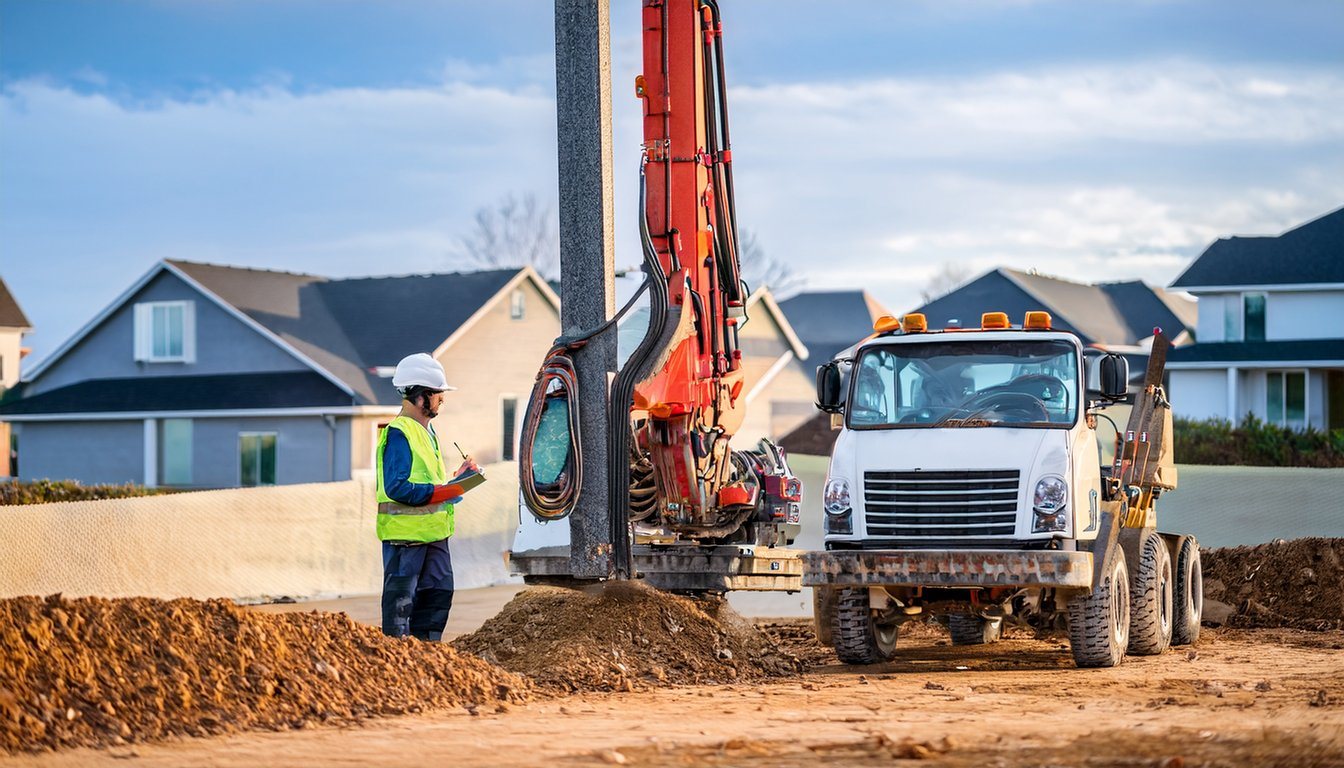
The field method matters to price because it decides what equipment shows up. Moment Engineering, a San Diego geotechnical firm, describes three common approaches on its drilling and exploration page:
- Drill rig borings. The firm lists "100+ ft Hollow-stem auger boring capability in alluvial soils." A truck-mounted rig is the standard tool when it can reach the spot.
- Hand auger borings. "Hand auger borings reach 10–15 feet and provide soil samples for classification and lab testing without heavy equipment." These suit backyards and tight lots where a rig can't get in.
- Test pits. "Backhoe-excavated test pits allow direct observation of soil layering, fill/native contacts, and buried obstructions."
The same page says "Most residential sites need 2–4 borings at 15–30 feet." That's the scope most residential proposals start from, and it's why quotes are often built around a price per boring.
Published soils report prices
Very few engineering firms post prices, so the published numbers are scattered. Here is what we found, with the date and place attached to each, because soils work is priced locally.
A Houston firm, Geotech Engineering and Testing, publishes a residential fee sheet (revised December 2018). It says: "The cost of a basic soil report for two borings to 15-feet, within a 25-mile radius of our offices is $1,050. The cost of each additional boring to a depth of 15-feet is $525." For deeper work, "The cost of geotechnical exploration report for two borings to a depth of 20-feet is $1,400," with $700 for each additional 20-foot boring, and the sheet adds a mileage charge of $4.00 per mile round trip outside that 25-mile radius. Treat those as a floor from another state and another year, not a California quote.
Closer to home, Moment Engineering lists a "Typical Investment: $3,000 – $8,000" for its drilling and subsurface exploration service in Southern California. Ask any firm quoting in that range whether the written report is included or billed on top.
Forbes Home publishes a soil testing cost table (last updated May 2025) that prices single tests rather than full reports. It lists boring at $500 to $1,000 and notes that "Some testing might require an engineer on site, which can cost between $50 and $310 per hour." Those line items help you check a per-boring price, but a single boring is not a soils report.
What pushes the price up
- More or deeper borings. Per-boring pricing means each added hole, and each added foot of depth, shows up on the bill. The Houston sheet's jump from $525 to $700 per extra boring when the depth goes from 15 to 20 feet is a small example of that.
- Access. If a rig can't reach the building footprint, the firm may switch to hand augers or test pits, which changes the crew, the time and what depth the samples come from.
- The lab panel. Calichi, a civil engineering firm, says "Laboratory testing (Proctor, gradation, expansion index) is billed per test at $150 to $500 each." A site with clay that swells may need more tests than sandy ground.
- A geology report on top. Hillside sites often need an engineering geologist as well as a soils engineer. We did not find a published price for a hillside geology report; the firms we checked quote it per project. Our hillside stabilization guide covers who designs slope work.
- Distance. Mileage or mobilization charges apply when the site is outside the firm's normal area.
Whether your project needs a soils report at all is its own question, and the answer depends on the project and the city.
What the city charges to review it
When a soils report is part of a permit, the building department reviews it, and many departments charge for that review separately from the building permit. In the City of Los Angeles, the LADBS fee schedule for grading report reviews (revised September 2017) lists these base fees:
| Report reviewed | Regular review fee | Response to correction |
|---|---|---|
| Single item technical report (listed under foundation, soil, geologic and seismic reports) | $363.00 | $181.50 |
| Combined soils and geology report | $726.00 | $363.00 |
| Combined soils and geology, supplemental report | $363.00 | $363.00 |
| Compaction report | $181.50 | $90.75 |
Surcharges are added to each fee, and the schedule is several years old, so check the current amounts with LADBS before you budget. Two things in that table are worth noticing. A hillside site with a combined soils and geology report pays double the single-report fee. And if the reviewer sends corrections, answering them triggers another review fee on top of the engineer's time to write the response. Other California cities and counties set their own review fees.
Costs after the report
This is the part most budgets miss. The soils report usually recommends that the soils engineer stay involved during construction, and the city relies on that involvement at inspection. Moment Engineering's compaction testing page puts it plainly: "Before pouring footings, the building inspector or soils engineer must verify that the bearing soils or compacted fill beneath the foundation meet the geotechnical report specifications." Here is what that tends to involve. On projects with deep excavations, the report also feeds the shoring design. If the report finds expansive soil, see post tension slab cost per square foot.
Answering plan-check corrections
If the plan checker asks the soils engineer to clarify or add to the report, the engineer writes a response letter. We did not find a published flat price for this; it's usually billed as engineer time. Calichi puts geotechnical engineer time during grading work at $150 to $300 per hour, which gives a sense of the rate. A clean first submittal keeps this line small.
Observing footing excavations
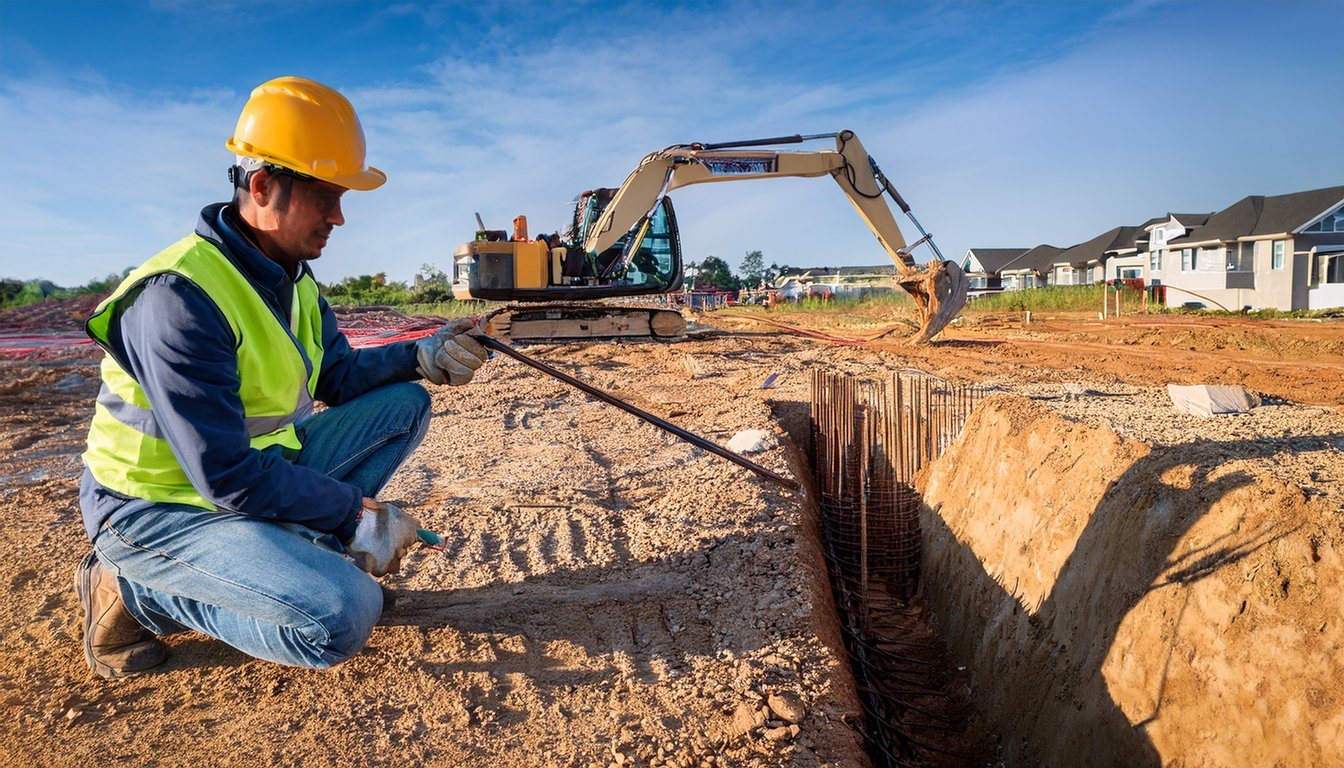
In our experience, the soils report on most new foundations asks the engineer's office to look at the footing trenches before the city's foundation inspection, to confirm the footings reach the soil the report was written for. That's typically a short site visit, but it has to be scheduled around the dig, and a return trip after changes adds another one. Our concrete footing cost guide covers the footings themselves.
Testing fill and grading
If the project places fill, regrades or backfills behind walls, a technician tests the compacted soil in the field. Moment Engineering says "individual site visits in Southern California typically run $350–$650 per trip." Calichi puts field technician time at $75 to $150 per hour. At the end, the engineer issues a compaction report, and in Los Angeles the city charges its own review fee for that too (the $181.50 line in the table above). Our grading plan guide explains who certifies what on an engineered grading job.
A worked budget
Here is an illustrative soils budget for a flat lot in Los Angeles where a new slab sits partly on fill. It uses the published figures above, not a quote.
| Stage | Low | High | Basis |
|---|---|---|---|
| Field exploration (drilling and sampling) | $3,000 | $8,000 | Moment Engineering typical range |
| City review of the soils report | $363 | $363 | LADBS single report fee, before surcharges |
| Three site visits (footings, fill) | $1,050 | $1,950 | 3 × $350 to $650 per trip |
| City review of the compaction report | $181.50 | $181.50 | LADBS compaction report fee, before surcharges |
| Total | $4,594.50 | $10,494.50 | Before surcharges, correction responses and any separate report fee |
Two things would move this. Moment's page doesn't say whether that range includes the written report, so if it's billed separately, add it. And a hillside version of the same project swaps the $363 review for the $726 combined soils and geology review, adds a geology report, and usually adds more visits. The point of the exercise is the shape of the budget: the report is the biggest single line, but the review fees and site visits added roughly 30 to 50 percent on top of it in this example.
How to compare soils report proposals
Two proposals with different totals often describe different work. Line them up on these points:
- How many borings or test pits, to what depth, and by rig or by hand.
- Which lab tests are included, and the price per extra test.
- Whether the written report, extra copies and one round of revisions are included.
- Whether responses to plan-check corrections are included or billed hourly, and at what rate.
- The rates for construction-phase visits: footing observation, compaction testing and the final compaction report.
- Mileage or mobilization charges.
If a proposal is silent on the construction-phase rates, ask for them before you sign, since you'll be paying them either way. Medici Construction Group is one licensed option for foundation, grading and site work that follows a soils report, holding California A, B and C-10 licenses under CSLB #1114433. We coordinate with the owner's soils engineer rather than replace one.
Frequently asked questions
How much does a soils report cost?
It depends on the site and the region. A Houston firm's 2018 fee sheet prices a basic two-boring report at $1,050, and a San Diego firm lists $3,000 to $8,000 as typical for its drilling and exploration work in Southern California. Budget separately for the city's review fee and the engineer's construction visits.
How much does a soil boring cost?
Forbes Home lists boring at $500 to $1,000 as a single test. On a full report, firms often price extra borings individually; the Houston fee sheet charges $525 for each extra boring to 15 feet and $700 for each to 20 feet.
Does the city charge to review a soils report?
Many do. The LADBS fee schedule for grading report reviews (revised 2017) lists $363 for a single soils report and $726 for a combined soils and geology report, plus surcharges, with a separate fee for reviewing responses to corrections.
Are compaction tests included in the soils report price?
Usually not. Field testing during construction is typically billed per visit or per hour. Moment Engineering says individual site visits in Southern California typically run $350 to $650 per trip.
Why do soils report quotes vary so much?
Because they often cover different work: a different number or depth of borings, a rig versus hand augers, a bigger or smaller lab panel, and whether plan-check responses and construction visits are included.
How much does a percolation test cost?
A perc test is a different test from a soils report, used mainly for septic systems and some drainage designs. Forbes Home lists percolation testing at $300 to $1,200, and Bob Vila puts a perc test at $750 to $1,850, with a national average of $1,300.
Is a soils report the same as a geotechnical report?
For most residential projects the terms are used interchangeably: both describe an engineer's investigation of the soil with recommendations for foundation design.