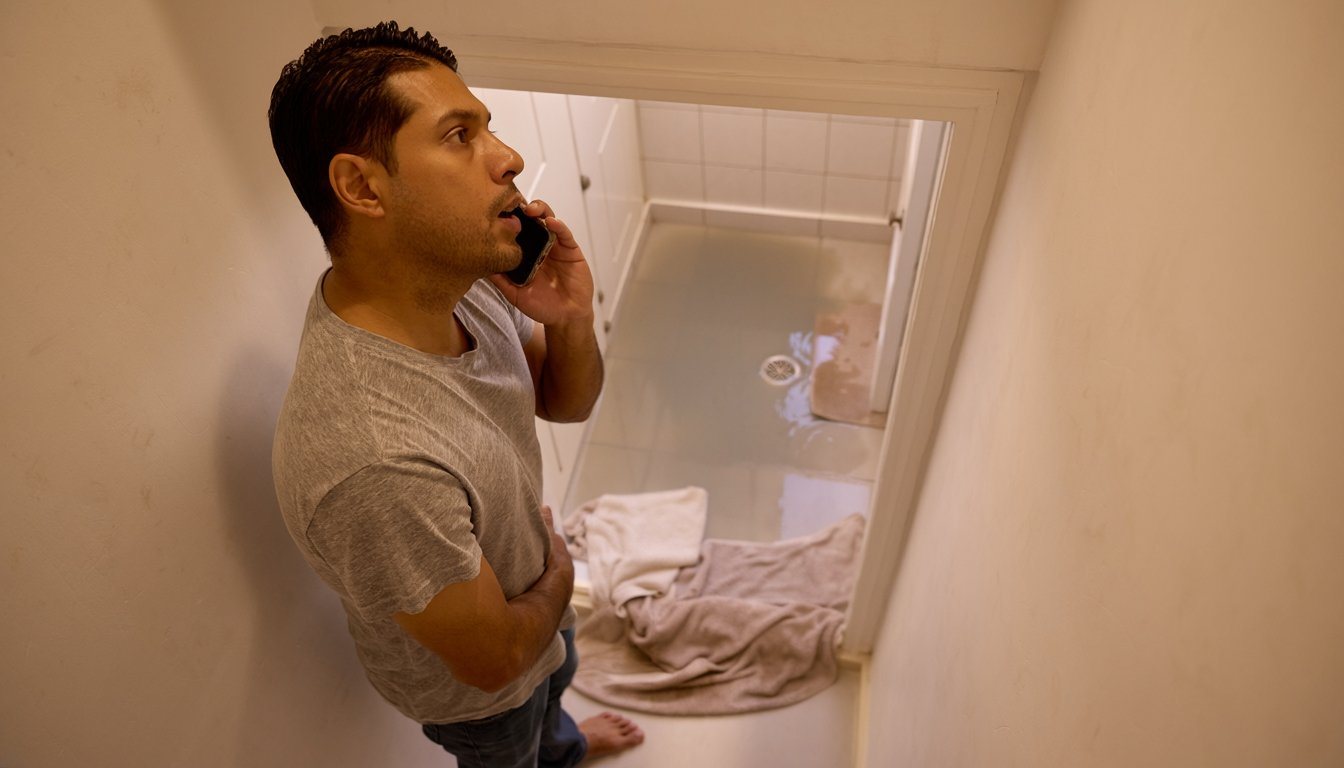
When sewage comes up through a floor drain or tub, "who do I call?" sounds like it should have one answer. It usually has several. A sewer backup can involve someone to stop the flow, someone to clean up, someone to pay, and, if you rent, someone who owns the building. Knowing who handles which part, and what order to call them in, saves time on the worst day of the year for your house.
Quick answers
- To stop the backup: a licensed plumber or sewer contractor for your own line, or your sewer utility if the public sewer is the problem.
- Which goes first depends on which pipe is blocked: one utility tells residents to call a plumber first; another has them work out whether the problem is in their own plumbing or the main, and call its 24/7 line.
- To clean up: a company that specializes in sewage cleanup and restoration.
- To pay: report it to your insurer, with photos taken before cleanup.
- If you rent: tell your landlord or property manager right away.
The four calls a sewer backup can need
It helps to sort the calls by job. First, someone has to stop more sewage from coming in by clearing the blockage, whether it's in your private line or the public sewer. Second, someone has to clean up and dry out the damage. Third, someone may pay for part of it, which starts with your insurer. And fourth, if you don't own the home, the owner needs to know immediately. Not every backup needs all four, but thinking of them as separate jobs keeps you from waiting on one call to handle another.
First call: a plumber, or the sewer utility?
This is where public guidance differs. Portland's sewer agency tells residents that if a sewer backs up into a home or business, "it's best to call a plumber first to investigate the cause of the backup." Western Virginia's water authority frames it differently: its steps tell residents to "try to determine if the blockage is just in the household/business plumbing or in the main sewer line," and to call its 24/7 sewer emergency line.
Both make sense once you know who owns what. The utility maintains the public sewer. In our experience, the property owner is often responsible for the pipe from the house to that sewer. A utility generally handles blockages in its own sewer, but check yours; if the blockage is in your line, a plumber or sewer contractor is who fixes it. The first call is really a guess about which pipe is blocked, so check what your own utility recommends. Our sewer backup guide has a table of clues for telling whose pipe it is, and our emergency sewer backup guide covers what to do when you can't tell, along with filing deadlines if the public sewer caused the damage.
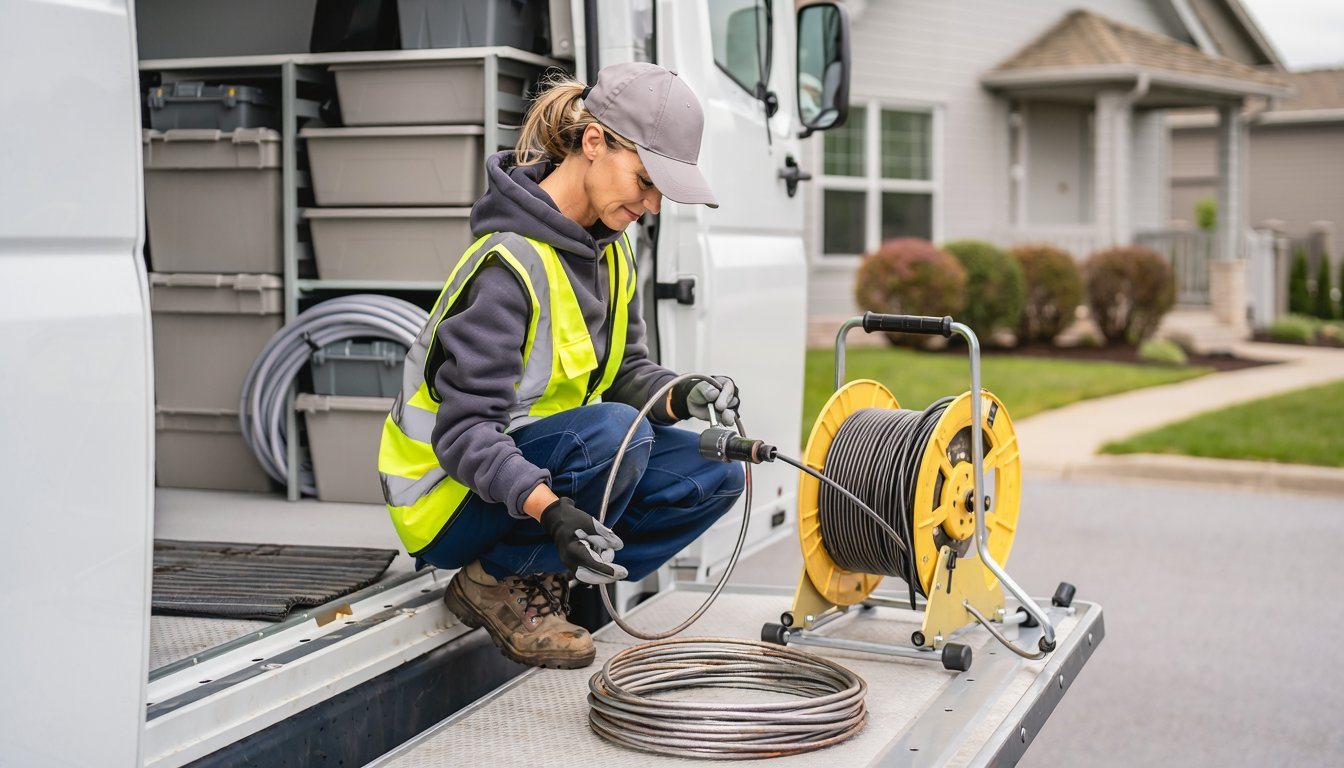
If a plumber is the right call, look for one who can camera the line after clearing it, so you learn why it happened. Our guide to hiring a sewer backup plumber covers what to ask. Medici Construction Group is one licensed option for sewer line diagnosis and repair, holding California A, B and C-10 licenses under CSLB #1114433.
Before you dial: what to do and what to have ready
The first call goes faster if you've done two small things. The first is to stop adding water to the system. Madison, Wisconsin's engineering division lists "Stop all water use in the home" as the first step when a backup starts, and a California district, West Valley Sanitation District in Santa Clara County, is blunter: "Do not run your water until your backup is cleared" is its instruction. In our experience, that means no flushing, no laundry, no dishwasher and no long showers until someone has looked at the line. Every gallon you send down goes to the lowest drain in the house.
The second is to collect the facts a dispatcher or plumber will ask about. Pittsburgh Water's emergency line asks callers to report where in the home the backup is, whether it has happened before, whether it occurs when water is used indoors, and whether it happens only during rain. Those four answers are useful to any crew, because they point toward the cause. In our experience, a backup only in the lowest tub that happens every time the washing machine drains suggests a blockage in your own line, while one that shows up only in heavy rain suggests stormwater getting into the sewer system, which is a public-side problem. While you wait, the same Pittsburgh page suggests checking with neighbors to see whether they have the same trouble. If the house next door is having the same problem, the odds shift toward the main.
How a utility crew works out whose pipe it is
Utilities do not all use the same test, but the logic is similar. Madison's crews use a simple observation. Its engineering page says that when the main was the problem, sewage flows back down the floor drain after crews clean the city sewer main, while if it is a lateral issue, the water remains after the main is cleaned, and the crew tells the owner which it is. In other words, the crew clears the public side first, then watches what your drain does.
Where the public responsibility ends also varies. West Valley Sanitation District says it responds to sewer overflows and backups at no additional charge and handles the main sanitary sewer line. Property owners maintain the building sewer between the building and the property line cleanout and, if the problem is inside the home, need to hire a plumber. Pittsburgh draws its line by pipe type, with the utility responsible for "a broken or clogged sewer main" and the owner for "a broken or clogged sewer lateral".
Three utilities, three slightly different boundaries. That is the practical reason to phone your own utility rather than rely on a general rule: the same clogged pipe can be the city's job in one town and yours in the next. A utility that sends a crew to check the main is worth calling even if you suspect your own line, because a quick answer about the main also tells you what to tell the plumber. Our overflowing cleanout guide covers what it means when the cleanout itself is the place where the water shows up.
Finding your sewer utility
Your sewer provider isn't always your city. In our experience, depending on where you live, it may be the city, the county, or a separate sanitation district. The quickest ways to find out are usually your sewer or water bill, which names the provider, or your city's website. Look up the number and save it before you ever need it; during a backup is a bad time to start searching.

Three scenarios and the order of calls
The right order depends on what you see. These are not rules from any one agency; they are ways to apply the guidance above, and your own utility's instructions win if they differ.
One drain, and it has happened before. A single bathtub gurgles and backs up, and the rest of the house drains normally. That points to a partial blockage in your own line. In our experience, the sensible order is to stop water use, call a plumber, and photograph anything that got wet. If the plumber clears the line and the water still doesn't drop, or the plumber finds the blockage lies beyond your property line, call the utility next.
Several drains at once, or the neighbors too. Sewage coming up in the lowest tub and floor drain while the sinks upstairs also run slowly, or a neighbor reporting the same, points toward the main. Here, calling the utility's 24/7 line first makes sense, since only the utility can work on the public sewer. Tell the dispatcher what you noted about timing and rain. In our experience, the utility's crew will also tell you whether your lateral needs a plumber.
Sewage on the floor and you can't tell. Stop the water, then make the call that gets a crew to the house soonest. If your utility's guidance says to call it first, do that; if it says a plumber comes first, do that. In our experience, each call narrows the other's search, so you rarely lose by making both quickly, and our emergency guide covers that situation in detail. Either way, book cleanup as soon as the flow has stopped, because the damage keeps spreading while a floor stays wet.
Ask for a camera video before you agree to a repair
If the utility says the problem is in your lateral, you are about to hire someone, which is when a record helps most. Madison's engineering division recommends that owners "require contractors to televise the sewer lateral and provide a video before agreeing to have the lateral repaired" and adds that homeowners should always get a copy of the video for their records. In our experience, a video does three jobs: it shows whether the fault is a blockage or a break, it gives a second contractor something to price against, and it documents the pipe's condition for your insurer or the utility if there is a later dispute over whose section failed. It is a simple request to make before any digging begins, and our guide to emergency sewer repair explains why the first visit is usually stabilization, not the full repair.
Second call: cleanup
Clearing the line stops the flow; it doesn't clean the house. Portland's guidance notes that companies specialize in cleaning and restoration services following a sewer backup or water damage. Our emergency guide covers what you can safely handle yourself and what to throw away, and our sewer backup cleanup cost guide explains what a professional cleanup invoice includes. For how to vet a company quickly, see our guide to choosing a sewer backup cleanup company.
Third call: your insurer
Photograph the damage before cleanup starts, then report the backup to your insurance company promptly. Whether your policy pays is a separate question: Western Virginia's water authority, for example, notes that "a special rider or endorsement is needed on your homeowner's or renter's insurance policy" to cover damages from sewer backups. Check your own policy, and see our sewer backup guide for more on coverage.
If you rent
Tell your landlord or property manager right away, even if you've already called a plumber. Western Virginia's water authority, for instance, states that "clean up of sewage backups in homes and offices is generally the responsibility of the property owner or landlord." Responsibility can vary with your lease and local law, so check your lease, and report damage to your own belongings to your renter's insurer.
Frequently asked questions
Who do I call for a sewer backup?
A licensed plumber or sewer contractor if the blockage is in your own line, or your sewer utility if the public sewer is backed up. After that, a cleanup company, your insurer, and, if you rent, your landlord.
Should I call a plumber or the city first?
It depends on which pipe you think is blocked. Portland advises calling a plumber first; Western Virginia's water authority asks residents to work out whether the blockage is in their plumbing or the main and to call its 24/7 line. Follow your own utility's guidance.
Who cleans up a sewage backup?
Companies that specialize in sewage cleanup and restoration handle professional cleanup. The plumber or utility clears the blockage; the cleanup is a separate job.
What does a plumber do for a sewer backup?
A plumber clears the blockage in your private line, in our experience often through a cleanout, and can run a camera afterward to find the cause, such as roots or a broken section of pipe.
Can I keep using water while I wait for help?
No. Madison, Wisconsin's engineering division says homeowners should stop all water use, and West Valley Sanitation District in California says not to run water until the backup is cleared. Extra water only adds to what is coming up through the lowest drain.
What should I tell the utility dispatcher?
Say where in the house the sewage is coming up, whether it has happened before, whether it occurs when water is used indoors, and whether it only happens in rain. Pittsburgh Water lists these four points for callers, and they help any crew find the cause.
Who do I call if I rent?
Your landlord or property manager, right away. Responsibility for cleanup often falls on the owner, but it depends on your lease and local law. Report damage to your belongings to your renter's insurer.