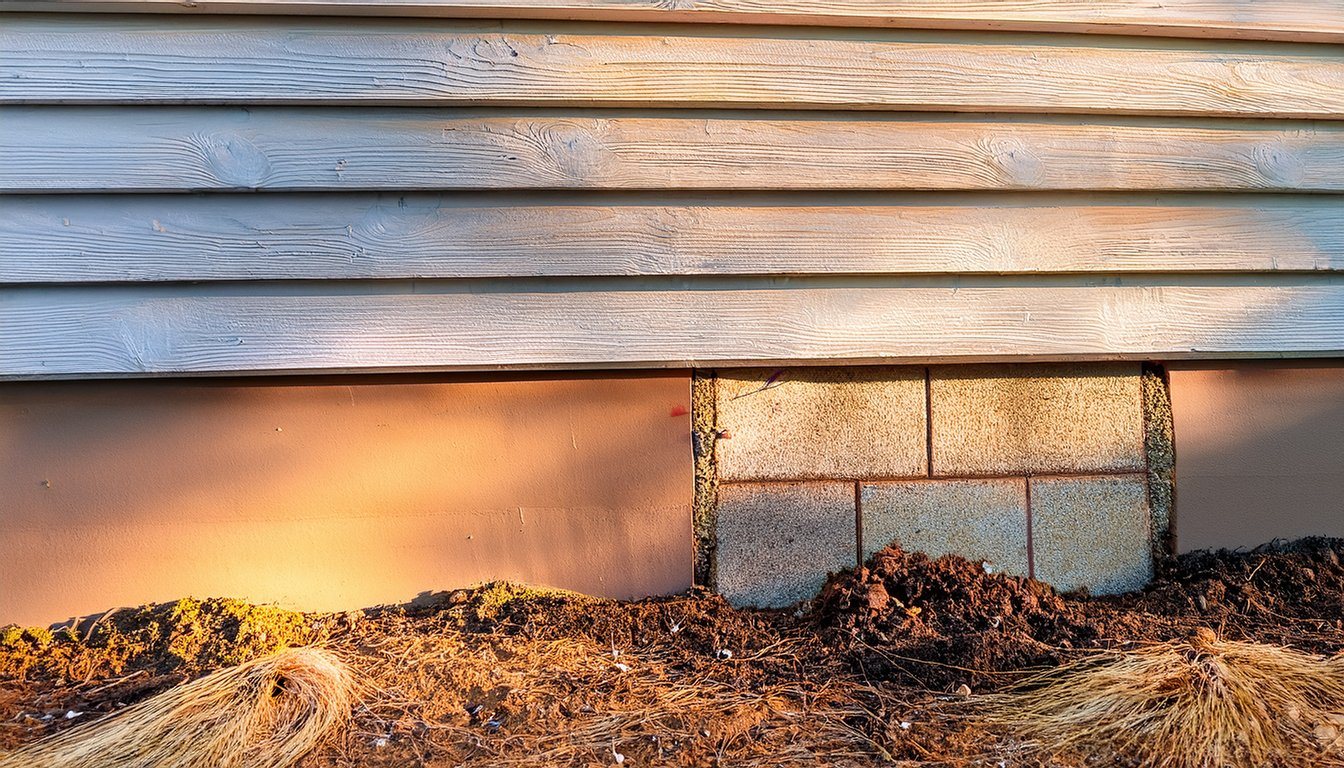
On a house with a raised floor and a crawl space, the stem wall is the short concrete wall that runs around the perimeter and holds the house up. That's why stem wall repair costs fall into two very different groups. If the wall can be fixed where it stands, the job is a repair. If any part of it has to come out, something else has to hold the house up while it's rebuilt, and the job becomes a different kind of project with a different kind of price.
Quick answers
- Fixing a crack in place is the least expensive tier; one contractor publishes stem wall epoxy repair at $125 per linear foot.
- Treating surface deterioration (spalling) costs more; the same contractor puts its average carbon fiber wrap repair at $5,000.
- Replacing a section means temporarily supporting the house above it, which is where cost climbs sharply.
- Replacing the whole foundation usually means lifting the house; national cost guides put that in the tens of thousands of dollars.
- Know which tier a quote is pricing before comparing numbers, and get an engineer involved before anything beyond crack repair.
Why stem wall repair costs vary so much
Typically, a stem wall sits on a footing below grade and carries the floor framing and walls of the house above it. Most repair decisions come down to one question: can the wall stay in place and be strengthened or sealed, or does concrete have to be removed and poured again? Everything in the first category is priced like a repair. Everything in the second has to account for holding the house up, which is a separate and expensive piece of work on its own. Figuring out what's wrong with the wall is a separate subject; our foundation cracks guide and foundation warning signs guide cover that. Not sure whether your crack needs repair at all? See stem wall cracks: which ones matter. For what a sound stem wall is supposed to do and how to check yours, see our residential stem wall guide.
The four levels of stem wall repair
Published pricing that's specific to stem walls is scarce. The figures below come from one contractor's published pricing and from national house-lifting guides, and they're labeled that way; treat them as reference points, not quotes.
| Level | What it involves | Published reference point |
|---|---|---|
| 1. Crack repair in place | Epoxy injection or stitching a crack; wall stays | One contractor: $125 per linear foot |
| 2. Surface deterioration | Reinforcing spalled or weakened concrete in place | One contractor: $5,000 average (carbon fiber wrap) |
| 3. Section replacement | Temporary support, remove and repour a section | No reliable published figure; quoted per project |
| 4. Full foundation replacement | House lifted or supported, new foundation built | Fixr: $30,000 to $100,000 (whole foundation, house lifted) |
1. Crack repair in place
When a crack is the problem and the wall itself is sound, it can usually be repaired without removing any concrete. One contractor that specializes in this work publishes its price plainly: "the epoxy crack repair will be $125 per linear foot." That's one company's pricing, not a market range. Our foundation crack repair guide compares the repair methods and broader cost figures.
2. Surface deterioration (spalling)
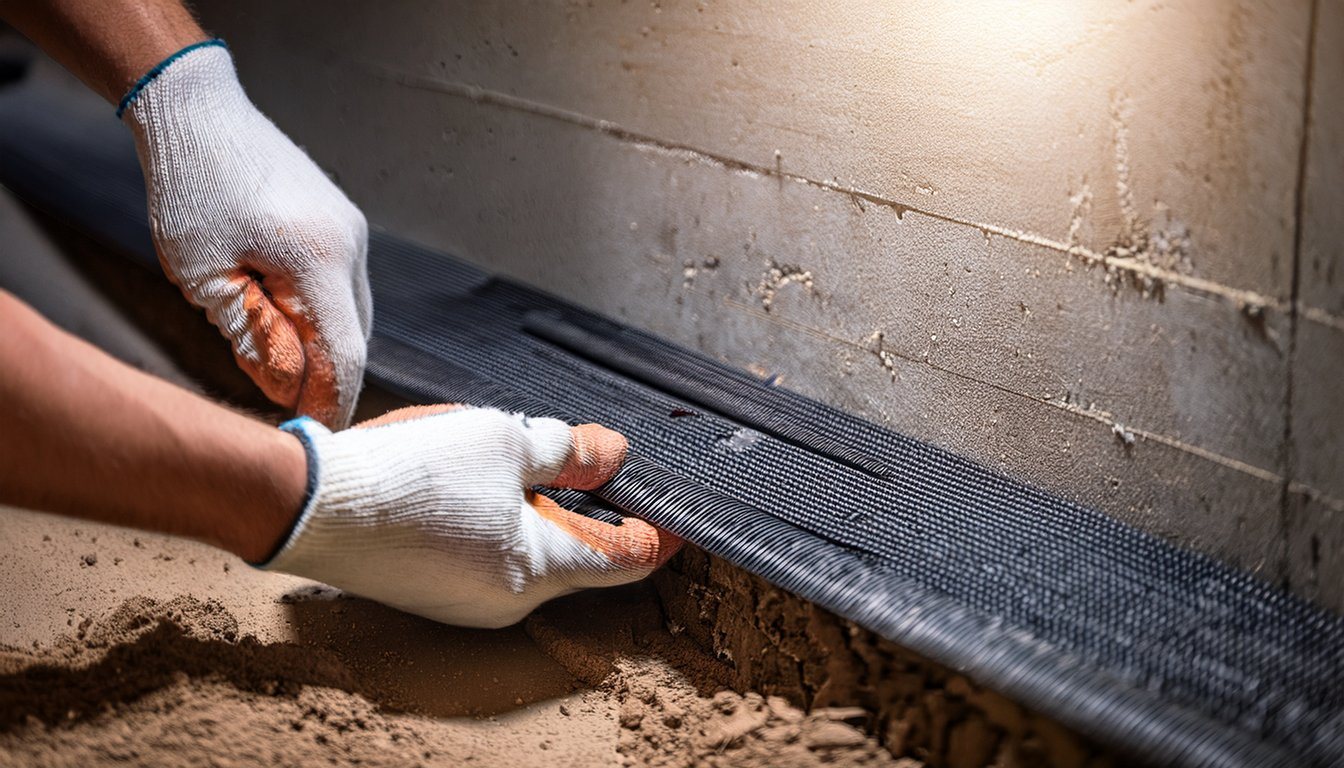
Older concrete can flake and crumble at the surface, often where water keeps reaching it. The same contractor describes carbon fiber wraps as its repair for stem wall spalling, notes they're "cheaper than removing and replacing an entire section," and states that "the average price for carbon fiber wrap repair is $5,000." Whether a wall is a candidate for reinforcement or too far gone is a call for an engineer, not a price sheet.
3. Section replacement
When part of the wall is too damaged to keep, that section can be removed and poured again. In our experience, this is where a stem wall job changes character: the floor framing that sat on that section needs temporary support while the old concrete comes out and the new section goes in, and the new concrete has to be connected to the existing wall on either side. We haven't found a reliable published figure for this tier, because the price depends so heavily on how long the section is, what's sitting on top of it, and how easy it is to reach.
4. Full foundation replacement
On most raised houses, the stem wall is essentially the whole perimeter foundation, so replacing all of it means lifting or fully supporting the house. National cost guides give a sense of the upper bound. Fixr says "the cost of lifting a house to repair the foundation averages $15,000 to $25,000," and "the cost to lift a house and replace the foundation ranges from $30,000 to $100,000." Those are whole-foundation numbers, not typical stem wall repairs, but they show why the jump from level 3 to level 4 is so large. Our foundation repair cost guide covers full-foundation pricing in more detail.
The step that changes the price: holding the house up
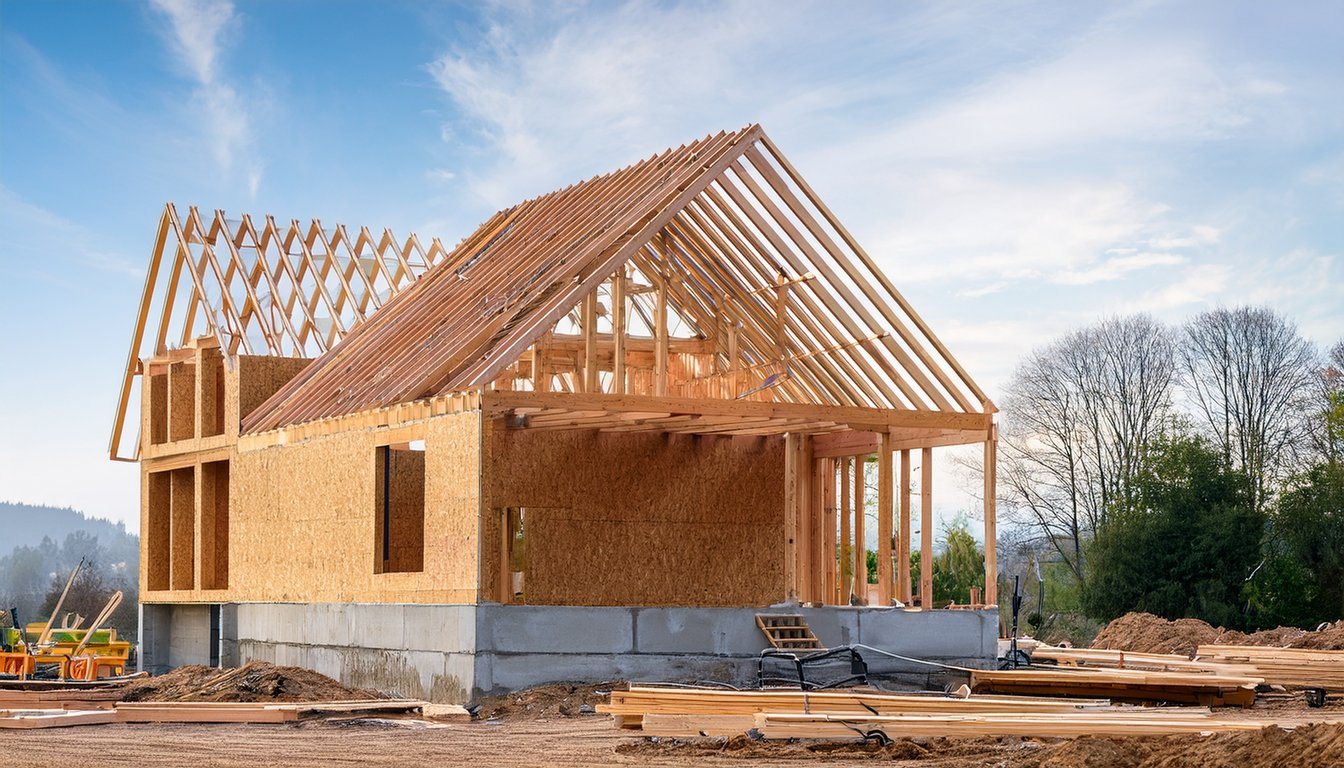
In our experience, the single biggest cost driver in stem wall work isn't concrete. It's whatever has to happen to keep the house standing while concrete is removed. For a short section, in our experience, that's usually temporary posts and beams under the floor framing next to the work. For the full perimeter, it's lifting the house. Raised houses do have one advantage here: Angi notes that "a house that is on a pier or beam foundation, and has a crawlspace, is easier to lift," which Angi says usually means less labor and a lower cost. If you're pricing a new raised foundation rather than a repair, see our raised foundation cost guide.
This is also why two stem wall quotes can look wildly different for what seems like the same problem. A quote to reinforce the wall in place and a quote to replace a section of it aren't competing prices for one job; they're prices for two different jobs. The engineer's assessment of whether the wall can stay is what decides which job you actually need.
When the problem is under the stem wall, not in it
Sometimes the wall is fine and the ground under its footing isn't. If the footing has settled, sealing the crack in the stem wall treats the symptom. The same contractor quoted above makes that point, warning that repairing only the crack leaves the underlying movement in place, and describes the usual fix as underpinning: "Push piers are hydraulically driven into the soil using the weight of your home until they reach bedrock," while helical piers are "driven into the ground until they reach competent soil."
Piers are priced by the pier. HomeGuide's foundation repair guide says "Underpinning, also called piering, costs around $1,000 to $3,000 per pier," and lists underpinning or piering at $10,000 to $20,000 as a project. It also describes helical piers as "A newer and more advanced piering method with higher costs."
In our experience, the pier count is what moves the total. The engineer sets the spacing along the settled section, the pier depth depends on how far down good soil is, and the stem wall itself may still need its cracks sealed once the footing is stable. So a piering quote and a crack-repair quote for the same wall aren't alternatives; the piers address the cause, and the crack repair finishes the job. Ask the engineer whether movement is ongoing before you pay for either.
Stem walls under slab houses and garages
Not every stem wall sits under a crawl space. Many slab houses, and many garages attached to raised houses, are built with a concrete slab inside a perimeter stem wall. In our experience, the repair tiers are the same, but the costs fall differently:
- Crack repair works the same way and is priced the same way, by the foot.
- Section replacement usually means cutting back the edge of the slab as well, because the slab bears on or ties into the wall. The slab patch, and any flooring over it, becomes part of the price.
- Supporting the structure is simpler in one way, since the slab carries most of the floor load, but the wall framing above the stem wall still has to be shored while the section is out.
- Garage stem walls often take the most abuse, from vehicles, water at the door and soil piled against the outside, so they're a common place for a section replacement on an otherwise sound house.
Other costs that belong in the quote
- Engineering. For anything beyond crack repair, an engineer's assessment and, for replacement, a design. Our foundation repair cost guide covers what an engineer's report typically costs.
- Permit and inspection. Most jurisdictions require a permit for structural foundation work; check with your local building department.
- Access. In our experience, a low crawl space or a wall hemmed in by a driveway, porch, or neighboring structure slows the work and adds cost.
- What's found once it's open. In our experience, opening up an old stem wall sometimes reveals damage to the wood sill on top of it that needs repair at the same time.
- Bolting while it's open. If the house isn't bolted to its foundation, doing it during foundation work can make sense; our Earthquake Brace + Bolt guide covers that program.
How to tell which level a quote is pricing
Before comparing numbers, ask each contractor a few direct questions. Does the wall stay in place, or is any concrete being removed? If a section is being replaced, how long is it, and how will the house be supported during the work? Is an engineer's assessment or design included, or does it need to happen first? Is the sill plate or framing above the wall included if it turns out to need repair? The answers usually explain most of the difference between two quotes, and they tell you whether you're comparing like with like.
Getting it done
For anything past a simple crack repair, start with a structural engineer's assessment, then get contractor bids on the specific scope the engineer defines. That keeps every bid pricing the same job. Medici Construction Group is one licensed option for stem wall and foundation work, holding California A, B and C-10 licenses under CSLB #1114433.
Frequently asked questions
How much does stem wall repair cost?
It depends on the level of repair. One contractor publishes stem wall epoxy crack repair at $125 per linear foot and carbon fiber reinforcement of deteriorated concrete at an average of $5,000. Replacing a section costs more because the house above has to be supported, and replacing the whole foundation with the house lifted runs into the tens of thousands in Fixr's national figures.
Can a cracked stem wall be repaired instead of replaced?
Often, yes, if the wall itself is still sound. Crack injection and in-place reinforcement are generally less expensive than removal and replacement. An engineer can tell you whether your wall is a repair candidate.
Can a stem wall be replaced in sections?
Often, yes, depending on the engineer's assessment. Damaged sections can often be replaced individually, with the house temporarily supported over each section while the work is done, rather than replacing the entire perimeter at once.
Do you have to lift the house to replace a stem wall?
Not always. In our experience, a short section can typically be replaced with temporary support under the floor framing nearby. Replacing the full perimeter foundation usually means lifting or fully supporting the house.
Do I need an engineer for stem wall repair?
For a simple crack repair, not always. For reinforcement, section replacement, or full replacement, an engineer's assessment is what determines the right scope and keeps contractor bids comparable.
How long does stem wall repair take?
It varies with the level of work. In our experience, crack repair can be a short visit, while section or full replacement involves support, concrete curing, and inspections that stretch the job out considerably.
Does a cracked stem wall need piers?
Only if the footing under it has settled or is still moving. Piers address movement in the soil, while crack repair addresses the wall. HomeGuide puts underpinning at about $1,000 to $3,000 per pier, so ask an engineer to confirm the movement before you pay for piers.