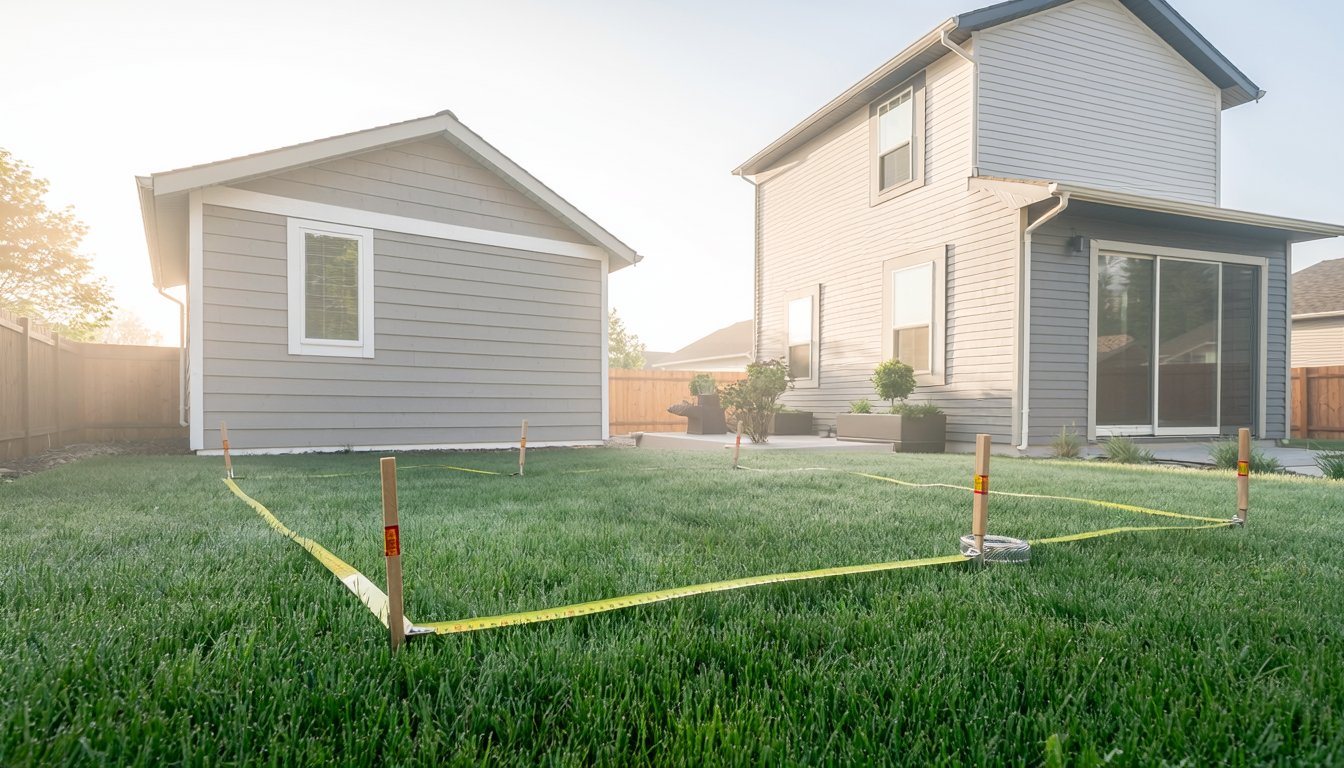
Ask how big an ADU can be and you'll hear several numbers: 800, 850, 1,000 and 1,200 square feet. They're all real, and they answer different questions. State law says a city's maximum can't be lower than 850 square feet, or 1,000 for units with more than one bedroom; it guarantees an 800-square-foot unit in almost every case; and state law caps detached ADUs built under a local ordinance at 1,200 square feet, the number Los Angeles and San Diego use for their local ADUs. In our experience, owners who plan around the first number they read often leave space on the table, or design something their lot can't hold.
This guide sorts the numbers out by ADU type, covers height, and then gets to the practical question: how big you should build.
Quick answers
- No single cap: cities set ADU maximums, but state law sets floors those maximums can't go below.
- Detached ADUs: up to 1,200 square feet under a local ordinance, the cap in state law, used by Los Angeles and San Diego.
- Attached ADUs: limited to 50 percent of the existing house under state law.
- Conversions: generally limited by the existing structure, not a square-foot cap.
Why there isn't one number
California's ADU law leaves the maximums to local governments. Government Code section 66321 says "a local agency may establish minimum and maximum unit size requirements for both attached and detached accessory dwelling units". The state sets limits on both ends: section 66314 caps the total floor area of a detached ADU at 1,200 square feet under a local ordinance, and section 66321 puts a floor under local caps, so a city can't set its maximum so low that a useful ADU becomes impossible.
That's why the answer changes from city to city, and why the size you can build also depends on which path you use. In Los Angeles, as our ADU requirements guide explains, the City distinguishes ADUs built under the state's by-right categories from ADUs built under its local ordinance, and the size limits differ between them.
The state floors
Two state rules set the minimums every city's maximum has to respect. Under the same section 66321, a city can't set a maximum size for an attached or detached ADU below 850 square feet of interior livable space, or below 1,000 square feet for an ADU with more than one bedroom. Our guide to a 1,000 square foot ADU quotes that provision and covers what that size costs.
Separately, section 66321 says local standards can't prevent an ADU of at least 800 square feet of interior livable space with four-foot side and rear setbacks from being built in compliance with other local standards. In our experience, that 800-square-foot guarantee is the number most people see online, and it's often mistaken for a cap. It's the reverse: it's the size a city has to allow even when its other rules would squeeze a unit smaller.
Recent changes matter here too. As our requirements guide notes, SB 543, effective January 1, 2026, clarified that ADU floor area limits apply to interior livable space. In our reading of the current code text, that clarification didn't change the 850 and 1,000 square foot floors themselves; confirm with your city how it measures floor area.
Size limits by ADU type
The City of Los Angeles laid out its limits by ADU type in a Zoning Administrator memo dated December 30, 2024. The table below summarizes that memo's size limits. It predates 2026 state changes, so confirm current rules with the City before you design.
| ADU type | Maximum size |
|---|---|
| New detached ADU under the City's ordinance | 1,200 sq ft |
| New detached ADU under the state's by-right category | 800 sq ft |
| Conversion of an existing accessory structure | No size cap, plus up to 150 sq ft added for entry |
| Attached ADU under the City's ordinance | 50% of the existing house (no cap if part of a new building) |
| Attached ADU converting existing space under state law | No size cap |
| Junior ADU (JADU) | 500 sq ft |
The 50 percent line for attached units comes from state law as well. Section 66314 limits the total floor area of an attached ADU to 50 percent of the existing primary dwelling when there's an existing house. In our experience, how that rule interacts with the state floors on a small house is worth confirming with your city before design.
Other cities follow a similar pattern with their own numbers. San Diego's ADU information bulletin, dated January 2026, sets a maximum of 1,200 square feet of gross floor area for attached or detached ADUs and a minimum of 150 square feet, and adds that "The conversion of an existing accessory structure or a portion of the existing primary residence to an ADU is not subject to the 1,200-square-foot maximum gross floor area limitation". Note the different measure: San Diego uses gross floor area, while the state floors are stated in interior livable space, so the same building can produce different numbers under each.
Does garage space count? In our experience, when you convert a garage, the garage's existing footprint is the practical limit rather than a square-foot cap, as both Los Angeles's memo and San Diego's bulletin reflect for conversions. Adding space beyond the footprint moves you into new-construction rules. Our garage to ADU cost guide covers what conversions involve.
How square footage gets measured
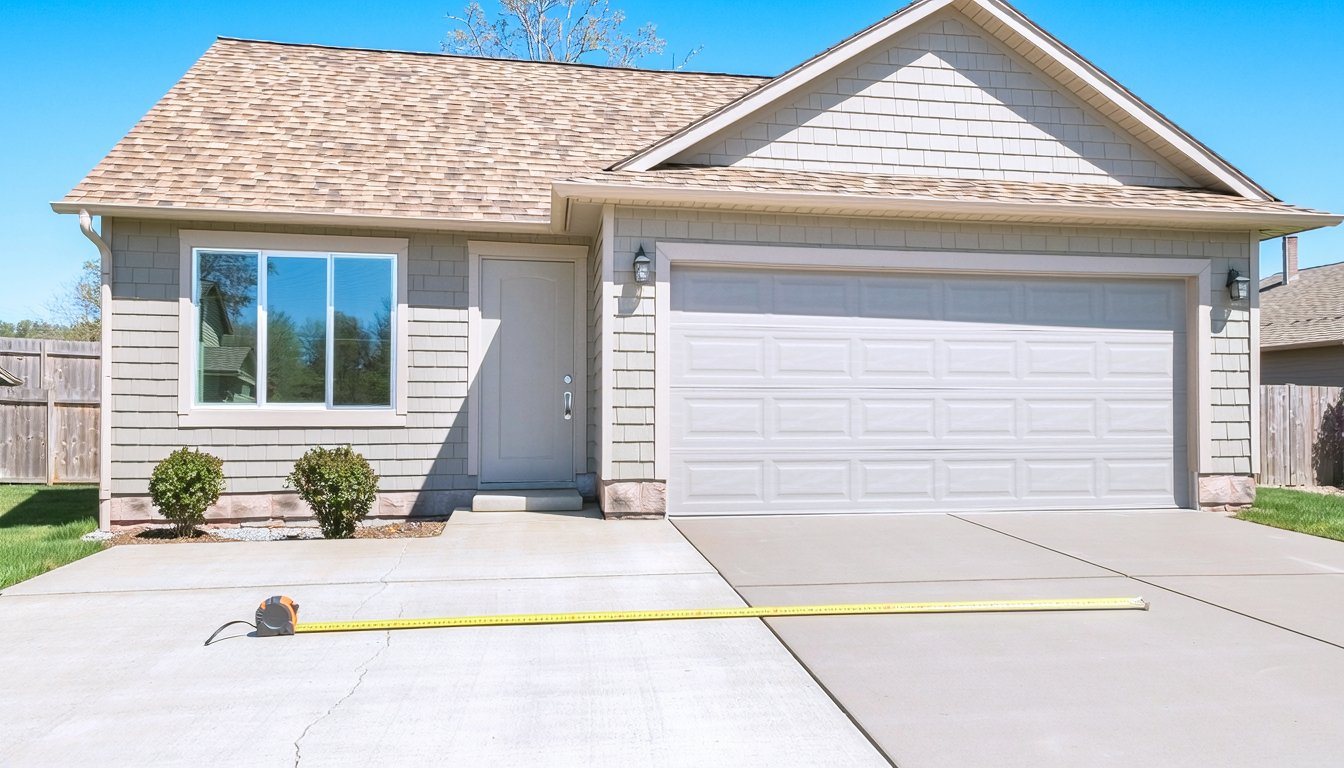
Two ADUs with the same number on the plans can be different sizes in practice, because rules measure floor area differently. The state floors use interior livable space, while San Diego's local maximum uses gross floor area. In our experience, these are the questions to settle with your designer and the city before you lock in a size:
- Inside or outside the walls? Some cities measure gross floor area to the outside of the exterior walls, so thick walls count against it; interior livable space is measured inside. Confirm your city's method.
- Porches, decks and covered patios. These are often excluded from floor area but may still count toward lot coverage or setbacks.
- Attached garages and storage. Non-habitable space attached to the ADU may or may not count, depending on the city.
- Lofts and stairs. A loft can add usable space under a height limit, but whether it counts as floor area depends on its ceiling height and local rules.
Getting the measurement method right early can be worth a few dozen square feet, which in our experience is sometimes the difference between a cramped layout and a comfortable one.
Height limits
Height caps often decide how much floor area you can fit more than the square-foot limits do. Section 66321 requires cities to allow at least 16 feet for a detached ADU on a lot with a single-family or multifamily home, and 18 feet for a detached ADU within a half mile of a major transit stop or on a lot with a multistory multifamily building, with an extra two feet allowed near transit when the roof pitch matches the main house.
Attached ADUs get more room. Cities must allow a height of "25 feet or the height limitation in the local zoning ordinance that applies to the primary dwelling, whichever is lower" for an attached ADU. The same provision adds that it "shall not require a local agency to allow an accessory dwelling unit to exceed two stories". Los Angeles's memo lists a two-story maximum, not counting basements, for detached ADUs under its ordinance.
These are minimums cities must allow; many allow more. In our experience, the 16-foot guarantee usually means a single story, which is why two-story ADUs tend to depend on local rules. Our backyard ADU ideas guide covers what fits under each height.
What shrinks the practical maximum
In our experience, the legal maximum and the size your lot can actually take are rarely the same number. These are the usual constraints:
- Setbacks and separation: distance from property lines and from the main house can narrow the buildable area.
- Lot coverage and floor area limits: some zones cap how much of the lot can be covered or how much total floor area the property can hold; ask whether the ADU counts toward them in your city.
- Easements and utilities: sewer, water and power lines, or recorded easements, can rule out part of the yard.
- Trees, slopes and access: protected trees, steep grades and fire access requirements shape the footprint.
- Hillside and fire zones: in Los Angeles, these can change which path applies; see our requirements guide.
A quick site check before design, with the survey, the utility locations and the zoning in hand, usually shows whether the maximum is realistic.
How big should you build?
The biggest ADU you're allowed to build isn't always the best one to build. In our experience, three things usually decide the size:
- Fees tied to size. State law sets size lines that affect impact and school fees; our ADU construction cost guide explains where they fall and what they save.
- Cost per square foot versus total cost. The price per square foot usually falls as a unit gets bigger, because fixed items like the kitchen, bathroom and utility connections are spread over more space, but the total still rises.
- What the unit is for. A rental, a home for a parent, or an office each have a natural size, and bedrooms drive the layout more than square feet do.
For what fits at each size, see our floor plan guides for 400 square feet, 800 square feet and two-bedroom layouts, and our guide to detached ADUs.
In our experience, the best-sized ADU is the one that fits the lot comfortably, stays under the fee lines that matter for your project, and meets the need you're building it for, with room left in the yard.
Medici Construction Group is one licensed option for ADU design-build and construction, holding California A, B and C-10 licenses under CSLB #1114433. Whoever you work with, ask them to check your lot's real limits before anyone draws the biggest unit the code allows.
Frequently asked questions
How big can an ADU be in California?
There's no single statewide maximum. Cities set maximums, but state law says those caps can't be lower than 850 square feet of interior livable space, or 1,000 for units with more than one bedroom. For detached ADUs under a local ordinance, state law caps size at 1,200 square feet, which is what Los Angeles and San Diego allow.
What is the maximum size of an ADU in Los Angeles?
Under the City's December 2024 zoning memo, a new detached ADU under the local ordinance can be up to 1,200 square feet; a detached ADU under the state's by-right path is 800 square feet; and conversions of existing space have no size cap. Confirm current rules with the City.
Can an ADU be bigger than the main house?
A converted ADU can match the structure it's in. For a new attached ADU, state law caps its floor area at 50 percent of the existing house. A detached ADU's limit comes from the city's maximum, so in some cases it could exceed a small main house; check local rules.
How big can an attached ADU be?
With an existing house, state law limits an attached ADU to 50 percent of the existing primary dwelling's floor area, subject to the state size floors. Los Angeles's memo lists the same 50 percent limit for attached ADUs under its ordinance.
How tall can an ADU be?
State law requires cities to allow at least 16 feet for most detached ADUs, 18 feet near major transit or with multistory multifamily housing, and up to 25 feet or the local limit for attached ADUs. Cities can allow more.
Can an ADU be two stories?
Sometimes. The state's 16-foot guarantee rarely fits two stories, so a two-story ADU usually depends on local rules or an attached design; our backyard ADU ideas guide covers the options.
How big can a JADU be?
A junior ADU can be up to 500 square feet under Los Angeles's rules and San Diego's, and in our experience it's created within the existing house. Our JADU vs ADU guide explains the other differences.